
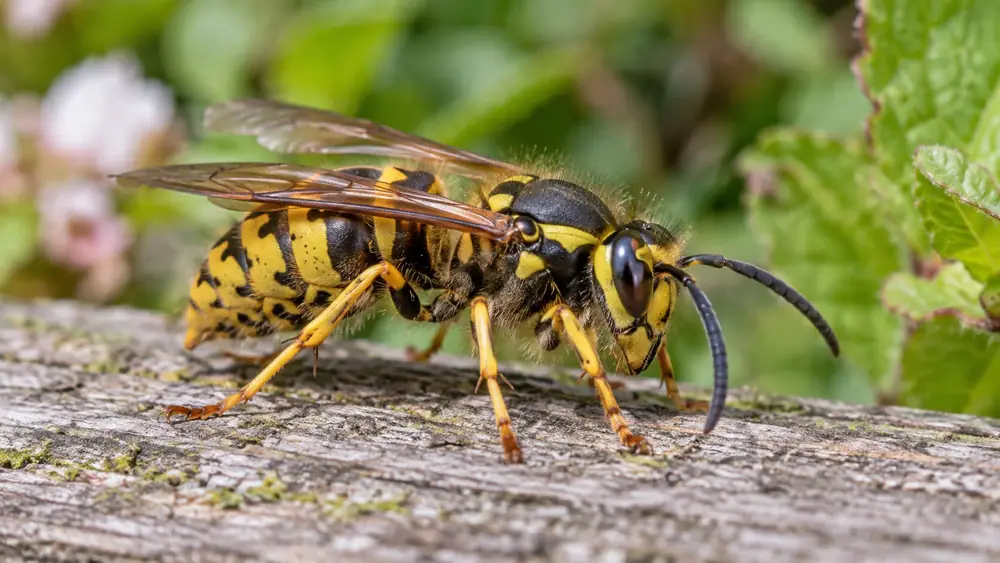
Wasp control in Rosebank usually means dealing with paper wasp nests under eaves, verandah roofs, balconies and window frames. We locate the nest, treat it so the wasps die inside, then remove it, and treat the spot so new queens are less likely to rebuild there. Treating early in the season keeps the job small and safe.
Why Rosebank homes and buildings attract wasps
Paper wasps look for a sheltered, dry overhang near water and food. The older homes of Illovo, Parkhurst and Houghton have plenty of that: deep eaves, wooden verandah ceilings, pergolas, gables and window frames with sheltered corners. Large gardens supply the caterpillars and insects wasps hunt to feed their larvae, plus pools and birdbaths for water. In the commercial area, shopfront canopies, balcony ceilings and the undersides of signage give similar shelter.
Nests start in spring with a single queen and a small cluster of cells. By late summer, after the colony has grown through the warm months, a nest can hold many wasps, and that is when most people notice them and get stung.
The wasps you are likely to see
Paper wasps
Slender wasps with long legs that dangle in flight, building open, umbrella-shaped nests of grey paper hanging from a single stalk. These are the most common and the most defensive near their nest; a hand near the nest or the jarring of a door or shutter they have built on can bring several out at once.
Mud daubers
Thin-waisted, solitary wasps that build small mud tubes or pots on walls, in garages and inside window frames. They are rarely aggressive. The nests are messy rather than dangerous, and we usually just remove them.
If what you have is a dense cloud of bees going in and out of a hole in the wall rather than a paper nest, see our page on bees in Rosebank homes, because bees are handled very differently.
How we deal with a wasp nest
- Locate and assess. We check where the nest is, how big it is and whether there are others nearby; paper wasps often have several small nests on one house.
- Treat. We apply a registered treatment directly into the nest, usually early or late in the day when the wasps are home and less active.
- Remove. Once activity has stopped, we take the nest down so there is nothing left to attract or shelter new wasps.
- Treat the spot. A residual treatment on the overhang discourages wasps from rebuilding in the same sheltered corner.
Normal life can carry on. We ask you to keep children and pets inside while we treat, and to keep them off any treated surfaces until dry.
The risky DIY mistake
Knocking the nest down with a broom or hosepipe. It sends the whole colony out at once, aiming for the nearest moving target, and because the nest has only been dislodged, the wasps often rebuild close by. Spraying a nest from close range with a household aerosol is not much better. If anyone in the house is allergic to stings, do not attempt it at all.
A local tip
Walk around the house once a month from September to November and look up at the eaves, verandah ceilings and the tops of window shutters. A new paper wasp nest the size of a coin is easy to deal with; the same nest in February can be the size of your hand and hold many wasps.
Offices, schools and shopfronts
For businesses, the concern is usually staff, customers or learners near a door or balcony where wasps have built. We schedule treatment outside busy hours where possible, cordon off the area if needed, and check the whole building for other nests while we are there. Schools in particular benefit from a check of the eaves and play areas before the summer term gets going.
What wasp control costs, and why
The cost depends on how many nests there are, how high and hard to reach they are, and whether the job needs a ladder, a roof or special access. A single nest at door height is a quick visit; several nests high on a double-storey gable take longer. Our guide pricing page shows where wasp treatments start. If you spot a tiny new nest early in spring, you may be able to deal with it yourself at night with a suitable product, carefully, and we will gladly talk you through it.
More nearby
Illovo homes and offices are covered on the Illovo pest control page. Next door we handle wasp nests in Sandton, and right across the city through wasp control in Johannesburg. For other local pests, see Rosebank pest control.
Nest work is done by Combat Pest Control, which is SAPCA registered, registered with the Department of Agriculture and has 25 years of experience. We offer service within 24 hours, and wasp treatments carry a 3-month guarantee on the treated nest site. Call 084 200 2700, or WhatsApp us a photo of the nest from a safe distance.
Questions we get asked
How much does wasp nest removal cost?
It depends on how many nests there are and how hard they are to reach. A single nest at door height costs less than several high up on a double-storey house.
Is it safe to remove a wasp nest myself?
Only a very small, new nest, and never if anyone in the house is allergic. Knocking down a large nest sends the whole colony out at once.
When are wasps worst in Johannesburg?
Nests start in spring and reach their biggest in late summer, which is when most people get stung and call us.
Will the wasps come back to the same spot?
New queens like the same sheltered corners, so we treat the spot after removing the nest. Checking the eaves each spring catches new nests early.
Do you remove mud dauber nests too?
Yes. Mud daubers are rarely aggressive, but their nests are messy, and we remove them as part of the visit.
What should I do if I am stung?
Remove any sting left behind, wash the area and use a cold compress. Get medical help immediately if there is swelling of the face or throat, or difficulty breathing.