
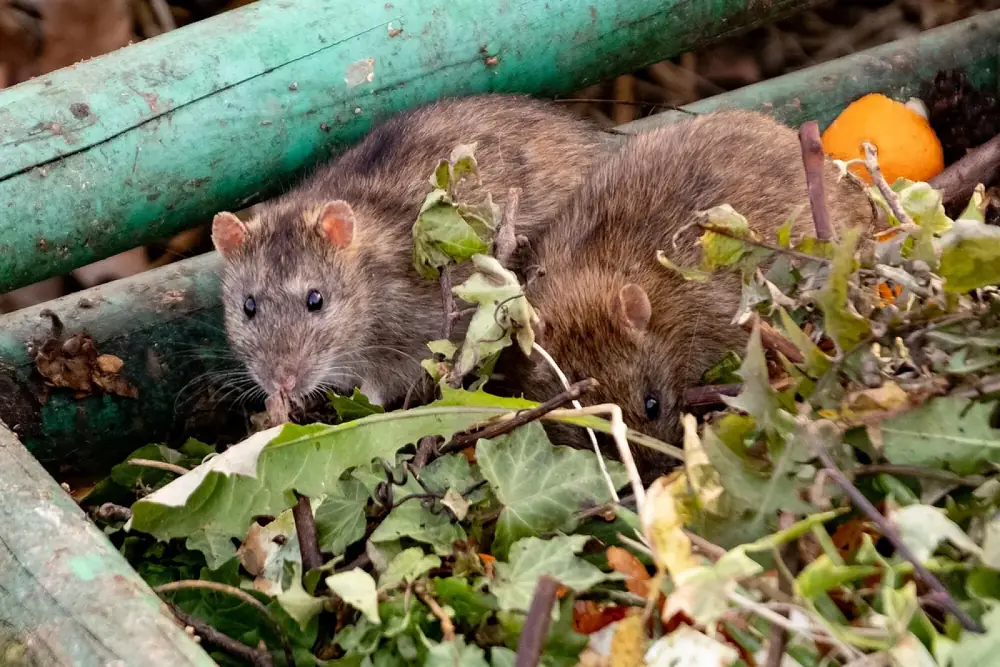
Rat control in Johannesburg means finding where the rats live, how they get into the building and what's feeding them, then dealing with all three. We bait outdoors in lockable stations, trap inside the roof and house, and show you the exact gaps to close so a new family doesn't move in next winter.
The two rats you'll meet in Johannesburg
The roof rat, also called the black rat, is slim, agile and a superb climber with a tail longer than its body. It runs along branches, power lines, creepers and the tops of boundary walls, and gets into the roof through gaps under the eaves and around fascia boards. In the leafy northern suburbs it's the rat behind most of our calls.
The brown rat is bigger and heavier, with a blunt nose and a shorter tail. It digs rather than climbs, living in burrows under paving, sheds, compost heaps and rubble, and in sewers and stormwater drains. It enters at ground level and is the main problem around restaurants, refuse rooms, markets and older industrial buildings.
The difference matters. Bait in the garden won't touch roof rats living in a ceiling, and traps in the roof won't reach brown rats coming up through a drain.
Why rats thrive in this city
Rats need food, water and shelter close together, and Johannesburg supplies all three. Spruits and stormwater channels give brown rats long, protected corridors. Big trees and creepers connect one roof to the next. Fruit trees, bird feeders, compost, dog food and chickens keep gardens well stocked, and busy commercial areas produce food waste around the clock. Old mine land, open veld and building sites on the edges of suburbs add burrowing space.
Activity rises sharply from late autumn. When the first cold nights arrive, rats that spent summer outdoors look for warmth, and most of our residential rat calls come between May and August. Food businesses see them all year.
Signs that it's rats
- Heavy scurrying or a dragging sound in the ceiling after dark
- Droppings about the size of a raisin, often in groups along a wall or in the roof space
- Dark, greasy rub marks where they squeeze past beams or around a pipe
- Large gnaw marks on cables, plastic bins, irrigation lines and the bottoms of wooden doors
- Holes at the base of walls, under paving or in flowerbeds, with smooth, well-used entrances
- Fruit eaten on the tree, or pet food disappearing overnight
For a closer look at what to check up there, see our guide to spotting rat activity in your roof.
How we clear rats
The first visit is an inspection of the roof space, the outside walls, the garden and any outbuildings, looking for runs, droppings, burrows and entry points. Outdoors, we place lockable, tamper-resistant bait stations on the routes the rats use, anchored so they can't be dragged away. In the roof and inside the house we usually use traps, so there's no risk of a rat dying in a cavity. Where we need to confirm a route, tracking powder shows exactly where they've walked.
Rats are naturally suspicious of new objects, so the first few days can be quiet before they start feeding. We return to check stations and traps, and once activity drops we walk you through the proofing: wire mesh over vents, sealing gaps around pipes and cables, fixing broken air bricks, brush strips under garage doors and trimming trees back from the roof.
Different parts of the city, different rat problems
In the heritage suburbs around Rosebank, Parktown and Saxonwold, roof rats use old trees and roofs where original timber has shrunk. In Soweto, brown rats move between backyard rooms, shared walls and refuse points, so treating with neighbours or the whole street works better than one house alone. Mice often turn up alongside rats; our mouse control across Johannesburg covers them.
The mistake that keeps rats coming back
Pushing loose poison into the ceiling through the trapdoor is the classic one. Rats hoard it, die in places you can't reach, and the smell lingers for weeks. Meanwhile the gap they used is still open. Poison sold over the counter also puts dogs, cats and owls at risk when used outside a station.
A local prevention tip
Johannesburg gardens feed rats more than kitchens do. Pick up fallen fruit, feed the dog indoors or lift the bowl at night, keep chicken feed in a sealed bin, and put the compost heap in an enclosed bin away from the boundary wall. Then cut branches back a metre from the roof.
What rat control costs, and why
The main cost drivers are the size of the property, the number of bait stations and traps, whether we're working in the roof space, and how many follow-ups it takes. A house with a few roof rats is a straightforward job; restaurants, warehouses and complexes are quoted to suit the site, often on a monitoring contract with service records. Our Johannesburg price list shows the guide price for rat treatments. A single rat seen once in the garden may only need a couple of good traps, and we'll be honest about that.
Rats get bolder the longer they're left, which is why we offer service within 24 hours. Behind that sits 25 years of experience, SAPCA registration and registration with the Department of Agriculture under Act 36 of 1947, plus a 3-month guarantee: if rats return to a treated property in that time, we come back. Ring 084 200 2700, or WhatsApp a picture of the droppings or gnawing.
Questions we get asked
How much does it cost to get rid of rats?
A single house with roof rats is a modest job, and the price grows with the size of the property, the number of stations and traps, and the number of visits. A single house is a modest job; businesses and complexes are quoted per site. We confirm the price after inspecting.
How quickly will the rats be gone?
Most homes see activity drop within one to two weeks. Rats avoid new objects at first, so the first few days can be quiet, and heavy infestations need follow-up visits.
Are rats in the roof dangerous?
They can be. Rats gnaw electrical cables, contaminate insulation and stored goods with droppings and urine, and can carry diseases. It's worth dealing with them early.
Can you get rid of rats without poison?
Partly, yes. Inside the house and roof we normally use traps, and proofing the entry points is the long-term fix. Outdoors, bait in lockable stations is usually the most effective way to reduce the population.
Why have rats appeared in my house now?
Usually it's the cold. Rats that lived in the garden or along a nearby spruit move indoors when winter nights arrive, or a new gap has opened, such as a broken air brick.
Is it safe to have bait stations if I have children?
Yes. The stations are lockable and tamper-resistant, so children and pets can't reach the bait, and we place them out of the way.
Do I need to do anything after the rats are gone?
Yes: seal the gaps we've shown you, trim trees back from the roof and remove food sources in the garden. That's what stops the next rats moving in.