
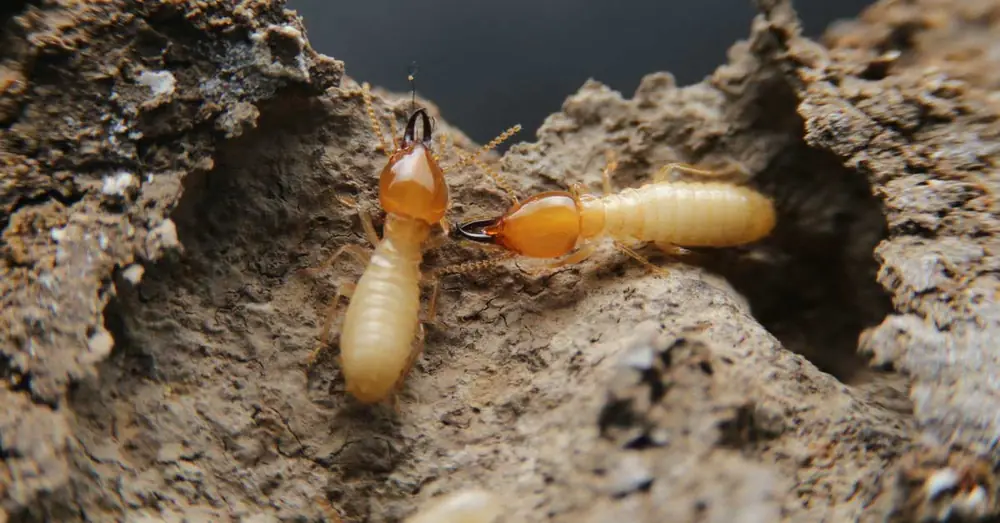
Good termite control in Johannesburg starts with an inspection, not a spray. The city has two very different termite problems: subterranean termites that eat timber in buildings, and harvester termites that strip lawns. We confirm which one you have, then treat the colony itself, so the activity stops rather than moving elsewhere.
Signs you have termites
- Mud tubes: thin brown tunnels running up a foundation, a garage wall or the inside of a cupboard. Subterranean termites build them because they dry out and die in open air.
- Hollow timber: skirting boards, door frames or floorboards that sound papery when you knock on them, or paint that bubbles along a line.
- Swarmers indoors: winged termites coming out of a wall, floor or door frame after the first summer rains. A swarm in the garden is normal; one inside the house means a colony is using your building.
- Bare lawn patches: small round holes with loose soil heaps around them and short, cut pieces of grass, usually in a dry winter. That's harvester termites.
Harvester or subterranean termites?
Subterranean termites: the ones that damage buildings
These live in the soil and travel to food through sealed mud tunnels. They eat roof timbers, door frames, skirting boards, floorboards, cupboard backs, cardboard boxes and even the paper on drywall. Older suburbs with timber floors and wooden roof trusses are classic targets, but new builds aren't immune: building rubble, offcuts and tree stumps left buried in the garden feed a colony for years before it finds the house.
Harvester termites: the ones that wreck lawns
Harvester termites leave your house alone. They cut grass and carry it underground, and in a dry Highveld winter they can turn a kikuyu lawn into bare, sandy patches in a few weeks. It's one of our most common calls from gardens in Randburg, Roodepoort and the south, and it's treated completely differently from a structural infestation.
Why termites do so well in Johannesburg
The Highveld gives termites almost everything they want. Deep soils hold moisture below the surface even in a dry winter, summer storms soak the ground, and the city's huge tree canopy drops a steady supply of dead wood. Older suburbs add timber floors, wooden roof trusses and built-in cupboards that sit right on the slab, while newer estates add buried building rubble and offcuts.
Where termites hide in Johannesburg homes
Some spots come up again and again on our inspections. Built-in cupboards against outside walls are the classic one, because termites can work up the back panels for months before anyone notices. Garages are another: cardboard boxes on the floor, timber offcuts and old doors leaning on the wall. Then there are door frames next to a shower or a leaking pipe, timber window sills on the weather side of the house, and the roof space above an overflowing gutter. On older properties, check under suspended timber floors and along skirting boards in rooms that back onto a flowerbed.
How we treat termites in existing homes
- Inspection. We check foundations, walls, the roof space, cupboards, door and window frames and the garden, confirm the species and map the activity.
- Finding the way in. Expansion joints, cracks in the slab, pipes through walls, wood touching soil and flowerbeds built up against the house are the usual routes.
- Treatment matched to the termite. For subterranean termites we apply registered soil treatments to create a treated zone around and under the structure, or use baiting where drilling and trenching aren't practical. For harvester termites we treat the active nest openings so the workers carry the product down to the colony.
- Follow-up. Heavy activity needs a return visit to make sure the tubes stay dead and the lawn holes stop reopening.
New builds and extensions
The cheapest time to protect a building is before the slab goes down. A termite pre-treatment of the soil creates a treated barrier under the foundations and floor, in line with the South African standard for soil treatment against termites (SANS 10124). Building inspectors and banks often ask for proof that it was done, so we issue the paperwork for each pre-treatment. If you're adding an extension, the new section needs its own treatment where it meets the soil, or termites simply use it as a bridge into the old house.
Termite certificates when you buy or sell
Buyers, banks and conveyancers often ask for a termite or entomological certificate before a property transfers. We inspect the property, report what we find and, if there's no active infestation, issue the certificate. If we do find activity, we explain the treatment needed so the sale isn't held up longer than necessary. Our entomological inspections page explains what the inspection covers.
What termite control costs, and why
There's no single price, because termite jobs vary so much. These are the things that set the cost:
- Which termite it is: a harvester termite treatment in a normal garden is a much smaller job than treating a house for subterranean termites.
- The length of the building's perimeter and whether we need to drill through paving or a slab.
- How much timber is affected, and whether baiting suits the building better than soil treatment.
- For new builds, the size of the slab area being pre-treated.
Our guide prices show where termite work starts. We'll give you a clear quote after the inspection, and we'll tell you honestly if a small lawn problem is something you can deal with yourself.
The mistake that makes things worse
Breaking open the mud tubes and spraying whatever you can see with a can from the supermarket kills a few dozen workers, while the colony underground loses nothing and simply builds a new route somewhere you can't see. Leave the tubes alone: they're exactly what we use to trace the activity back to where it's getting in. The second mistake is assuming a house treated when it was built is still protected. Soil treatments wear off, and extensions, new paving and flowerbeds break the treated zone.
Prevention that works on the Highveld
- Keep soil, mulch and paving below the damp-proof course and away from the walls.
- Dig out old tree stumps and buried rubble rather than landscaping over them.
- Don't stack firewood, timber or cardboard against outside walls or on the garage floor.
- Fix leaking taps, gutters and irrigation that keep soil wet against the foundations.
- Water the lawn through winter if you can; harvester termites target dry, stressed grass.
Termite control in your area
We treat termites right across the city, with dedicated pages for Sandton, Bryanston, Fourways, Midrand, Randburg, Roodepoort, Rosebank, Northcliff, Soweto and Johannesburg South. For how colonies work, read the termite guide.
Combat Pest Control is SAPCA registered and registered with the Department of Agriculture, with 25 years of experience. Termite treatments come with a treatment certificate and a 5-year guarantee, and we offer service within 24 hours. Call us on 084 200 2700, or WhatsApp us a photo and we'll tell you what you're looking at.

Questions we get asked
How do I know if I have termites?
Look for mud tubes on walls or in cupboards, timber that sounds hollow, winged termites coming out of a wall or floor, or bare lawn patches with small holes and soil heaps. If you're unsure, WhatsApp us a photo.
Is it expensive to treat termites?
It depends on the termite and the building. A harvester termite treatment in a garden is a modest job; treating a house for subterranean termites costs more and depends on the perimeter, the paving and how much timber is affected. We quote after inspecting.
How long does a termite treatment last?
A soil treatment protects the treated zone for years, and our termite treatments carry a 5-year guarantee with a treatment certificate. Building work, new paving and flowerbeds can break the treated zone, so have it checked after renovations.
Do I need to move out during termite treatment?
No. Termite treatments go into the soil and specific points around the building, so you can stay at home.
Is termite treatment safe for pets and children?
Yes, when it's applied correctly. Keep children and pets away from treated areas until they're dry, and we'll tell you exactly which areas those are.
What can I do about harvester termites in my lawn?
Treat the active nest openings so the colony takes the treatment underground, then water and feed the lawn so it recovers. Re-seeding without treating first just feeds the termites.
Do I need a termite certificate to sell my house?
Often, yes. Many buyers, banks and conveyancers ask for one before transfer. We inspect the property and issue the certificate if there's no active infestation.
What should I do before you arrive?
Leave any mud tubes intact, clear access to cupboards, the garage and the roof hatch, and note where you've seen activity. Don't spray the termites yourself.