
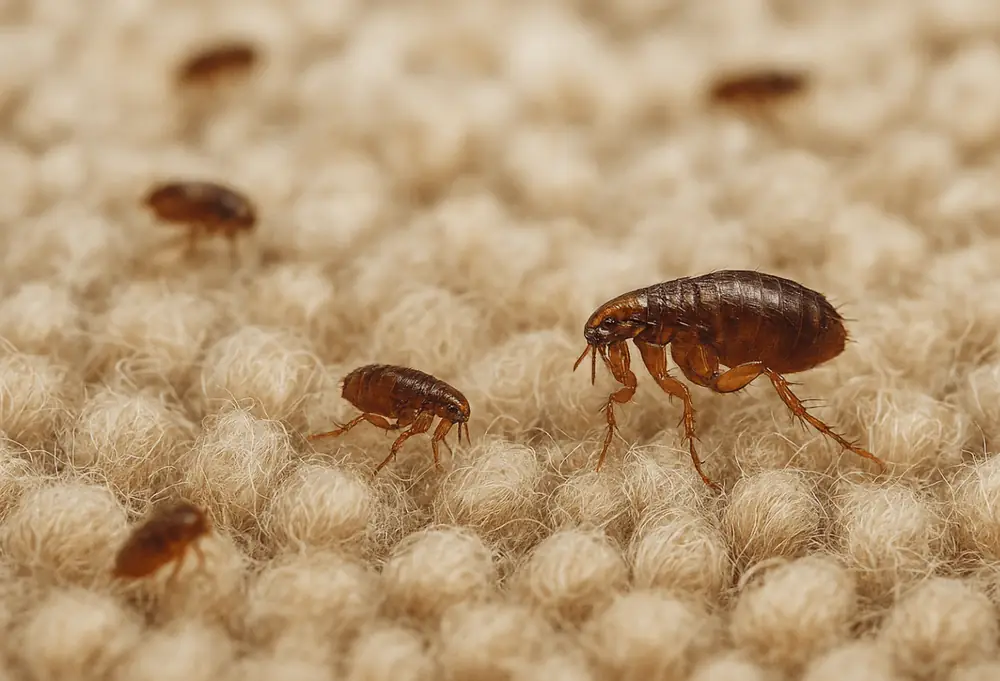
Flea control in Rosebank means treating the home and the garden at the same time as your pets. Most of a flea population lives as eggs, larvae and pupae in carpets, bedding and shady soil, not on the animal. We treat those areas with residual products while you treat the pets with your vet's advice, which breaks the cycle.
Why fleas are common around Rosebank
This is dog-walking country. Zoo Lake, the parks and the tree-lined streets of Parktown North, Parkhurst and Saxonwold see plenty of dogs every day, and fleas spread wherever animals rest. The older gardens here are full of deep shade under big trees, cool soil under decks and dry, sheltered spots along walls, exactly where flea larvae develop best. Many of the older homes also have wooden floors with gaps between the boards, and fleas develop happily in the dust that collects there.
Warm, humid summer weather speeds up the life cycle, so infestations often build fast from November to March. Flats and houses that have stood empty between tenants are another classic: flea pupae can wait for weeks, then hatch all at once when vibration and body heat tell them someone has arrived.
Signs of a flea problem
- Small, very itchy bites, usually around the ankles and lower legs.
- Pets scratching, biting at the base of the tail or losing fur.
- Tiny dark specks in pet bedding that turn reddish on damp paper. That is flea dirt.
- Fleas jumping onto white socks when you walk across a carpet or a shady patch of lawn.
How we treat fleas
Before we arrive
Vacuum every floor thoroughly, including under furniture, along skirting boards and in the gaps of wooden floors, then empty the vacuum outside. Wash pet bedding on a hot cycle. Book your pets in for flea treatment with your vet for the same day or the day before. Vacuuming also stirs the pupae into hatching, which exposes them to the treatment.
Inside
We apply an odourless, non-staining residual treatment to carpets, rugs, floor gaps, under beds and the places pets sleep. Keep children and pets off treated areas until they are dry.
Outside
We treat shaded resting spots: under decks and verandahs, along walls, kennel areas, under shrubs and anywhere your dogs lie in the heat of the day. Sunny, open lawn is less of a concern, because larvae dry out in direct sun.
Afterwards
Keep vacuuming every day or two for a fortnight. You may still see a few fleas for a week or so as the last pupae hatch and meet the treatment; that is normal, not a failure.
Fleas when you do not have pets
It happens more often than people think. The previous owner's or tenant's animals, a neighbour's cat that sleeps under your deck, or stray cats nesting in an outbuilding can all leave fleas behind. Hedgehogs, rodents and birds nesting in the roof bring their own parasites too. If you are bitten and there are no pets in the house, we look for where animals have been resting, both inside and out, and treat those spots first.
The usual reason fleas come back
Treating only the dog. A flea collar or spot-on deals with adult fleas on the animal, but the hundreds of larvae and pupae in the house and garden keep hatching and jumping straight back on. Equally, treating the house without treating the pets lets the animal bring a fresh supply in from the park. All three have to be done together.
A Rosebank tip
If your dog's favourite spot is the cool soil under a deck or a hedge, rake out the leaf litter there and let some sun in. In gardens shaded by big old trees, those few square metres are often where most of the flea population develops.
Landlords and agents
If a tenant with pets has moved out, have the property treated before the new tenant moves in. It is far easier to do in an empty unit, and it avoids a new tenant being bitten in the first week, which is an unpleasant way to start a lease.
What flea control costs, and why
The size of the house, the number of rooms with carpets or wooden floors, and how much of the garden needs treating all affect the cost, as does whether a follow-up is needed for a heavy infestation. A small flat is a quick job; a large home with a big shady garden and several dogs takes more time and product. Our price guide shows where flea treatments start. If you caught it early and only the pet bed is affected, treating the pets and washing the bedding may be enough.
Related pages
Dogs that pick up fleas often pick up ticks too; see tick control around Rosebank. Parktown North gardens are covered on our Parktown North pest control page. Out west we treat fleas in Northcliff, and right across the city with flea control in Johannesburg. For other pests in the area, see our Rosebank overview.
Jason van Heerden runs Combat Pest Control with 25 years of experience behind him, and the business holds SAPCA registration as well as registration with the Department of Agriculture. We offer service within 24 hours and back flea treatments with a 3-month guarantee. Call 084 200 2700, or WhatsApp us if you have questions about preparing.
Questions we get asked
How much does flea treatment cost?
It depends on the size of the house, the number of rooms with carpets or wooden floors and how much garden needs treating. A small flat costs much less than a large home with a big shady garden.
Why am I still seeing fleas after the treatment?
Flea pupae are protected and keep hatching for a week or two. Each new flea meets the treatment and dies, so keep vacuuming and the numbers will fall quickly.
Do I need to leave the house?
No. Stay out of treated rooms until the surfaces are dry, and keep children and pets off them until then.
Do I still need to treat my pets?
Yes. Speak to your vet and treat your pets at the same time, otherwise they keep carrying fleas between the garden and the house.
Why do fleas appear in an empty flat?
Pupae can wait for weeks and hatch when they sense movement and warmth, so the first person to walk in after a vacancy often gets bitten.
How long does a flea treatment last?
The residual treatment keeps working for some time, and our treatments carry a 3-month guarantee, provided your pets are treated as well.