
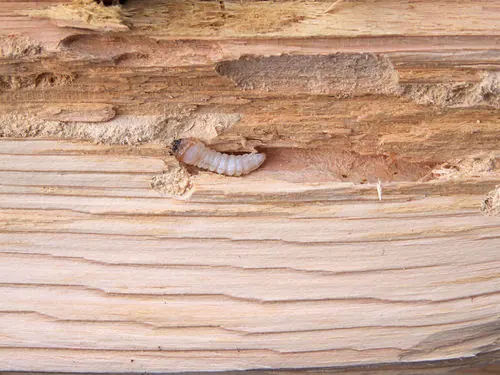
Wood borer treatment in Rosebank protects the original timber in older homes: pine floorboards, skirting boards, roof timbers, built-in cupboards and antique furniture. We confirm whether the beetles are still active, find how far they have spread, then treat the affected timber with registered products, or fumigate furniture where that is the better option.
Why wood borer is common in this area
The suburbs around Rosebank, Parkhurst, Parktown, Saxonwold, Houghton and Melrose among them, have a high share of homes built in the first half of the twentieth century. Many still have their original suspended pine floors, timber ceilings, roof structures and joinery, and plenty of families have inherited antique furniture to go with them. Wood boring beetles lay their eggs in cracks and old exit holes in that timber. The larvae then tunnel inside the wood for a year or more before emerging as adults, so the damage builds quietly over many years before anyone notices.
What wood borer looks like
- Small, round exit holes in timber, roughly the size of a pinhead to a match head.
- Fine, powdery dust, called frass, under the holes or on the floor below a piece of furniture.
- Fresh holes with clean, pale edges rather than dark, dirty ones.
- Timber that crumbles at the edges or feels soft when pressed with a screwdriver.
- Small brown beetles on windowsills in late spring and summer, when adults emerge.
Old holes do not always mean a live infestation. Dark holes with no fresh powder may be from activity that ended long ago. That is why we always check for current activity before recommending treatment.
Wood borer or termites?
This is the question we answer most often in older Rosebank homes, and getting it right matters, because the treatments are completely different. Wood borer leaves neat round holes and loose powder. Termites leave mud tubes, soil packed into cracks and timber hollowed out from inside, often with an intact painted surface. Some old houses have both. If what you are seeing is mud rather than powder, read about termite treatments in Rosebank homes, which come with a 5-year guarantee and certificate.
Our treatment process
Inspection
We examine the affected timber, check for fresh frass and holes, and look at neighbouring boards, skirting, cupboards and the roof space to see how far the activity reaches. Under suspended floors we check the joists as well as the boards.
Treating structural timber
For floors, skirting boards, roof timbers and built-in joinery, we apply registered wood borer treatments to the affected timber so that larvae inside are killed and newly laid eggs do not survive. Unfinished surfaces, like the underside of floorboards and roof timbers, take the treatment best.
Furniture and antiques
Loose furniture can often be treated in place. For valuable antiques, or pieces with heavy activity, fumigation with registered fumigants may be the better answer, because it reaches larvae deep inside the timber. Fumigated items must be sealed and the area vacated until cleared, and we arrange that with you.
Replacement
Where timber has lost its strength, it may need replacing. We tell you honestly which boards or timbers are beyond saving, and treat the surrounding timber so the replacement is protected.
A common mistake
Sanding and resealing an old floor without checking for wood borer first. A fresh varnish over active beetles seals the problem in, the new holes appear through the finish a year later, and the floor has to be done again. Have the floor checked and treated before sanding.
A Rosebank tip
Keep the air bricks under suspended floors open and clear of soil. Wood boring beetles do best in timber with a higher moisture content, and a well-ventilated underfloor keeps old pine joists and boards drier and far less attractive to them.
Buying an older house
If you are buying in one of the older suburbs around Rosebank, ask for the timber floors and roof structure to be checked before transfer. Wood borer and termite damage are both much cheaper to treat early, and an inspection gives you a clear picture before you commit.
What wood borer treatment costs, and why
The cost depends on how much timber is affected, whether it is floors, roof timbers or furniture, how easy it is to reach, and whether any pieces need fumigation. A few active boards in one room is a modest job; an entire floor or a roof structure takes more time and product. Our wood borer and pest control prices show the starting point, and we quote after inspecting.
More nearby
Parkhurst's old cottages and semis are covered on our pest control in Parkhurst page. In the older southern suburbs we provide wood borer treatment in Johannesburg South, and across the city through wood borer treatment in Johannesburg. For everything else locally, see our Rosebank pest control hub.
Timber treatments are carried out by Combat Pest Control, a SAPCA-registered business registered with the Department of Agriculture, under owner Jason van Heerden with 25 years of experience. We offer service within 24 hours, and wood borer treatments carry a 3-month guarantee. Call 084 200 2700, or WhatsApp us a photo of the holes and powder.

Questions we get asked
How much does wood borer treatment cost?
It depends on how much timber is affected, whether it is floors, roof timbers or furniture, and whether fumigation is needed. A few boards cost much less than a whole floor; we quote after inspecting.
How do I know if the wood borer is still active?
Look for fresh, pale powder under the holes and holes with clean, light edges. Dark holes with no new powder may be old damage.
Do I need to move out for wood borer treatment?
Not for treating floors and timbers in place. Fumigation of furniture is different: the sealed area must be vacated until it is cleared.
Can you treat antique furniture without damaging it?
Yes. Depending on the piece, we treat it in place or recommend fumigation, which reaches larvae deep in the wood without affecting the finish.
Should I sand my old floor before or after treatment?
Have it checked and treated before sanding and resealing. A new finish over active wood borer seals the problem in.
Will treated timber need replacing?
Only timber that has lost its strength. Most affected boards and timbers can be treated and kept, and we tell you honestly which cannot.
Is it termites or wood borer in my floor?
Wood borer leaves neat round holes and fine powder. Termites leave mud, soil in cracks and hollowed-out timber. We confirm which before treating.