
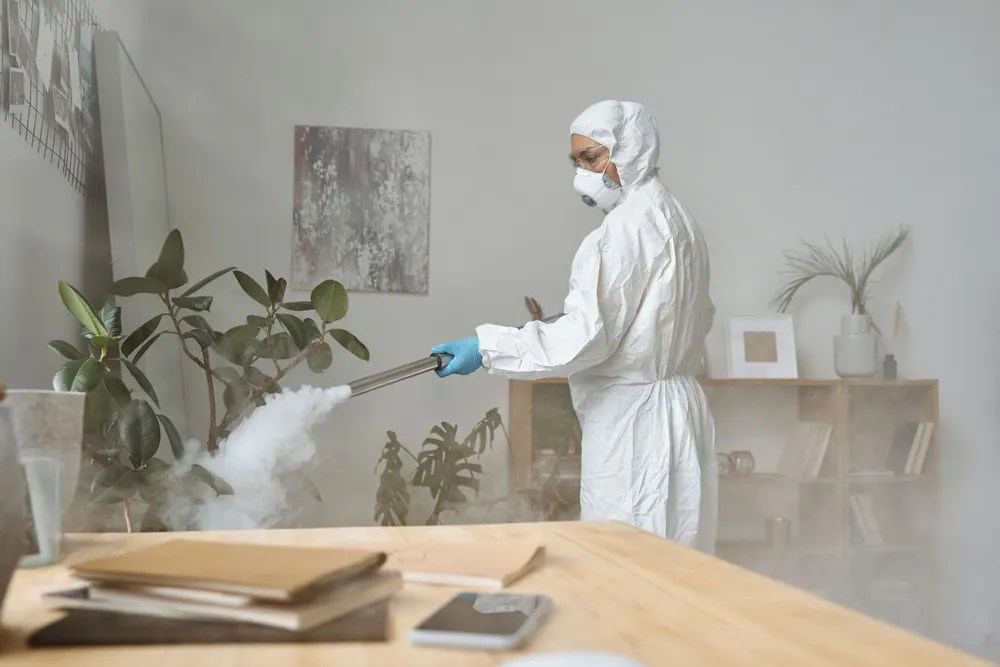
Pest control in Newtown has to suit theatres, museums, offices, restaurants, apartments and event spaces in the same few blocks. The pests we deal with most are rats around refuse and event areas, pigeons on old warehouse roofs, cockroaches in venue kitchens, flies after big events, and paper-eating insects in archives. We inspect first and plan around each building's use.
A cultural precinct in old industrial buildings
Newtown lies on the western edge of the city centre, linked to Braamfontein by the Nelson Mandela Bridge. Its old market buildings, power station buildings and warehouses now hold the Market Theatre, Museum Africa, music venues, offices, a shopping centre and apartments, with Mary Fitzgerald Square as the open space for concerts and festivals. Restaurants, bars and food stalls serve visitors, and the railway yards and Fordsburg lie close by.
This is a precinct of high ceilings, old roof trusses, large refuse loads after events, and buildings full of paper, fabric, costumes and stored collections. Pests that suit those conditions do very well, and many of them don't show up in an ordinary home.
Rats around refuse and event days
Festivals, markets and busy weekends leave a lot of food waste behind, and rats from drains, railway land and old basements move in fast. Lockable, tamper-resistant bait stations around refuse areas and building perimeters, checked on a schedule, keep the population under control between events. Inside venues, traps are used where bait isn't appropriate. For our full approach, see rodent control for Johannesburg businesses.
Pigeons under high roofs
Old industrial roofs, steel trusses and wide ledges give pigeons ideal roosting and nesting sites. Droppings soil seating, stages and walkways, block gutters and attract bird mites, which can bite staff working below. We remove nests, treat for mites and fit netting or spikes to keep birds out of roof spaces and off ledges.
Archives, costumes and collections
Paper, books, textiles and costumes attract their own pests. Fish moths feed on paper, glue and starch; booklice thrive in damp storerooms on the mould growing on paper and card; carpet beetle larvae eat wool, feathers and natural fibres. Signs include small holes in fabric, grazed paper surfaces and tiny pale insects in boxes. Lowering humidity, sealed storage and targeted treatment of shelving all help. Our page on booklice in Johannesburg buildings explains more.
Venue kitchens and food outlets
German cockroaches settle in bar fridges, ice machines, dishwashers and the warm spots behind cooking equipment. Gel baits and targeted treatment of hiding places control them without closing the kitchen. We keep a service record for each visit, which helps with health inspections.
Flies after events
Flies peak in summer and after big outdoor events. Prompt refuse removal, closed bins and washing down refuse areas make the biggest difference, with treatment of resting and breeding areas when numbers are high.
Apartments and offices
The flats and offices in converted buildings have the same issues as anywhere in the inner city: German cockroaches moving through shared plumbing, mice in the ground floors and bed bugs arriving with furniture. They are best handled building by building, with the managing agent, rather than one unit at a time.
Working around shows and opening hours
We plan visits around performances, exhibitions and trading hours, often early in the day. Insect treatments are odourless and non-staining, important in spaces with costumes, collections and upholstery, and nobody needs to leave the building for them.
The mistake we see
Treating after a problem appears instead of before the busy season. For a venue, a monitoring contract set up ahead of the summer events season catches rats and cockroaches while numbers are small, rather than in the middle of a festival weekend.
A Newtown tip
Store archive boxes and costume rails off the floor and away from outside walls, and put a cheap humidity meter in the storeroom. If the reading stays high, booklice and mould will follow, and fixing the damp does more than any treatment.
What it costs and why
The price depends on the building, the number of stations, the size of kitchens and storerooms and how often we visit. Bird proofing is quoted on the area and access height. Collection and archive work depends on the volume of storage. This page shows a guide "from" price, and our guide to pest control prices lists every service. We quote after inspecting.
Newtown is covered by our Rosebank and city pest control hub, and Marshalltown, a few blocks east, has its own page.
Jason van Heerden owns Combat Pest Control and runs it day to day, with 25 years of experience behind him. SAPCA membership, Department of Agriculture registration, service within 24 hours and a 3-month guarantee on general treatments come as standard. Venue and building managers can call 084 200 2700 or WhatsApp us a photo.
Questions we get asked
Can you treat a theatre without disrupting shows?
Yes. We plan visits around performances, usually early in the day, and use odourless treatments.
What's damaging the paper in our storeroom?
Usually fish moths or booklice, sometimes both. Booklice point to damp; fish moths to undisturbed paper and card. We identify and treat them.
How do we keep pigeons out of a high roof?
Netting under the roof structure and spikes on ledges, after nests are removed and the area treated for mites.
How much does a venue pest control contract cost?
It depends on the building size, kitchens, stations and visit frequency. We quote after a site visit.
Will treatment harm costumes or collections?
Our insect treatments are non-staining, and we treat shelving and cracks rather than spraying stored items.
When should we start monitoring before festival season?
A month or two before the busy period, so rodents and cockroaches are under control before the crowds arrive.