
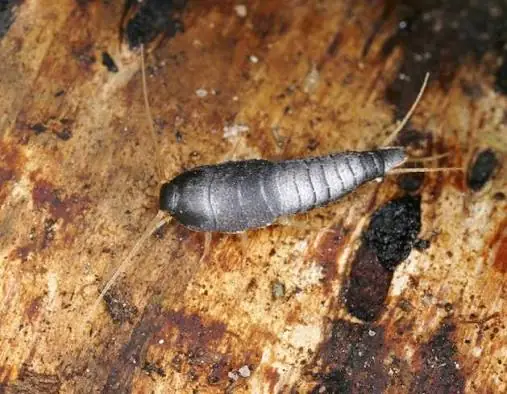
Fish moth control in Rosebank means treating the hidden spaces where these silvery insects live: built-in cupboards, roof voids, bookshelves, wall cracks and storerooms. We find the main harbourage, apply odourless, non-staining residual treatments into the cracks and voids they use, and advise on the damp and clutter that keep them coming back.
Why fish moths like the suburbs around Rosebank
Fish moths, also called silverfish, feed on starch, glue, paper, book bindings, wallpaper paste, cotton and linen, and they need a sheltered, slightly damp place to hide. The older homes of Forest Town, Parktown, Houghton and Saxonwold supply both. Many have deep built-in cupboards and wardrobes against outside walls, pressed ceilings with voids above, timber floors with gaps, and generations of books, papers and photographs. Bathrooms in old houses often have tired grouting and slow leaks that keep a wall cool and damp.
The commercial side of Rosebank adds its own version: offices with filing rooms, legal and accounting archives, storerooms of printed material and basement storage that rarely sees daylight. Fish moths are slow breeders, but they live for years, so a population quietly builds in a storeroom no one opens.
How to recognise a fish moth problem
- Small, flat, tapering silver-grey insects, quick and wriggling, that run from light.
- Irregular holes and scraped surfaces on paper, book covers, photographs and wallpaper.
- Yellowish stains and tiny pepper-like droppings on stored papers and linen.
- Fine scales and shed skins on bookshelf backs or in drawers.
- Insects trapped in the bath or basin, where they fall in and cannot climb the smooth sides.
Fish moths, booklice or something else?
Booklice are much smaller, pale and soft, and they feed on the mould that grows on damp paper rather than the paper itself. Carpet beetle larvae are hairy and slow-moving and go for wool, feathers and natural fibres. Each needs a slightly different approach, so we confirm what is there before treating. Fish moths are by far the most common of the three in older Rosebank homes.
How we treat fish moths
- Inspection. We open built-in cupboards, look behind bookshelves, check the roof space and any storerooms, and find where the activity is heaviest. In offices we start with archives and stationery stores.
- Crack and crevice treatment. We apply residual products into the joints of cupboards, behind skirting boards and shelving, into wall cracks and along pipe entries, where fish moths actually live.
- Voids. Roof spaces and ceiling voids are treated where the population extends up there, which is common in houses with pressed ceilings.
- Advice. We point out damp spots, cardboard storage and clutter that need sorting to stop the problem returning.
The products are odourless and do not stain wood, books or fabrics. You can stay at home; keep children and pets off treated surfaces until dry. Valuable books, documents and textiles can stay in place or be moved out briefly, and we will tell you which.
What people often get wrong
Spraying the open shelves and leaving it at that. Fish moths spend the day deep in cracks and behind cupboard backs, so a surface spray barely touches them. The other mistake is storing papers and linen in cardboard boxes; cardboard is food as well as shelter. Sealed plastic containers in a dry spot remove both.
A Rosebank tip
In older homes, check the built-in cupboards on the south side of the house, the side that gets the least sun. Those walls stay cool and slightly damp through winter, and that is usually where fish moths are concentrated. A dehumidifier or simply leaving the cupboard doors open on dry days helps more than you might expect.
Looking after archives and collections
For offices, schools and anyone storing documents they cannot replace, regular treatment of the storeroom is cheaper than restoring damaged records. Keep archive rooms dry and ventilated, store boxes off the floor and away from outside walls, and do not let the room become a dumping ground for empty cartons. We can include archive rooms in a scheduled monitoring contract, with a written record of each visit.
What fish moth control costs, and why
The number of rooms and cupboards involved, whether the roof void or a storeroom needs treating, and how established the population is all affect the cost. A few cupboards in a flat is a small job; a large old home with pressed ceilings, or a commercial archive, takes longer. Our guide prices for treatments show where fish moth work starts. If you have seen one or two in the bath and nothing else, dealing with the damp may be all that is needed.
More on old-house pests
Old Rosebank homes that have fish moths often have timber pests as well; see our wood borer service for Rosebank if you have small holes in floors or furniture. Forest Town homes are covered in detail on the Forest Town pest control page. We also treat fish moths in Sandton offices and homes, and across Johannesburg through our Johannesburg fish moth control service. The full list of local services is on our Rosebank pest control page.
Combat Pest Control is SAPCA registered and registered with the Department of Agriculture, run by owner Jason van Heerden with 25 years of experience. We offer service within 24 hours, and fish moth treatments carry a 3-month guarantee. Call 084 200 2700, or WhatsApp us a photo of the insect or the damage.
Questions we get asked
How much does fish moth treatment cost?
It depends on the number of rooms and cupboards, whether the roof void or a storeroom is involved and how established the problem is. A few cupboards cost far less than a whole old house; we quote after an inspection.
Are fish moths harmful to people?
No. They do not bite or carry disease. The harm is to books, papers, photographs, wallpaper and fabrics.
Will the treatment damage my books or clothes?
No. The products are odourless and non-staining, and they are applied into cracks and joints, not sprayed over your belongings.
Why do I find fish moths in the bath?
They fall in while looking for moisture at night and cannot climb the smooth sides. It usually means there is a population in the bathroom walls or nearby cupboards.
How long does a fish moth treatment last?
The residual treatment keeps working for months in undisturbed cracks, and the treatment carries a 3-month guarantee. Fixing damp and cardboard storage makes the result last much longer.
Can you treat an office archive without moving everything?
Usually, yes. We treat the shelving joints, walls and voids around the stored material, and advise on any boxes that should be moved off the floor.