
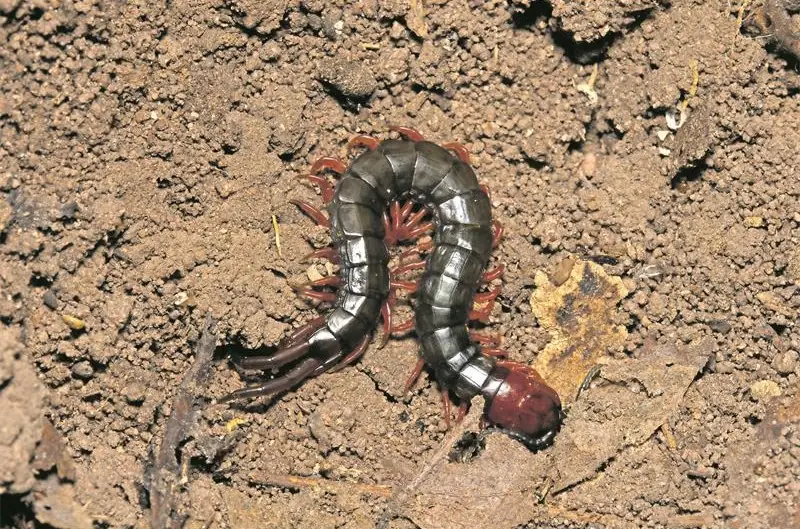
Centipede control in Rosebank is about dealing with damp and the small insects centipedes hunt. We find where they are sheltering, usually in leaf litter, under pots, in drains or in cool basements, treat those areas and the entry points into the house with residual products, and show you what to change so they stop coming indoors.
What draws centipedes into Rosebank homes
Centipedes are hunters. They feed on insects, spiders, slaters and other small creatures, and they need moisture, because they lose water quickly through their bodies. The gardens around Rosebank give them plenty of both: deep leaf litter under old trees, thick mulch in the beds, rockeries and stone walls, compost heaps and dense groundcover that rarely dries out completely.
Older houses in Norwood, Parkhurst and Houghton often have the indoor equivalent: bathrooms with ageing grout, basements and cellars, subfloor voids under timber floors, and air bricks at ground level that let crawling creatures straight in. When summer rain soaks the garden, or a dry spell sends them looking for moisture, centipedes come indoors and turn up in the bath, the shower, the laundry or the basement.
Which centipede have you found?
Large garden centipedes
Long, flattened, with one pair of legs per body segment and a pair of venom claws behind the head. Some grow surprisingly large and can be orange, brown or blue-green. They are fast, prefer to run, and can give a painful bite if handled. In children or anyone sensitive, a bite deserves medical advice.
House centipedes
Smaller, with very long, fine legs and a fast, darting movement. They hunt other insects indoors, especially in bathrooms and basements, and are more alarming to look at than they are harmful.
Not a centipede
Millipedes are rounder, slower and have two pairs of legs per segment. They eat decaying plant matter rather than insects and curl up when touched. If what you have is slow and curls into a spiral, see our page on millipedes in Rosebank gardens.
How we treat centipedes
- Inspection. We look at the garden edges, rockeries, pots and mulched beds against the house, check drains, basements and subfloor voids, and find the entry points.
- Perimeter and harbourage treatment. We apply an odourless, non-staining residual treatment around the outside of the house, into wall cracks, along the base of walls and around drains and air bricks.
- Indoor spots. Bathrooms, laundries, basements and storerooms get a targeted crack-and-crevice treatment where centipedes hide.
- Reduce the prey. If the house has plenty of other insects, spiders or slaters, we deal with those too, because centipedes follow their food.
You do not need to leave home. Keep children and pets away from treated areas until they are dry.
When centipedes are most noticeable
Most of our centipede calls around Rosebank come in two waves. The first follows the early summer storms, when water fills the leaf litter and soil and pushes centipedes up and out, often straight into a garage or laundry. The second comes in late summer and early autumn, when warm nights keep insects plentiful and centipedes are at their most active as hunters. In the cold, dry winter they go quiet and shelter deeper, which is a good time to clear mulch and seal gaps before the next season.
The most common mistake
Treating the house while leaving thick mulch and leaf litter piled against the walls. As long as there is a damp, insect-rich strip touching the foundation, centipedes will keep coming in. Pulling the mulch back and letting that strip dry out makes the treatment last far longer.
A local tip
Check the gratings over floor drains in old bathrooms and outside laundries. Many are missing, broken or rusted through in older Rosebank homes, and centipedes use the drain as a damp, sheltered road straight into the house. A new grating costs very little.
Basements and cellars
A number of the older homes and blocks around Rosebank have cellars, basement garages or storerooms below ground level. These stay cool and damp all year and often collect cardboard, old furniture and garden tools, which is perfect centipede shelter. Improving ventilation, clearing the floor and storing items on shelves rather than against the walls makes a basement far less attractive, and lets a treatment reach the cracks where centipedes hide.
What centipede control costs, and why
The cost depends on the size of the house and garden, whether basements or subfloor voids need treating, and whether other insects need treating at the same time. A flat with the occasional centipede in the bathroom is a simple job; a large old home with a cellar and heavily mulched beds takes longer. Our pest control guide prices show the starting point. If you see one centipede after a storm and nothing more, clearing the mulch and fixing a drain cover may well be enough.
More nearby
Older Norwood homes are covered on our Norwood pest control page. In Sandton's leafy suburbs we handle centipedes in Sandton homes, and across the city through centipede control in Johannesburg. For the full list of local services, see our Rosebank pest control page.
Combat Pest Control is SAPCA registered and registered with the Department of Agriculture, with 25 years of experience in pest control. We offer service within 24 hours and give a 3-month guarantee on the treatment. Call 084 200 2700, or WhatsApp us a photo of what you found.
Questions we get asked
How much does centipede control cost?
It depends on the size of the house and garden, whether a basement or subfloor void is involved and whether other insects need treating too. A flat is a small job; a large old home costs more.
Are centipedes dangerous?
Most are not dangerous, but large garden centipedes can give a painful bite if handled. Children, older people and anyone who reacts badly should get medical advice after a bite.
Why do I keep finding centipedes in the bath?
They come up through drains or in from damp walls looking for moisture and prey, then cannot climb the smooth sides. Drain covers and treating the bathroom usually solve it.
Is the treatment safe for my cats and dogs?
Yes, once dry. Keep pets off treated areas until then.
Do centipedes mean I have other insects?
Often, yes. Centipedes hunt insects, spiders and slaters, so plenty of centipedes usually means plenty of prey nearby.
What can I do to keep them out?
Pull mulch and leaf litter back from the walls, fix leaks and damp spots, cover floor drains and seal gaps under outside doors.