
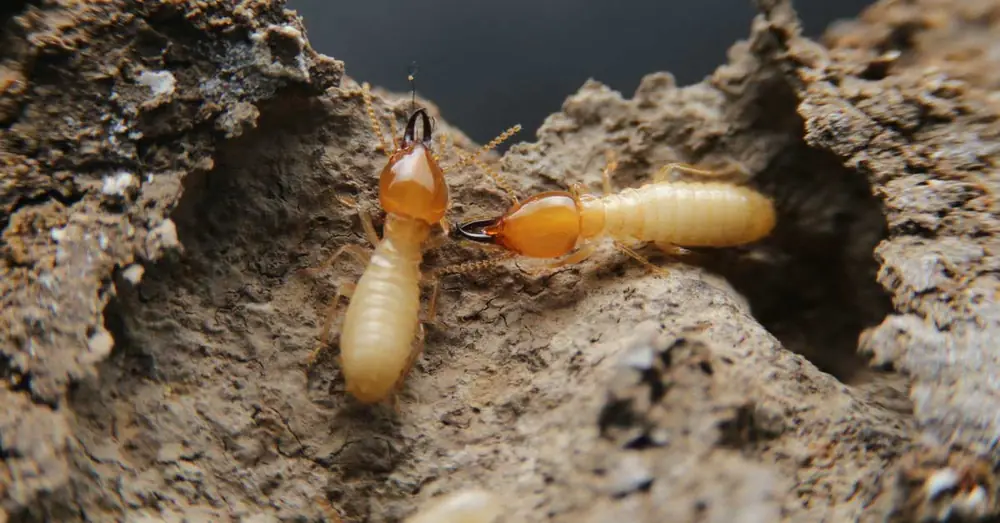
Termite control in Rosebank is mostly about protecting old timber: suspended floors, skirting boards, roof structures and built-in cupboards in homes that have stood for generations. We inspect to confirm whether you have subterranean termites in the building or harvester termites in the lawn, then treat the colony with registered soil treatments or baiting.
Why the suburbs around Rosebank attract termites
Rosebank sits among some of Johannesburg's earliest residential suburbs. Parktown, Saxonwold, Houghton, Parkhurst and Melrose were largely built when houses had raised timber floors over a ventilated void, timber door and window frames and pine roof structures, and much of that original timber is still in place. Subterranean termites live in the soil and need a sheltered route to their food. A raised floor over bare earth, with air bricks at ground level and a flowerbed against the wall, gives them exactly that.
The gardens add to it. The area's huge old trees shed branches year after year, and when one is felled the stump and roots usually stay in the ground. A colony can feed on a buried stump for years before it reaches the house. Generous mulching, compost and fallen leaves keep the topsoil cool and damp well into the dry season.
Then there is the Highveld weather. Afternoon thunderstorms from October to March soak the ground, and the first heavy storm of the season is usually followed by a flight of winged termites on a warm, still evening. In winter the surface dries out, but deep Highveld soils hold moisture lower down, so colonies keep working all year.
Signs of termites in a Rosebank home
- Mud tubes on foundation walls, in the void under a timber floor, up the back of a built-in cupboard or along a garage wall.
- Floorboards that give underfoot or sound hollow, especially near outside walls and bathrooms.
- Soil packed into cracks in skirting boards, door frames or plaster, sometimes still damp.
- Swarmers indoors after a summer storm, or little drifts of shed wings on windowsills.
- Lawn damage in winter: bare patches, small open holes and short cut grass stalks, which point to harvester termites rather than a threat to the house.
Those winged swarmers are often mistaken for flying ants. Termites have straight antennae, a thick waist and four wings of equal length; ants have elbowed antennae and a pinched waist. If in doubt, a photo on WhatsApp is enough for us to tell you.
Termites or wood borer?
Old floors in this area often suffer from both, and they are treated in completely different ways. Wood borer beetles leave neat round exit holes and fine powder; termites leave mud and hollowed-out timber, often with the painted surface still intact. We confirm which it is before quoting. If it turns out to be beetles, our wood borer treatment in Rosebank explains what happens next.
Where we find termites in these older properties
- The void under suspended timber floors, where a colony can work unseen for years.
- Garden cottages, outbuildings and garages with timber frames set close to the soil.
- Extensions added over the decades, where a newer slab meets an old foundation and leaves a crack.
- Pergolas, decks, timber edging and old sleepers used as retaining walls.
- Basement storerooms in office buildings and blocks of flats, where archive boxes and timber shopfittings stand against walls.
How we treat termites in Rosebank
- Inspection and mapping. We go under the floor where there is access, into the roof space and around every outside wall and outbuilding, tracing mud tubes back to where they leave the soil.
- Choosing the method. For most houses, a registered soil treatment applied around and under the structure creates a treated zone the termites cannot cross without picking up the product. Where heritage paving, parquet or a tight site make drilling and trenching impractical, baiting is often the better option.
- Harvester termites. In lawns we treat the active nest openings so foraging workers carry the product down to the colony, then advise on bringing the grass back.
- Follow-up and certificate. We check that activity has stopped and issue a treatment certificate with our 5-year termite guarantee.
You do not need to move out. Keep children and pets away from treated soil until it has dried, and we will show you exactly where that is.
Renovating, extending or selling
Renovations are common in these suburbs, and they are when termite protection most often gets broken. New paving, a pool or an extension laid over untreated soil creates a bridge straight into the old house. If you are building, a soil pre-treatment before the slab is cast costs far less than treating later. If you are selling, many buyers and banks ask for a termite certificate before transfer; we inspect and issue one when there is no active infestation.
The mistake we see most
Someone lifts a damaged floorboard, finds termites and pours garden insecticide into the gap. The workers it reaches die, the colony in the soil carries on, and activity moves to a different board, often one you cannot see. Disturbing the tubes also makes the activity harder for us to trace. If you find termites, leave the area as it is and call us.
A tip for Rosebank gardens
Keep the air bricks under your floor clear, with the soil level well below them. Over the years many flowerbeds in these suburbs have been built up until soil and mulch sit against or above the vents, which keeps the underfloor damp and gives termites a hidden way in. Dropping the bed and leaving a strip of gravel against the wall helps a great deal.
What termite control in Rosebank costs, and why
The price comes from the job, not the postcode. The main factors are which termite it is, the length of the building's perimeter, whether we must drill through paving, slabs or an old verandah, how much timber is affected, and whether baiting suits the property better than soil treatment. A harvester termite treatment in a lawn is a modest job; a large heritage home with outbuildings is a much bigger one. Our termite price guide shows the starting point, and you get a written quote after the inspection.
Nearby and across the city
Many of the largest old properties we treat are covered on our Saxonwold pest control page, and further west there are termite treatments in Northcliff. For the bigger picture, see termite control across Johannesburg, and for every other pest in the area, our Rosebank pest control overview.
Jason van Heerden has spent 25 years dealing with Johannesburg termites, and Combat Pest Control is SAPCA registered and registered with the Department of Agriculture. We offer service within 24 hours, and every termite treatment comes with a certificate and a 5-year guarantee. Call 084 200 2700, or WhatsApp us a photo of the mud tubes or damage before you touch anything.

Questions we get asked
How much does termite treatment cost for an older house in Rosebank?
It depends on the perimeter, the paving or slab we need to drill through, how much timber is affected and whether baiting suits the house better. Our price guide shows the starting point, and we quote in writing after the inspection.
Will you need to lift our timber floors?
Usually not. We inspect through access hatches and air bricks where we can and only lift or drill where the activity makes it necessary, and we discuss that with you first.
Can you treat termites without damaging heritage paving or parquet?
Often, yes. Where drilling would mark old paving or floors, baiting is a good alternative, and where drilling is needed we keep the holes small and seal them afterwards.
Are flying termites after a storm a sign my house is infested?
Not always. A swarm in the garden is normal after the first summer rains. Swarmers coming out of a wall, floor or door frame inside the house do mean a colony is using the building.
What does the 5-year termite guarantee cover?
It covers the treated property for five years, and you get a treatment certificate. Building work, new paving or raised flowerbeds can break the treated zone, so tell us before you renovate.
Will the treatment harm my old trees or vegetable beds?
No, when it is applied correctly. The treatment goes into a defined zone around the building, and we plan around vegetable beds and keep away from tree roots that do not need treating.
Can we stay in the house during a termite treatment?
Yes. The work happens in the soil and at specific points around the structure, so you can carry on as normal. Keep pets and children off treated soil until it is dry.