
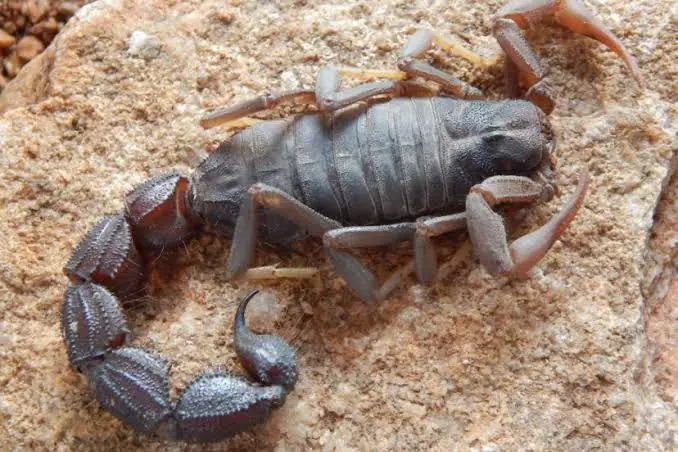
Scorpion control in Rosebank focuses on the rocky ground scorpions live in: the ridges of Westcliff and Parktown, rockeries, stone retaining walls and wood piles. We identify the species, treat their hiding places and the routes into the house with residual products, and show you how to make the garden less inviting.
Why scorpions turn up here
Much of the Rosebank area is flat and built up, but the ridges to the west and south are a different story. Westcliff and parts of Parktown sit on steep, rocky ground with natural outcrops, terraced gardens and stone retaining walls, much of it decades old and full of cracks. Scorpions shelter under rocks and in crevices by day and hunt insects at night. Gardens nearby with rockeries, stacked firewood, paving laid over rubble and old bricks piled behind the garage offer the same conditions on a smaller scale.
They are most active in the warm months. After summer rain floods their burrows, and on hot nights when insects are plentiful, scorpions wander further and end up indoors, often in bathrooms, under doors and in shoes left outside.
Which scorpion is it?
The simple rule used across South Africa holds well here: look at the pincers and the tail.
- Big pincers, thin tail: these scorpions rely on their claws to catch prey. A sting is painful but generally of low medical concern. The burrowing scorpions common in Highveld gardens mostly fall into this group.
- Small pincers, thick tail: these rely on venom and should be treated with more respect. A sting from one of these needs medical attention, particularly for children and older people.
If you can, photograph the scorpion or trap it under a glass. Knowing what it is tells us what we are dealing with and helps a doctor if someone has been stung.
Where we find them
- Under loose rocks, stepping stones and the edges of rockeries.
- In cracks in old stone and brick retaining walls.
- Inside stacked firewood, bricks, roof tiles and building rubble.
- Under pot plants, doormats and garden furniture cushions.
- Indoors: under doors with a gap, in drains, in bathrooms and in shoes or clothes on the floor.
How we treat scorpions
We start with a walk around the property at ground level, lifting what can be lifted, checking walls and finding how scorpions are getting inside. Then we apply odourless, non-staining residual treatments to rockeries, wall cracks, the base of retaining walls and the outside perimeter of the house, and treat entry points such as door thresholds, gaps under garage doors and drain outlets. Scorpions are tougher than most insects, so the treatment targets the places they hide and walk, rather than a general spray. Larger ridge properties may need a follow-up visit in mid-summer.
You can stay at home. Keep children and pets off treated areas until they have dried.
What people get wrong
Expecting the treatment to make the garden scorpion-free forever while the woodpile still leans against the house. On a rocky ridge there will always be scorpions somewhere in the landscape; the aim is to keep them out of the house and away from where people walk barefoot. Clearing the clutter they use is half the job.
A tip for ridge gardens
Fit brush strips to the bottom of outside doors, especially doors that open onto a rockery or terrace, and keep shoes and towels off the floor in summer. Most indoor scorpion encounters in Westcliff and Parktown homes start with a gap under a door and end in a shoe.
If someone is stung
Keep calm, keep the person still and cool the sting with a cold compress. Seek medical help straight away for children, older people or anyone stung by a thick-tailed scorpion, or if there is numbness, difficulty breathing or muscle twitching. Take a photo of the scorpion with you if you can.
What scorpion control costs, and why
The cost depends on the size of the garden, how much rockery, stone wall and terracing needs treating, and how many entry points the house has. A level suburban stand with a small rockery is a quick job; a terraced ridge property with long stone walls takes considerably longer and may need a follow-up. Our pest control price guide gives the starting figure. If you have found one scorpion in two years, clearing the woodpile and fitting a door seal may be all you need.
More nearby
Scorpion country is spider country too; see our Rosebank spider control page. Westcliff homes are covered in more detail on the Westcliff pest control page. South of the city, gardens near the Klipriviersberg see plenty of scorpions, covered by our scorpion control in Johannesburg South. For the whole city, see scorpion control in Johannesburg, and for other local pests, our Rosebank pest control page.
Combat Pest Control is SAPCA registered and registered with the Department of Agriculture, with 25 years of experience under Jason van Heerden. We offer service within 24 hours, and scorpion treatments carry a 3-month guarantee. Call 084 200 2700, or WhatsApp us a photo of the scorpion.
Questions we get asked
How much does scorpion control cost?
It depends on the size of the garden, the amount of rockery and stone wall and the number of entry points. A flat suburban stand costs much less than a terraced ridge property; we quote after looking.
Are the scorpions in Johannesburg dangerous?
Most garden scorpions here have big pincers and thin tails and give a painful but generally low-risk sting. Thick-tailed scorpions with small pincers are more venomous and need medical attention after a sting.
How do scorpions get into the house?
Mostly under doors, through gaps under garage doors and up through drains. Brush strips on doors and drain covers make a big difference.
Will one treatment get rid of all the scorpions?
On a rocky property, no treatment removes every scorpion from the landscape. It keeps them away from the house and living areas, and carries a 3-month guarantee.
Is the treatment safe for my dogs?
Yes, once it has dried. Keep pets off treated areas until then.
What should I do before you arrive?
Move firewood, bricks and rubble away from the walls if you can, note where you have seen scorpions, and keep a photo of any you have caught.