
To get rid of bed bugs, confirm it really is bed bugs, contain them in one room, heat-treat bedding and clothes, then have the bed, furniture and cracks treated, with a follow-up for the eggs. This guide on how to get rid of bed bugs explains each step and the mistakes that spread them.
First, make sure it's bed bugs
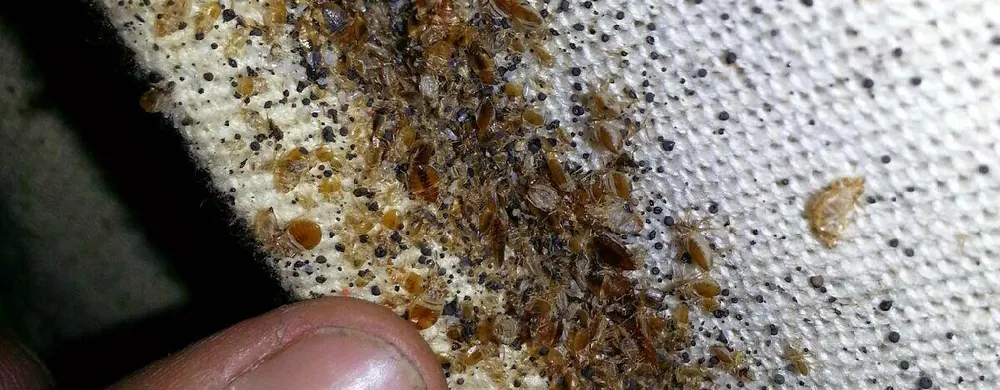
Bites alone don't prove anything; fleas, mosquitoes and bird mites all bite at night too. Look for the bugs themselves and their traces:
- Adults: flat, oval, reddish-brown insects about the size of an apple pip, swelling and darkening after feeding.
- Droppings: small black spots, like a felt-tip pen dot, along mattress seams, on the bed frame and behind the headboard.
- Shed skins and eggs: pale, papery skins and tiny white eggs in seams and joints.
- Blood spots on sheets and pillowcases.
- A sweetish, musty smell in heavy infestations.
Check with a torch along the piping of the mattress, under the corners, in the joints of the bed base, behind the headboard, inside bedside drawers and along the skirting board behind the bed. If you find specks on walls rather than in the bed, and birds have been nesting in your roof, read our guide to bird mites instead.
How bed bugs got in
Bed bugs aren't a sign of a dirty home. They hitch rides in luggage, handbags, second-hand furniture, bedding from a guest room, or on the clothes of a visitor. Travel, students coming home from residences, and buying a used bed or couch are the common stories. Once inside, they stay close to where people sleep or sit for long periods, because they feed on blood while you're still.
Step 1: contain the problem
Don't move to the spare room or the couch. The bugs follow you and you end up with two infested rooms. Keep sleeping in the same bed, and don't carry bedding, cushions or clothes from the affected room through the house unless they're bagged.
Step 2: heat is your friend
- Strip the bed and put sheets, pillowcases, duvet covers and clothes from the room into sealed plastic bags.
- Wash on the hottest cycle the fabric allows, then tumble dry on high heat. Heat kills bed bugs and their eggs; the dryer is more important than the wash.
- Items that can't be washed, like soft toys or shoes, can go through a hot tumble dry cycle on their own.
- Keep the clean items bagged until the room has been treated.
Step 3: vacuum and declutter
Vacuum the mattress seams, bed base, carpets and skirting boards thoroughly, then empty the vacuum into a sealed bag and put it in the outside bin straight away. Clear clutter from under the bed and around the room, because every box and pile is another hiding place.
Step 4: professional treatment
Home methods reduce the numbers. They rarely eliminate bed bugs, because eggs and bugs hidden deep in bed joints, wall cracks and furniture survive. Professional treatment covers the mattress, bed base and frame, headboard, bedside furniture, couches if affected, skirting boards, cracks and electrical plates near the bed. We use products that are odourless and won't stain, and you don't need to move out; just keep children and pets off treated surfaces until dry. A follow-up visit around two weeks later catches the bugs that hatch from eggs after the first treatment. That second visit isn't optional if you want them gone. Our bed bug treatment in Johannesburg page explains the service in detail.
Do you need to throw out the mattress?
Usually not. Most mattresses can be treated and then fitted with a zipped mattress encasement that traps any remaining bugs inside and gives them nowhere to hide. Throwing a mattress out, especially carrying it through the house, can spread bugs on the way, and a new mattress in an untreated room soon becomes infested too.
The mistakes that spread bed bugs
- Foggers and bug bombs scatter bed bugs into walls, plug points and neighbouring rooms without reaching the ones in the bed.
- Sleeping elsewhere spreads them to a new room.
- Taking furniture out without bagging it drops bugs and eggs along the way.
- Skipping the follow-up leaves eggs to hatch and start again.
Guesthouses, hostels and complexes
Bed bugs in guesthouses, B&Bs, student accommodation and hostels need quick action and discretion. We treat affected rooms and check adjacent ones, and the follow-up schedule is planned around bookings. In blocks of flats, bed bugs can travel between units through wall voids, so checking neighbouring units is worth it.
What bed bug treatment costs, and why
The cost depends on how many rooms are affected, how much furniture needs treating and how heavy the infestation is. One bedroom caught early is the simplest job. Several bedrooms, couches and a lounge, or a guesthouse with multiple rooms, take longer. Every bed bug job includes a follow-up, which is part of the price. Our bed bug and pest control prices show the guide "from" price, and we confirm the cost after seeing the rooms.
Preparing for treatment
- Wash and tumble-dry all bedding and clothing from the affected rooms and keep it bagged.
- Clear the floor and under the bed, and pull the bed away from the wall.
- Empty bedside drawers into sealed bags.
- Don't use any sprays or foggers beforehand.
Biting at night but not sure it's bed bugs? Our biting insect guide helps compare the culprits.
Combat Pest Control is owned and operated by Jason van Heerden, who has handled bed bug cases across Johannesburg for 25 years. We're SAPCA registered and registered with the Department of Agriculture under Act 36 of 1947, and we offer service within 24 hours, with a 3-month guarantee on the treatment. Call 084 200 2700, or WhatsApp us a photo of what you've found on the mattress.

Questions we get asked
How do I know if I have bed bugs?
Look for small black dots of droppings, shed skins and flat brown insects in mattress seams, bed frames and behind the headboard. Bites alone aren't proof, so check with a torch.
How much does bed bug treatment cost?
It depends on how many rooms and how much furniture are affected. One bedroom caught early costs less than a whole house or a guesthouse. The price includes the follow-up visit, and our price guide shows the starting point.
Can I get rid of bed bugs myself?
You can reduce them by washing and tumble-drying bedding on high heat and vacuuming thoroughly, but eggs and hidden bugs usually survive. Professional treatment and a follow-up are normally needed.
Do I need to throw away my mattress?
Usually not. Most mattresses can be treated and then covered with a zipped encasement. Throwing it out can spread bugs through the house.
Do I need to leave home during treatment?
No. Keep children and pets out of the treated rooms until surfaces are dry, and you can sleep in your own bed that night.
How long does it take to get rid of bed bugs?
Usually two treatments about two weeks apart. Bites should reduce after the first visit, and the follow-up deals with bugs that hatch from eggs.
Where do bed bugs come from?
They travel in luggage, bags, second-hand furniture and clothing. They're found in clean homes and hotels and aren't a sign of poor hygiene.