
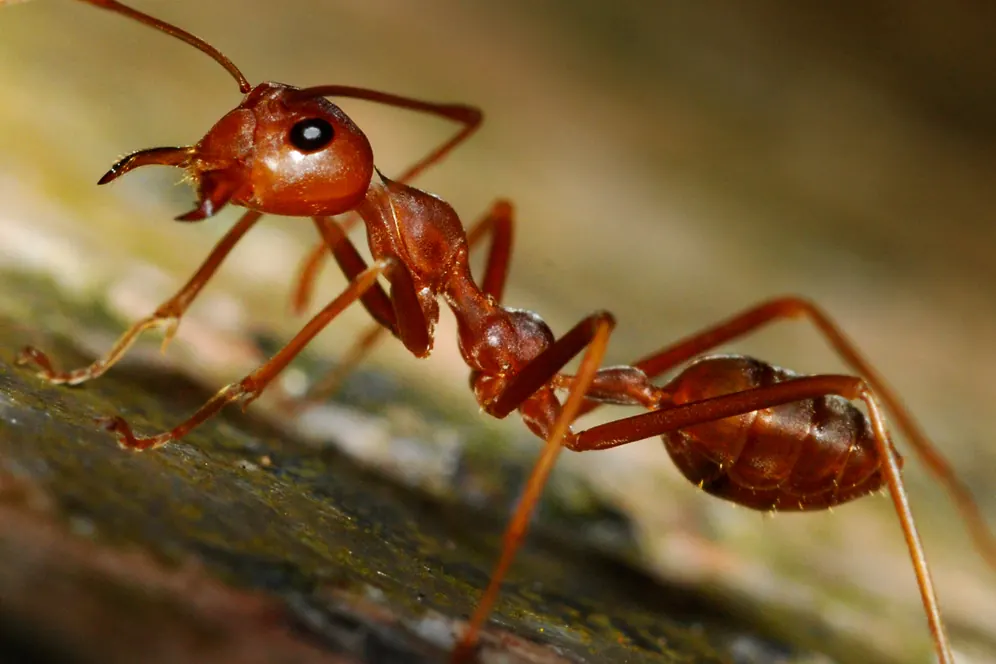
The main signs of ants are trails along skirting boards and counters, small soil heaps in paving joints, fine debris below wall cracks, and winged ants appearing after rain. This article explains what each sign means, how to tell ants from termites, which Johannesburg ants you're likely to see, and how to find the nest instead of chasing the trail.
Trails
An ant trail is a chemical road. Scout ants that find food lay a scent trail back to the nest, and other workers follow it. A trail tells you two things: what they're after and roughly where they're coming from. Follow it with your eye, or with a torch at night, away from the food and towards the point where the ants enter the room. It usually ends at a gap under a skirting board, a crack in the tiles, an electrical plate, the frame of a window or door, or the hole where a pipe comes through the wall.
Trails towards sugar, honey, jam or fruit often mean a sweet-feeding species. Trails towards pet food, meat scraps or greasy dishes point to protein-feeders. Seasonal patterns matter too: ants on the Highveld often move indoors just before and after summer storms, when nests flood, and again in dry spells when they come looking for water.
Soil heaps and mounds
Small piles of fine sand or soil between paving bricks, along the edge of a patio or at the base of a wall show ants excavating a nest underneath. In lawns, crater-like mounds with loose soil are typical of nesting ants. Don't confuse these with harvester termite holes, which have short cut pieces of grass around them, or with the raised ridges and heaps left by moles.
Debris below cracks
Fine dust, soil or tiny wood-like particles piling up below a crack in a wall, a window frame or a skirting board can mean ants are nesting inside the wall void. Some species also nest inside damp timber, roof insulation or electrical boxes, so ants coming out of a plug point aren't as unusual as they sound.
Winged ants
On warm, humid evenings after the first good rains, mature colonies release winged males and queens to mate and start new nests. A few inside the house may have flown in through a window. A steady stream from one spot inside, like a skirting board or a crack in the floor, means a colony is nesting there.
Flying ants or flying termites?
This is the single most important distinction. Look closely:
- Waist: ants have a pinched, narrow waist; termites have a straight, thick body.
- Antennae: ants' antennae are bent, like an elbow; termites' are straight and beaded.
- Wings: ants have larger front wings than back wings; termites have four wings of equal length that break off easily, leaving piles of wings on windowsills.
If what you're looking at is termites, especially coming from inside, read our guide to termites and book an inspection.
The ants you're likely to meet in Johannesburg
Brown house ants are small, light to dark brown, and form huge colonies that nest under paving, in garden beds and inside walls. They're the ones behind most trails into kitchens. Pugnacious ants are larger, quick and aggressive, nest in lawns and sunny soil, and will bite if disturbed. The bigger black sugar ants tend to forage at night and nest in dead wood, wall cavities and old timber. Each nests in different places and takes bait differently, which is why identifying them helps.
Finding the nest
- Put a small amount of honey on a piece of card where you've seen ants, and wait half an hour.
- Follow the workers carrying food away. They'll lead you to the entry point.
- Check the outside of the wall at that point for soil, paving heaps or a crack.
- Note whether there's more than one trail; large colonies often have several entry points.
The mistake that makes ants worse
Spraying the trail. It kills the workers you can see, but the colony simply sends more, and some species respond to stress by splitting into several new colonies. Wiping a trail with vinegar or soapy water to remove the scent is fine as a short-term fix. Killing the colony requires bait that workers carry back to the queen.
What to do about it
For a small, new trail, a store-bought ant bait placed on the trail, left alone and kept away from children and pets, can be enough. Keep food sealed and wipe sticky spills. If ants keep coming back, are nesting inside walls or electrical boxes, or there are trails in several rooms, professional treatment is quicker. We use ant baits placed directly on the active trails, so workers carry them back to the nest, combined with targeted treatments around entry points and the outside of the house where needed. Our ant control in Johannesburg page explains the service, and the ant control guide goes deeper into how colonies work.
What ant treatment costs, and why
Cost depends on the size of the property, the number of nests and trails, and whether the ants are nesting inside the structure. One kitchen with a single trail is a small job. A house with ants in walls and paving all round, or a complex with ants moving between units, takes longer. Our ant and pest control prices show the guide "from" figure, and if a supermarket bait will solve it, we'll tell you.
A tip for Highveld homes
Watch the weather. If ants have invaded once before a storm, they'll probably do it again. Seal gaps along the kitchen skirting and around pipe entries during the dry winter months, before the rains bring them in. In suburbs with plenty of paving and old gardens, like those on our ants in Randburg homes page, that preparation saves a lot of summer frustration.
Combat Pest Control is owned and operated by Jason van Heerden, with 25 years in pest control behind him. We're SAPCA registered and registered with the Department of Agriculture under Act 36, offer service within 24 hours, and ant treatments come with a 3-month guarantee. Not sure what kind of ant you've got? Call 084 200 2700, or WhatsApp us a close-up photo.

Questions we get asked
What are the first signs of an ant problem?
A trail of ants along a skirting board or counter, often towards food or water, and small heaps of soil between paving bricks near the house.
How much does ant treatment cost?
It depends on the size of the property, the number of nests and whether ants are inside the walls. A single kitchen trail is a small job. Our price guide shows the starting price.
How can I tell flying ants from flying termites?
Ants have a pinched waist, bent antennae and front wings bigger than the back ones. Termites have a straight body, straight antennae and four equal wings that drop off easily.
Why do ants come inside before it rains?
Rain floods their nests, so colonies move to higher, drier places, which often means your kitchen. They also come in during dry spells looking for water.
Is ant bait safe for my children and pets?
Professional ant bait is placed in small amounts on trails and out of reach. Keep children and pets away from it, and from any treated surfaces until dry.
How long does it take for ant bait to work?
Trails usually reduce within a few days as workers carry bait back to the nest. Larger colonies can take a week or two.
Should I spray the ants I can see?
No. Spraying kills only the visible workers and can cause the colony to split. Leave the trail for the bait to work.