
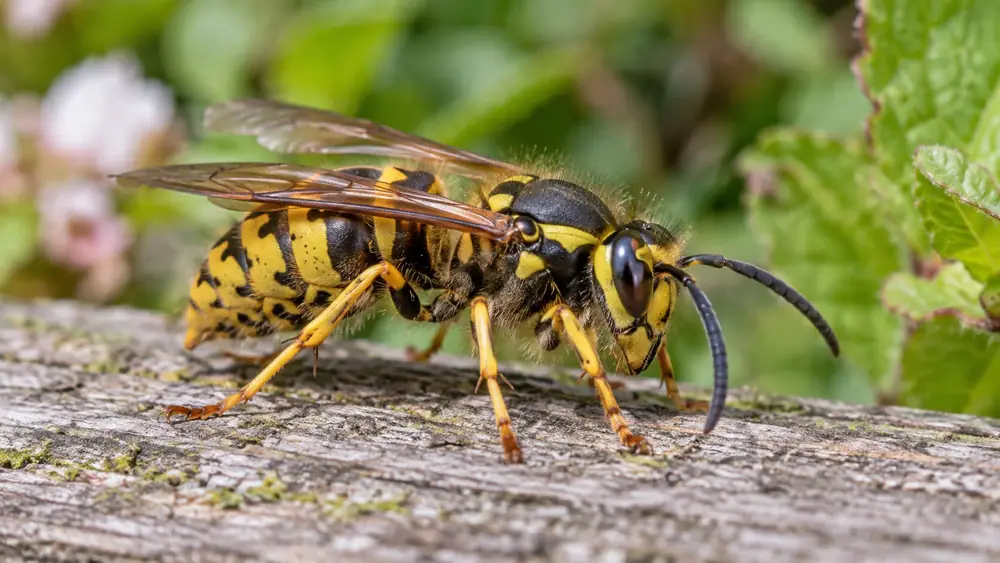
Wasp control in Northcliff means finding and destroying the nests, not swatting the wasps. Paper wasps build under eaves, pergolas, balconies and window frames, often high on the downhill side of split-level homes. We locate every nest, treat it with a registered product, remove it once the wasps are dead, and treat the surrounding surfaces to discourage rebuilding.
Why wasps are a ridge problem
Paper wasps like sheltered, sunny spots with a bit of height, which describes the eaves of many Northcliff homes perfectly. Houses built down the slope often have one side that's two or three storeys high, with overhangs, timber pergolas and balconies facing the view. Nests up there grow unnoticed for weeks, because nobody looks up at the eaves from the bottom of a steep garden.
The gardens give them everything else. Wasps hunt caterpillars and other insects in the shrubs and trees, collect water from pools, birdbaths and ponds, and chew wood fibres from fences and old timber to build their nests. Activity starts in spring, peaks through the hot summer months and dies back as nights cool in autumn.
The wasps we deal with here
Paper wasps
Slender, long-legged wasps, usually yellow-brown or reddish with darker markings, that build open, umbrella-shaped grey nests with visible cells hanging from a short stalk. They're the main stinging wasp around homes. A nest starts small in spring and can hold many wasps by late summer. They defend it aggressively if disturbed, and stings are painful.
Mud daubers and potter wasps
These build small mud cells or tubes on walls, under eaves and inside garages, and stock them with paralysed spiders or caterpillars for their young. They're solitary and seldom sting unless handled. Most people want the mud nests removed for looks rather than safety.
Where we find nests
- Under eaves and fascia boards, especially on the high, sunny side of the house
- Inside timber pergolas, carports and under balcony floors
- Behind shutters and in the frames of large windows
- In dense hedges and creepers along boundary walls
- Under the lids of pool equipment boxes and meter boxes
- Inside unused braai areas, outdoor lights and roof gutters
How we deal with wasp nests
- Find every nest. We walk the property and check the eaves, pergolas, hedges and outbuildings, because there's rarely just one.
- Treat the nest. We apply a registered product directly into the nest, usually in the early morning or late afternoon when most wasps are home and less active.
- Remove it. Once the wasps are dead, we take the nest down so it isn't reused and doesn't attract new queens.
- Treat the area. A residual treatment on the surfaces around nesting sites discourages wasps from rebuilding in the same spot.
On high eaves we bring the right access equipment, and we'll tell you if a nest needs extra time because of its height.
The mistake: knocking it down with a broom
Hitting a paper wasp nest with a broom or a hose is the fastest way to get stung several times, and the wasps usually rebuild nearby within days. On a ladder, on a slope, it's genuinely dangerous: people fall more often than they get badly stung. If the nest is above head height, leave it to us.
Safety around stings
Most wasp stings cause pain and swelling that settles within a day or two. Anyone who has a strong reaction, such as swelling of the face or throat, difficulty breathing, dizziness or a spreading rash, needs urgent medical help. If someone in your home is allergic, tell us when you book so we can plan the treatment around that.
A Northcliff tip
In early spring, when the first queens start building, walk around the house and look up under the eaves on the sunny side with binoculars or the zoom on your phone. A nest the size of a coin is easy to deal with. The same nest in February can be the size of a dinner plate.
What wasp control costs, and why
The cost depends mostly on the number of nests, how high and hard to reach they are, and whether a follow-up visit is needed. One low nest on a pergola is a quick job; several nests on the high eaves of a split-level house take more time and equipment. You can check the starting price on our pest control prices list. A tiny new nest at shoulder height can sometimes be handled with a shop-bought wasp spray at dusk, with long sleeves and a clear escape route.
If what you're seeing is a swarm or a nest of honeybees rather than wasps, see bee control in Northcliff, because we handle bees differently. For more on wasps across the city, read wasp control in Johannesburg, and for the leafy suburbs east of here, our Rosebank wasp control page. The older homes of Sophiatown nearby have their own page, and everything we do locally is on our Northcliff pest control page.
Jason van Heerden owns and runs Combat Pest Control, with 25 years of experience. We're SAPCA registered and registered with the Department of Agriculture under Act 36, we offer service within 24 hours, and wasp treatments carry a 3-month guarantee. Call 084 200 2700, or zoom in on the nest with your phone and WhatsApp us the photo.
Questions we get asked
Will the wasps come back after you remove the nest?
Not to the same nest, because we treat it and take it down. New queens can build elsewhere on the house, which is why we treat the surrounding surfaces and check for other nests.
How much does wasp nest removal cost?
It depends on how many nests there are and how high and hard to reach they are. Our price guide shows the starting price.
When is the best time to treat a wasp nest?
Early morning or late afternoon, when most wasps are on the nest and less active. That's when we usually schedule the treatment.
Are wasps the same as bees?
No. Wasps are slender and smooth, build paper or mud nests and hunt insects. Honeybees are hairier, build wax comb and collect pollen. We deal with them differently.
Is it safe for my children and pets during treatment?
Yes. Keep them indoors while we treat the nest, and away from treated surfaces until they're dry.
What should I do if I'm stung?
Wash the sting, use a cold compress and watch for a strong reaction. Swelling of the face or throat, breathing difficulty or dizziness needs urgent medical help.