
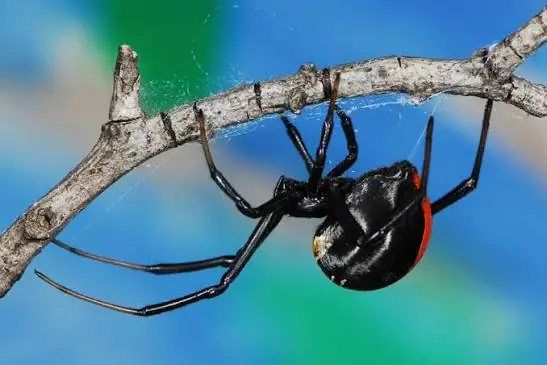
Spider control in Johannesburg starts with knowing which spiders you're dealing with. Most are harmless and useful, but button, violin and sac spiders deserve respect. We identify what's living around your home, treat eaves, windows, garages and outbuildings where they shelter, and reduce the insects that draw them in.
The spiders that matter
Button spiders
The brown button spider is very common in Johannesburg gardens. It's small, brown to grey with a distinctive orange hourglass underneath, and builds untidy webs under garden furniture, in pot plant holders, under window sills and in meter boxes. Its round egg sacs have small spikes, which makes them easy to recognise. The black button spider is less common in suburbs and prefers undisturbed spots such as rubble, rockeries and wood piles. Both have a neurotoxic venom; bites are uncommon but need medical attention.
Violin spiders
Violin spiders are slender, long-legged and light brown, with a darker violin-shaped mark on the front of the body. They hide in dark, undisturbed places: behind cupboards, in garages, roof spaces, piles of clothes and boxes. Their bite is often painless at first and can cause a slow-healing wound, so a bite that worsens over days should be seen by a doctor.
Sac spiders
Pale, yellowish or cream spiders that hunt at night and shelter by day in silk sacs in folds of curtains, behind pictures and in corners of the ceiling. They're one of the most common causes of spider bites in South African homes, often at night when a sleeping person rolls over on one. Most bites heal well but can be red and sore for days.
The harmless majority
Rain spiders, the big, flat, brown hunters that walk into homes before storms, look alarming but are not considered dangerous and rarely bite. Daddy longlegs, jumping spiders, garden orb weavers and wall spiders all eat insects and do far more good than harm. Baboon spiders in ridge and veld gardens are best left alone.
Why spiders are common here
Johannesburg's ridges, rockeries and big gardens give spiders plenty of shelter, and the summer insect boom gives them food. Homes on rocky slopes, such as around Northcliff Ridge and the ridges near Roodepoort, see more spiders, and so do estates bordering veld in Fourways. Outside lights that attract moths and flies at night become a feeding station, and the spiders follow the food into the house.
How we treat spiders
- Identification. We look at the spiders, webs and egg sacs to see which species are present and where they're concentrated.
- Perimeter and eaves treatment. We apply odourless, non-staining residual treatments around eaves, window and door frames, gutters, outside walls and other places spiders build webs and enter.
- Garages, roofs and outbuildings. Dark, undisturbed spaces where violin and button spiders shelter are treated carefully, including storage areas and meter boxes.
- Web and egg sac removal. Button spider egg sacs are removed so the next generation doesn't hatch.
- Insect reduction advice. Fewer insects means fewer spiders, so we talk about lighting and the other pests drawing them in.
Normal treatment doesn't require you to leave home. Keep children and pets off treated surfaces until they've dried.
Businesses, schools and complexes
Spiders matter more where lots of people, and especially children, share a building. Schools, crèches, office parks and complexes with shared garages and storerooms benefit from regular treatment of eaves, playground equipment, storerooms and the undersides of benches and tables, where button spiders like to build. We can schedule visits through the warmer months and keep a record of what was treated.
What people get wrong
Blaming every red mark on a spider. Many "spider bites" are actually flea or mosquito bites, an infected scratch or a skin reaction. On the other side, people often ignore button spiders under the garden chairs because they're small, and that's where children's hands go. Check under outdoor furniture, swings and toy boxes before summer, and remove any webs and spiky egg sacs you find, wearing gloves.
Prevention
- Switch outside lights to yellow bulbs or motion sensors, so fewer insects gather at night.
- Shake out shoes, gloves and clothes left in the garage or on the floor.
- Store garage and roof items in sealed plastic boxes rather than cardboard.
- Keep beds and couches a little away from walls and curtains off the floor.
- Clear rubble, wood piles and dense creepers from right against the house.
What spider control costs, and why
The price depends on the size of the house, how many outbuildings and garages need treatment, how much perimeter and eaves there is to cover, and whether the roof space is included. A townhouse is a fairly modest job; a large property on a ridge with outbuildings costs more. Our pest control rates show a guide "from" price for spider treatments. If you see the occasional rain spider, simply catch it under a glass and put it outside. Our spider guide has more on identification, and if you're finding scorpions too, see scorpion control in Johannesburg.
With spiders a photo really helps, because it tells us straight away whether it's a harmless rain spider or something to take seriously. WhatsApp it to us, or phone 084 200 2700 to book. We offer service within 24 hours and guarantee spider treatments for 3 months, and the business is SAPCA registered, registered with the Department of Agriculture and owned by Jason van Heerden, who has 25 years in pest control.
Questions we get asked
How much does spider control cost?
Spider treatments are priced on the size of the house, the number of garages and outbuildings, and whether the roof space is included. A townhouse is a modest job; a big property costs more. We confirm the price before starting.
Are rain spiders dangerous?
No, they're not considered dangerous. They're big and fast but rarely bite. Catch one under a glass and put it outside.
Which Johannesburg spiders are dangerous?
Button spiders, violin spiders and sac spiders are the ones to take seriously. If someone is bitten by one, or a bite becomes painful or slow to heal, see a doctor.
How long does a spider treatment last?
Our spider treatments carry a 3-month guarantee. Reducing insects around outside lights helps it last longer.
Is the treatment safe for children and pets?
Yes, once dry. Keep children and pets off treated surfaces until they're dry, then carry on as normal.
Will you kill all the spiders in the garden?
No, and we wouldn't want to. We treat the house, eaves, garages and outbuildings, and remove button spider webs and egg sacs from places people touch.
What should I do before you come?
Clear access to the garage, roof hatch and outbuildings, and don't sweep away webs or egg sacs, so we can see what's there.