
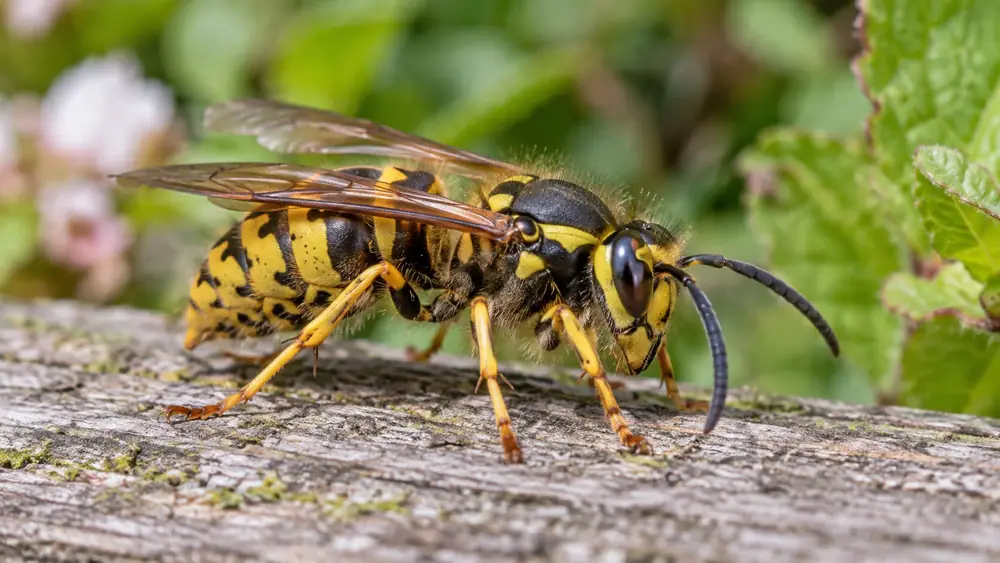
Wasp control in Sandton means treating and removing the nest, not swatting the wasps you see. We locate every nest on the property, treat it so the wasps die inside, then remove it so it can't be rebuilt in the same spot. It's quick, it's targeted, and it's much safer than knocking a nest down yourself.
The wasps you'll meet
Paper wasps
The most common call by far. Paper wasps are slender, with dangling legs in flight, and they build open, umbrella-shaped nests of grey paper with the cells visible from underneath. Nests start small in spring with a single queen, and by late summer they can have dozens of wasps. They're defensive near the nest and will sting if it's disturbed.
Mud daubers
Long, thin-waisted, solitary wasps that build small tubes or lumps of mud on walls, ceilings, inside garages and behind pictures. They rarely sting people and don't defend their nests aggressively. Usually it's a nuisance rather than a risk, but people with allergies understandably want them gone.
Where wasps nest in Sandton
Paper wasps want shelter from rain and a warm, quiet spot. Sandton properties offer them everywhere:
- Under roof eaves and fascia boards, especially on the warm north-facing side
- Inside gate motor housings, intercom boxes and electrical covers
- Under patio umbrellas, pergola beams and lapa roofs
- Inside pool pump covers and filter housings
- Under garden furniture and on the undersides of window sills
- On the balconies and window ledges of office buildings and apartments
Gardens full of flowering plants, water features, pools and large trees supply nectar, water and the caterpillars wasps hunt for their young, which is why mature Sandton gardens see so many nests.
When to call
Wasp nests are smallest and easiest to deal with in spring, when the first queen is building. They grow fast through summer, and late summer is when most people get stung, as nests reach their largest size. If a nest is near a door, a pool, a play area, a gate motor that people touch every day or a window that is opened often, it's worth dealing with promptly, and if anyone in the house is allergic to stings, don't wait.
How we remove wasp nests
- Locate all nests. We walk the property, because where there's one paper wasp nest there are often a few more.
- Treat the nest. A targeted treatment goes directly onto the nest, killing the wasps inside, including those returning later.
- Remove it. Once the activity has stopped, the nest is taken down and the spot treated so other wasps are less likely to rebuild there.
- Advice. We point out the sheltered spots that are likely to attract new nests next season.
Treatment is targeted at the nest, so there's no need to leave home. Keep children and pets indoors while we work and away from the area until it's clear.
The mistake that leads to stings
Knocking the nest down with a broom or a hose. The wasps don't leave; they swarm and attack whoever is nearest, and survivors often rebuild nearby within days. Spraying a nest with a household insecticide from close range has the same effect. If the nest is above head height, inside a gate motor or near a doorway, leave it for us.
A Sandton tip
Check your gate motor cover and intercom box in early spring. In Sandton they're among the most common places we find paper wasp nests, because they're warm, dry and untouched for months, and the first anyone knows of it is a sting while fiddling with the remote on a dead-battery day.
What wasp control costs, and why
The price depends mainly on how many nests there are, how high and how accessible they are, and whether they're inside equipment like a gate motor or pool pump. A single small nest under a low eave is a quick job; several nests high under a double-storey roof take longer. This page shows a guide 'from' price, and the full Johannesburg price guide explains the rest. A tiny spring nest at hand height, with only the queen on it, is something many people deal with themselves with care, and we'll tell you if that's the case.
Wasps or bees?
If the insects are hairy, golden-brown and flying in and out of a hole in a wall, a meter box or a tree, they're probably honeybees, which we handle differently. See bee swarm removal in Sandton for how we deal with those. All our other local services are on the Sandton pest control page, and the Benmore Gardens pest control page covers one of the area's leafy suburbs. Next door, we also handle wasp nests in Rosebank, and the city-wide guide is wasp control across Johannesburg.
Combat Pest Control is SAPCA registered and registered with the Department of Agriculture, with 25 years of experience under owner Jason van Heerden. We offer service within 24 hours, and if wasps rebuild on a treated spot within 3 months, we come back. Call 084 200 2700, or WhatsApp us a photo of the nest and where it is.
Questions we get asked
How much does wasp nest removal cost?
It depends on how many nests there are and how hard they are to reach. A single low nest is quick; several nests under a high roof or inside equipment take longer. We quote over the phone from a photo where possible.
Will the wasps come back after removal?
Not to the same nest. New queens may build elsewhere next spring, especially in sheltered spots. If wasps rebuild on a treated spot within 3 months, we come back.
Is it safe to stay home during treatment?
Yes. The treatment is applied only to the nest. Keep children and pets indoors while we work and away from the spot until it's clear.
Can you remove a nest from my gate motor?
Yes. Gate motors and intercom boxes are common nesting spots. We treat the nest inside, remove it and check the cover closes properly.
When is the best time to remove a wasp nest?
As early as possible, ideally in spring when the nest is small. Nests grow quickly through summer, and late summer is when most stings happen.
What should I do if I'm stung?
Wash the area and use a cold compress. If you have swelling of the face or throat, difficulty breathing or dizziness, get medical help immediately.