
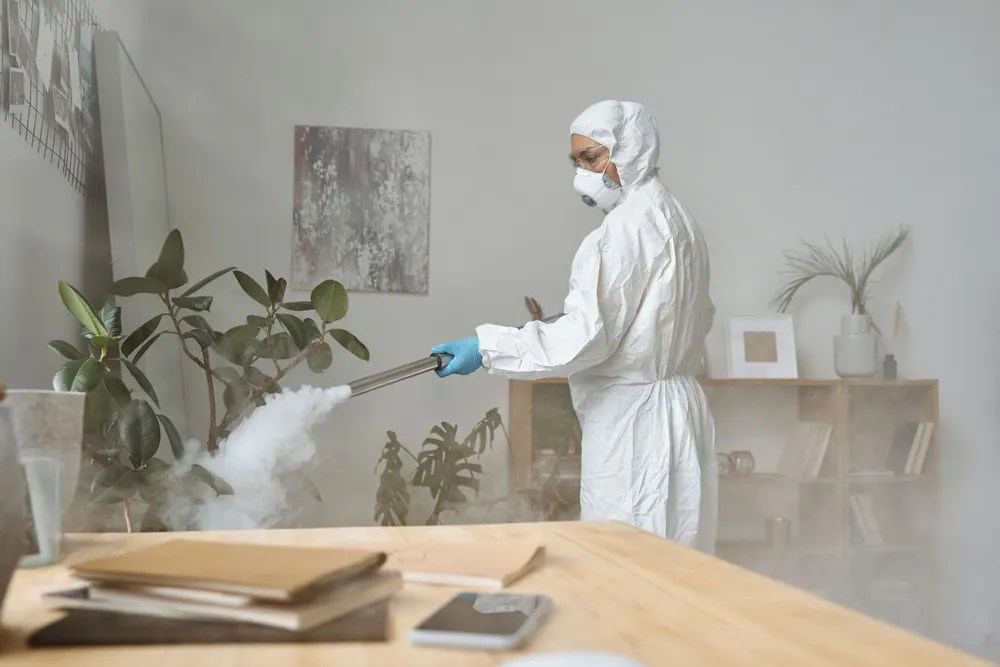
Pest control in Killarney is mostly apartment work. In the older blocks we treat German cockroaches moving between flats, fish moths and carpet beetles in built-in cupboards, mice in basements, and pigeons nesting on balconies, which can bring bird mites indoors. We work with residents and body corporates to treat the source, not just one unit.
Killarney's apartment blocks
Killarney is one of Johannesburg's most densely built residential suburbs, a short stretch of apartment blocks between Houghton, Parktown and Riviera. Many of its buildings date from the 1930s to the 1960s, including a well-known collection of art deco blocks, with parquet floors, built-in timber cupboards, steel windows, balconies and service lanes behind. Killarney Mall serves the neighbourhood, and the residents range from long-term owners to young renters.
Old blocks are solidly built, but they share a lot: plumbing stacks, refuse rooms, electrical ducts, roofs and basements. Pests use all of them. And because many flats have original cupboards, wooden pelmets and fabric-lined storage, Killarney sees more fabric and paper pests than most suburbs.
Cockroaches in older blocks
German cockroaches are the most common complaint. They live in the warm gaps behind stoves and fridges, under sinks and inside cupboard hinges, and travel between flats along the plumbing ducts. When one flat is treated, the survivors simply move next door. A coordinated treatment of the block, using gel baits in hiding places and a targeted treatment of ducts and refuse areas, is what makes a lasting difference.
Fish moths and carpet beetles
Built-in cupboards, bookcases, stored papers and boxes of linen are fish moth territory. Look for silvery, fast-moving insects and small irregular holes in paper or fabric. Carpet beetles are smaller and slower: the larvae are tiny, hairy and brown, and they eat wool carpets, rugs, coats and natural-fibre upholstery. Both need treatment of the storage areas and some changes to how things are stored. Our pages on fish moth control in the Rosebank area and carpet beetles in Johannesburg homes explain each.
Pigeons on balconies, mites indoors
Pigeons nest in balcony corners, on air-conditioning units and in gaps around the roofline. Droppings are unpleasant on their own, but the bigger surprise is bird mites. When chicks leave a nest, the mites look for a new host and wander indoors through windows and gaps, biting at night. Removing the nest, treating the area and fitting netting or spikes solves both problems.
Mice in basements and ground floors
Mice come in through refuse rooms, basement parking and gaps under ground-floor doors, especially in winter. Lockable bait stations in common areas, checked regularly, keep numbers down, while traps deal with any that reach the flats.
Working with body corporates
For a block, we inspect common areas and a sample of units, then plan a treatment of every unit with a follow-up for cockroaches. Scheduled monitoring of refuse rooms and basements, with a written record each time, keeps things in check afterwards. Residents get simple preparation notes, and normal treatments don't require anyone to move out; pets and children only need to keep clear of treated spots until they're dry.
Preparing your flat
For cockroaches, we need clear access to the kitchen cupboards, the space under the sink and the area behind the stove and fridge, but you don't need to empty the whole kitchen. For fish moths and carpet beetles, empty the affected cupboards and wardrobes, vacuum them out and leave the doors open. If you've seen pigeons nesting, tell us which balcony or window so we can check the roofline above it.
What residents often get wrong
Using mothballs or a spray on the cupboard and assuming the job is done. Fish moths and carpet beetle larvae live deep in folds, seams and dark corners, and they come back as soon as the smell fades. Empty the cupboard, vacuum it out thoroughly, treat it, and store wool and paper in sealed containers afterwards.
A Killarney tip
If your block has an old refuse chute, ask the managing agent how often it is washed. A chute that is only ever emptied, never cleaned, is a cockroach breeding ground running past every floor of the building.
What it costs and why
A single flat is priced on its size and the pest. Fish moths and carpet beetles can need more time because every cupboard and storage space has to be done. A whole block is quoted on the number of units and the common areas, and works out much cheaper per flat than individual treatments. Bird proofing depends on the number of balconies or ledges. This page shows a guide "from" price, and the detail is on our Johannesburg price guide.
Killarney is part of the area covered on our Rosebank pest control page, and Houghton, right next door, has its own page.
Combat Pest Control is run by owner Jason van Heerden, with 25 years in the trade. We're SAPCA registered and registered with the Department of Agriculture, provide service within 24 hours and guarantee general treatments for three months. Call 084 200 2700 or WhatsApp us a photo of what you've found.
Questions we get asked
Can our body corporate book a whole-block treatment?
Yes. We inspect, treat every unit and the common areas, follow up for cockroaches and can set up scheduled monitoring with records.
What are the tiny hairy larvae in my wool rug?
Most likely carpet beetle larvae. Vacuum thoroughly, especially the edges and under furniture, and we can treat the affected areas.
Why am I getting bites in my flat at night?
If pigeons have been nesting on your balcony or roofline, bird mites are a likely cause. Otherwise it may be bed bugs; a photo helps us tell.
How much does it cost to treat one flat for cockroaches?
It depends on the size of the flat. A block-wide treatment is cheaper per unit and lasts longer; guide prices are on our prices page.
Do mothballs get rid of fish moths?
Not really. They mask the problem for a while. Clearing, vacuuming and treating the storage area, then sealing what you store, works.
Do I need to empty my kitchen before a cockroach treatment?
No. With gel bait we only need access to the cupboards, under the sink and behind appliances.