
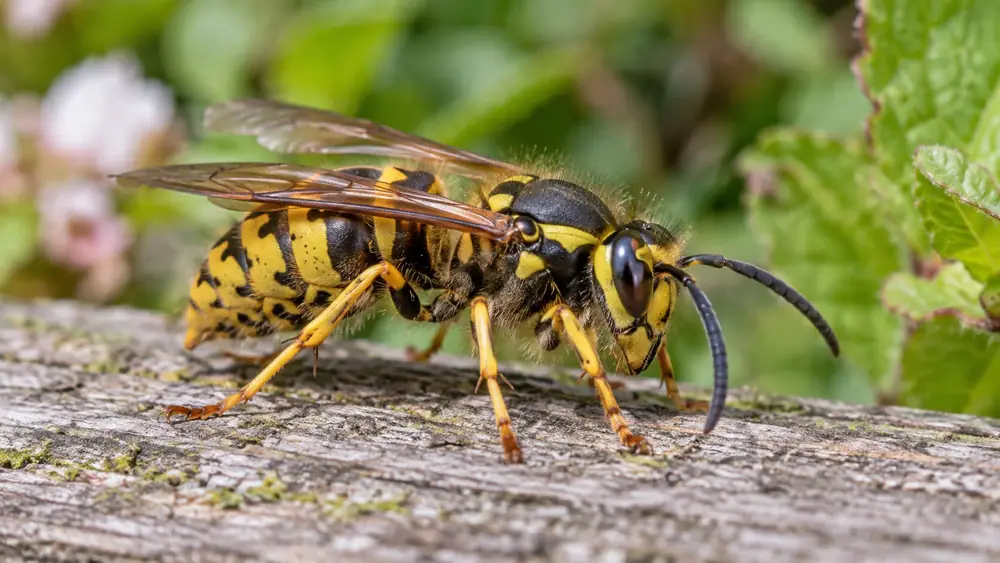
Wasp control in Roodepoort means treating and removing the nest itself, safely, rather than spraying the wasps flying around it. We locate every nest on the property, treat it with a targeted product, take it down once the wasps are dead, and treat the spot so new queens are less likely to rebuild there. Most jobs take one visit.
The wasps we deal with in Roodepoort
Paper wasps
These are the most common. They're slender, with long dangling legs in flight, often yellow and brown or reddish. They build open, umbrella-shaped grey paper nests with visible cells, hanging from a single stalk under eaves, gutters, carport roofs, patio covers, window frames, pool pump housings and the underside of garden furniture. A nest starts small in spring and can grow to dozens of wasps by late summer.
Mud daubers
These build small mud tubes or pots on walls, in garages and under eaves. They're solitary, rarely sting and hunt spiders to feed their young. Most people leave them alone, but we can remove them if they're in an awkward spot.
Why wasps are a summer problem here
Roodepoort has a lot of what wasps want: family homes with deep eaves and overhangs, carports, pergolas and patio roofs, big gardens full of insects to hunt, and pools and birdbaths for water. Queens that spent winter tucked away somewhere sheltered start new nests in September and October. With warm summer weather and plenty of food, nests grow rapidly, and by January and February, when you're spending most time outside, they're at their largest and most defensive.
When a nest needs professional removal
- It's near a door, a window, the pool, the braai area or where children play
- Someone in the household is allergic to stings
- It's high up, under the eaves of a double-storey, or inside the roof space
- There are several nests, or the nest is large and active
- You've been stung trying to remove it yourself
If a person who's been stung has difficulty breathing, swelling of the face or throat, or feels faint, get emergency medical help immediately.
How we remove wasp nests
We check the whole property, because where there's one nest there's often another under a different eave or the carport. Each nest is treated directly with a registered product that kills the wasps on the nest and those returning to it. Once the activity has stopped, we remove the nest and treat the attachment point and surrounding surfaces, which discourages new queens from building in the same sheltered spot. For nests inside roof spaces or wall cavities, we treat the entry hole and the void.
We'll often suggest working in the early morning or evening, when most wasps are home and calmer. While we work, children and pets are best kept inside, and away from treated spots until those have dried.
The common mistake
Knocking the nest down with a broom or blasting it with the hosepipe. The wasps survive, become very defensive, and either attack or simply rebuild nearby within days. Spraying a supermarket aerosol from close up is not much better: you're well within stinging range, and a few drops rarely reach every wasp. Leave it to us if the nest is active.
A Roodepoort tip
Walk round the house in September and October and look under the eaves, the carport roof, the pergola and the pool pump cover. A spring nest is the size of a coin, with a single queen, and that's the easiest time to have it dealt with. Waiting until February means facing a nest the size of a side plate.
Wasps or bees?
Honeybees are hairier and rounder, and a swarm or colony needs a completely different approach, ideally involving a beekeeper. If it's bees you're dealing with, see our page on bee swarm removal in Roodepoort.
Businesses, schools and complexes
Schools, restaurants with outdoor seating, sports clubs and complexes with shared carports often have several nests at once. We can do a full site inspection, treat every nest in one visit and come back during the peak season to check for new ones, which is easier than reacting each time someone gets stung.
What wasp nest removal costs, and why
The price depends on how many nests there are, how high they are and how hard they are to reach, and whether a nest is inside a roof or wall void. A single paper wasp nest under a low carport is a small job; several nests under double-storey eaves take longer. A tiny spring nest with one queen, out of reach of people, can sometimes be left alone if you're comfortable with it. Look for the guide "from" price on this page, and see our Johannesburg price guide for the rest.
Nearby
Homes on the slopes can visit our Florida Hills page. We also remove wasp nests in Northcliff, and the main page on wasp control in Johannesburg covers the city. All our local services are on the Roodepoort pest control page.
Don't stand under an active nest with a broom. Ring Combat Pest Control on 084 200 2700, or WhatsApp a photo showing the nest and where it hangs. Owner and operator Jason van Heerden has 25 years in pest control, the business is SAPCA registered and registered with the Department of Agriculture (Act 36 of 1947), we offer service within 24 hours, and treated nest sites carry a 3-month guarantee.
Questions we get asked
How much does wasp nest removal cost?
It depends on the number of nests, their height and how easy they are to reach, and whether a nest is inside a roof or wall. A single low nest is a small job; we'll confirm the price before we start.
Can I remove a wasp nest myself?
A tiny spring nest with a single queen, at a safe height, can be. An active summer nest is best left to us; knocking it down makes the wasps aggressive and they rebuild nearby.
Will the wasps come back to the same spot?
Sometimes new queens choose the same sheltered spots. We treat the attachment point to discourage them, and our treatments carry a 3-month guarantee.
Is it safe for my kids and dogs?
Yes. Keep them indoors while we work and off treated surfaces until they're dry.
When is the best time to deal with a nest?
As early as possible, in spring, when nests are small. We often work in the early morning or evening, when wasps are calmer.
What should I do if I'm stung?
Wash the area, use a cold compress and take an antihistamine if suitable. Get emergency help if there's swelling of the face or throat, difficulty breathing or faintness.