
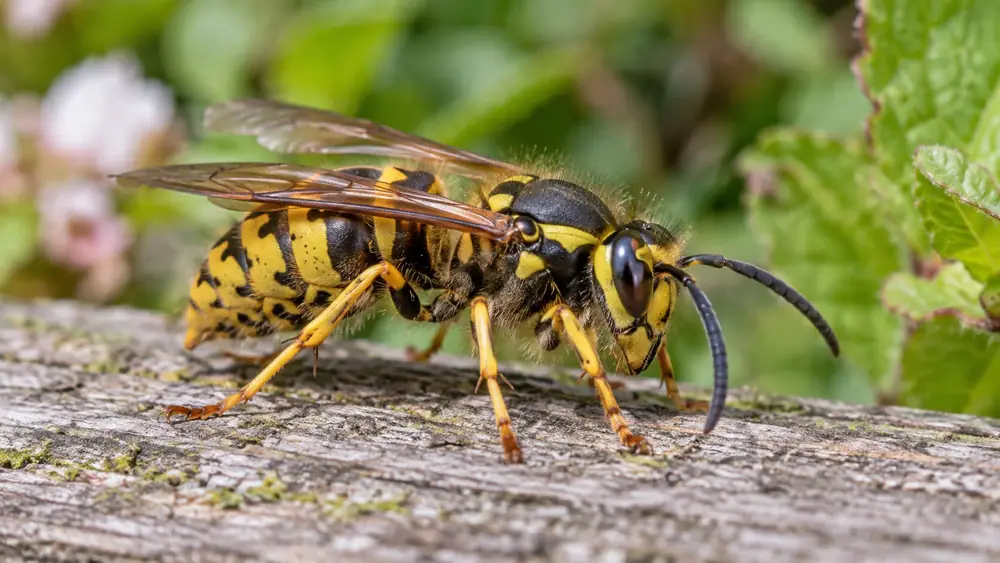
Wasp control in Midrand means treating and removing the nest itself, not swatting the wasps around it. Paper wasps build under eaves, in gate motors, behind shutters and under patio roofs across Midrand. We treat the nest safely, early or late in the day, remove it and treat the spot so they are less likely to rebuild.
Why Midrand has so many wasp nests
Look up at the eaves of almost any Midrand townhouse in summer and there is a fair chance you will find a paper wasp nest. Modern complex and estate buildings are full of the sheltered overhangs these wasps prefer: wide fascia boards, roof overhangs, pergolas, carports, garage door tracks, louvred shutters and the hollow tops of steel gate frames. Office parks add canopies, covered parking and signage. Plenty of gardens with water features and irrigated beds supply water and insects, and the long, warm Highveld summer gives each colony months to grow.
Nests usually start small in spring, a single queen building a few cells. By mid to late summer the same nest can hold dozens of wasps, and that is when people get stung reaching for a gate latch, opening a window or closing a garage door.
The wasps you are likely to see
Paper wasps
Long-legged, slim, brownish or yellow-and-brown wasps that build open, umbrella-shaped grey nests with the cells visible from below. These cause the majority of stings around Midrand homes and are the main reason people call us.
Mud daubers
Slender, solitary wasps that build small mud tubes or pots on walls, ceilings and inside garages. They rarely sting people and are not aggressive, but many owners want the nests removed from walls and ceilings.
Wasp or bee?
Wasps are smooth, shiny and thin-waisted. Bees are hairier, rounder and usually live in enclosed spaces, often in large numbers. If you have a cloud of insects going into a wall cavity or water meter box, it is probably bees, and our bee swarm service in Midrand deals with that differently.
When wasps become a real risk
A nest by the front door, above a children's play area, next to a pool or in a gate motor that people touch every day is a sting waiting to happen. People who are allergic to stings can have a serious reaction, and anyone stung several times at once should get medical advice. Nests near busy entrances at office parks, schools and shopping areas should be dealt with promptly.
How we remove wasp nests
Assess the nest. We look at the size, location and how many wasps are active, and whether there are other nests on the building. Complexes often have several along the same row of eaves.
Treat at the right time. Early morning or late afternoon, when most of the colony is on the nest and less active, is safest. We wear protective gear and use registered products applied directly to the nest.
Remove the nest. Once the wasps are dead, we take the nest down so it is not left hanging.
Treat the site. A residual treatment on the spot discourages new queens from building in the same place.
The mistake that gets people stung
Knocking the nest down with a broom or blasting it with a hose. The wasps defend the colony, and the person underneath usually comes off worst. Doing it in the middle of a hot day, when the wasps are most active, makes it worse. Spraying a nest with a household aerosol from close range is not much better.
A Midrand tip
Walk around the eaves, carport and gate frames in early spring and knock down any small new nests, no bigger than a coin, with a long pole while the queen is alone. It takes minutes then and saves a much bigger job in summer.
For complexes and office parks
On a complex or office park, one nest is rarely the only one. We can inspect the whole site, treat all active nests in one visit and work with the body corporate or facilities manager to schedule a check before peak season.
What wasp control costs, and why
The price depends on how many nests there are, how high and hard to reach they are, and whether the job is one house or a whole complex. A single low nest under a patio is a quick job; several nests along a double-storey row of units, or a nest inside a roof, take longer and may need ladders or extra equipment. See our pest control price guide for Johannesburg for a starting price, along with this page's guide "from" price. A small mud dauber nest on a garage wall, if you are not allergic, can usually be scraped off yourself.
Townhouse complexes in Vorna Valley are typical of our wasp calls. For the same service further south, see wasp nest removal in Sandton, the city-wide service at wasp control in Johannesburg, or the rest of our Midrand pest control services.
Combat Pest Control is owned and run by Jason van Heerden, with 25 years in pest control. We are SAPCA registered and registered with the Department of Agriculture under Act 36, give service within 24 hours and guarantee wasp treatments for 3 months. Call 084 200 2700, or WhatsApp us a photo of the nest so we can see what we are dealing with.
Questions we get asked
How much does wasp nest removal cost?
It depends on the number of nests, how high and hard to reach they are, and whether it is one house or a complex. A single low nest is a quick job. We quote once we know the size and location.
Is it safe to remove a wasp nest myself?
Only very small new nests, while the queen is alone, are reasonably safe to knock down. Larger nests are best left to us, especially if anyone in the house is allergic to stings.
Will the wasps come back to the same spot?
New queens sometimes try, but treating the site after removal discourages them. Checking the eaves in early spring helps catch new nests early.
Is the treatment safe for my family and pets?
Yes. The product is applied directly to the nest and the immediate area, and we tell you when it is safe to use that area again.
Are mud daubers dangerous?
Not really. They are solitary and rarely sting people. Many owners still want the mud nests removed from walls and ceilings.
Can you remove nests from a complex in one visit?
Usually, yes. We inspect the whole site, treat every active nest we find and work with the body corporate on access and timing.