
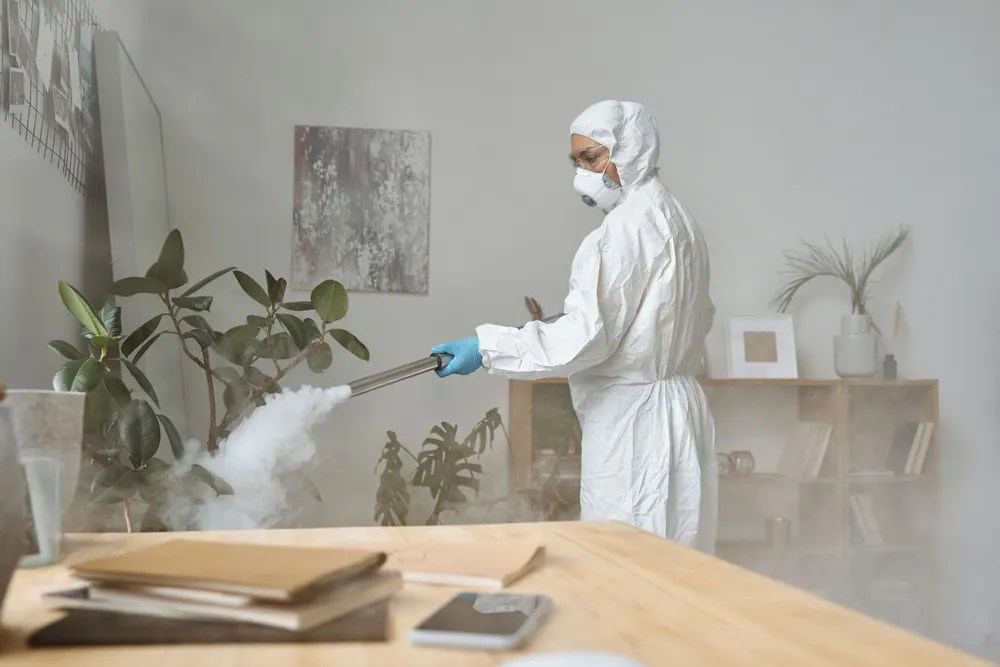
Pest control in Parktown means looking after old buildings. Wood borer and termites in original timber, roof rats and pigeons in big roofs, bees in chimneys and wall cavities, and cockroaches in institutional kitchens are the usual problems. We inspect carefully, treat with products that won't mark old finishes, and give practical proofing advice.
Old houses on the ridge
Parktown was one of Johannesburg's first wealthy suburbs, built on the ridge north of the city centre in the early mining years. Many of the large stone and brick mansions of that era are still standing, and a lot of them are now offices, schools, consulates or institutions rather than family homes. The suburb also holds major schools, part of the Wits medical campus and big hospitals, with the M1 cutting through on its way north. The trees are old and enormous, and gardens slope down from the ridge towards Westcliff and Forest Town.
Big, old roofs are the heart of Parktown's pest story. They have deep eaves, dormers, chimneys and decades of small gaps that rats, pigeons and bees can use. Inside, original floors, panelling and staircases are exactly the kind of timber wood borer goes for.
The pests that matter most in Parktown
Wood borer
Small round holes in floorboards, skirting or roof timber, with fine pale dust underneath, mean wood borer beetles have been breeding in the wood. In heritage buildings this needs a careful treatment of the affected timber rather than ripping it out. Our wood borer treatment around Rosebank page describes how we deal with it.
Subterranean termites
Termites build mud tubes up foundations and into door frames and built-in cupboards. Big gardens with old stumps and compost give colonies plenty to feed on before they reach the building. We treat the soil around the structure or bait where drilling isn't suitable, with a treatment certificate and a 5-year termite guarantee.
Roof rats
The tree canopy reaches right over many Parktown roofs, and roof rats use it to get onto the roof and under the eaves. We bait in lockable stations, trap in the roof space, and then show you which gaps to close.
Pigeons and bees
Ledges, gutters and parapets on older buildings attract pigeons, whose droppings stain stonework and block gutters. Proper bird proofing for Johannesburg buildings, with spikes, netting or sealed gaps, solves this without harming the birds. Bee swarms like old chimneys and wall cavities; where possible we work with a beekeeper to remove them.
Cockroaches in kitchens and canteens
Schools, offices and institutions with staff kitchens or canteens tend to pick up German cockroaches. Gel baiting in the right spots clears them without spraying around food.
Working in offices, schools and institutions
For businesses and schools we offer scheduled monitoring contracts: rodent stations checked on every visit, a written record of what was found and done, and treatments timed outside working hours where needed. This keeps you ready for an audit or a health inspection. For property sales and leases, we also carry out entomological inspections and issue pest reports.
Signs worth reporting early
- Fresh, pale dust under small holes in floors, stairs or furniture
- Mud tubes on a foundation, a cellar wall or the back of a cupboard
- Scratching above the ceiling after dark, or droppings in the roof space
- A steady stream of bees going in and out of one spot on a wall or chimney
- Droppings building up on window ledges, parapets and gutters
In a big old building, one of these signs often points to a problem that has been growing quietly for a while, so it pays to have it looked at sooner rather than later.
What owners often get wrong
Many people sand and reseal an old floor without checking for wood borer first. If the beetles are still active, the new finish goes straight over a live infestation, and in a year or two fresh holes appear in the beautiful new floor. Have the timber checked before restoration work starts. It's far easier to treat bare wood.
A Parktown tip
Check the chimneys. Unused chimneys on old houses are a favourite spot for bees, pigeons and even rats. A simple mesh cap stops all three, and it's much cheaper than removing a swarm from inside a chimney stack.
What it costs and why
The size and age of the building drive the cost. A rat treatment in a normal house is fairly straightforward; a large heritage roof with several entry points takes more stations, more time and usually a follow-up. Wood borer and termite work depends on how much timber or perimeter is involved, and bird proofing on how much ledge and gutter needs covering. Have a look at our guide prices for the starting point, and we'll quote after the inspection.
Parktown is part of our Rosebank and surrounds service area, and the leafy suburb next door has its own page on pest control in Westcliff.
Its owner, Jason van Heerden, has spent 25 years in pest control and still runs every job himself. Our registrations are with SAPCA and the Department of Agriculture, we can usually be on site with service within 24 hours, and general treatments come with a 3-month guarantee. To arrange a visit, ring 084 200 2700, or WhatsApp a photo of the holes, droppings or swarm.
Questions we get asked
What does pest control cost for a large old house in Parktown?
It depends on the pest and the size of the building. Big roofs need more stations and time, and wood borer or termite work depends on how much timber is affected. Our guide prices page gives a starting point, and we quote after inspecting.
Will the treatment damage old floors or panelling?
No. We use odourless, non-staining products and treat the affected timber carefully, which is why we inspect before choosing a treatment.
How do I know if wood borer is still active?
Fresh, pale powder below the holes, or new holes appearing, means it's active. Old, dark holes with no dust may be from an infestation that has died out.
Can you remove bees from a chimney?
Yes. Where possible we work with a beekeeper so the swarm can be removed alive, and then we close the gap so another swarm doesn't move in.
Do you offer monitoring contracts for schools and offices?
Yes. Visits run on a fixed schedule, rodent stations are locked and numbered, and you get a signed report after each one.
Do staff need to leave the building during treatment?
Not for normal insect treatments. Keep people and pets off treated surfaces until they're dry. Only gas fumigation needs the sealed area vacated.