
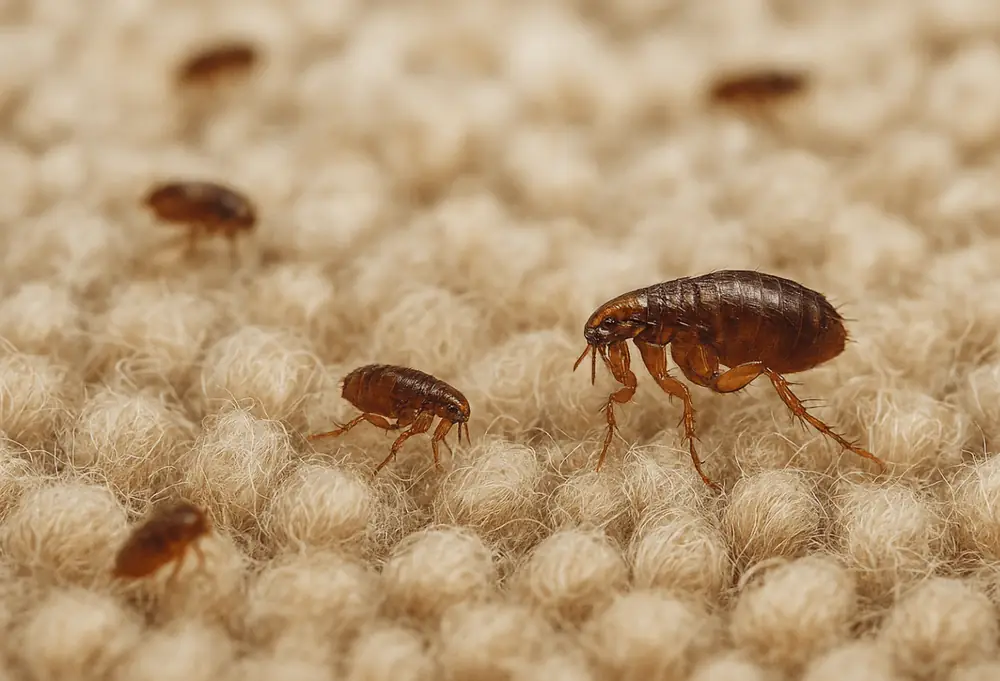
Flea control in Johannesburg only works when the house, the garden and the pets are treated at the same time. Adult fleas on your dog or cat are a small part of the problem; the eggs, larvae and cocoons are in carpets, bedding and shady soil. We treat those areas while your vet handles the animals.
Where fleas actually live
The flea that bites most Johannesburg families is the cat flea, which happily lives on dogs, cats and, briefly, people. An adult female lays eggs on the animal, and they roll off wherever the pet sleeps, lies or scratches. Larvae hatch in carpets, between floorboards, in pet beds, under couches and in the dry soil under shady trees, feeding on debris and flea droppings. They avoid light, which is why they hide so deep.
The next stage is the one that catches people out. Flea larvae spin a sticky cocoon and can wait inside it for weeks, protected from most treatments, until vibration, warmth or carbon dioxide tells them a host is nearby. Then they hatch all at once. That's why people move into a house that stood empty, or come home from holiday, and are bitten within hours.
Why fleas are a Johannesburg summer problem
Fleas develop fastest when it's warm and humid, so activity climbs with the summer rains and peaks from late spring to autumn. Big gardens under large trees give them cool, shaded soil where larvae survive even when the lawn is baking. Dogs dig and lie in exactly those spots. Stray cats sleeping in roof spaces, under decks or in garages can keep reintroducing fleas even after a household's own pets are clean. In winter activity drops outside, but heated homes with carpets let fleas carry on breeding indoors.
Signs of a flea problem
- Small, itchy bites, usually around ankles and lower legs
- Pets scratching, biting at their back or tail, or losing hair
- "Flea dirt" in the pet's coat or bedding: black specks that turn reddish on a damp tissue
- Fleas jumping onto white socks when you walk across the carpet
- Bites that start after moving house or returning from a trip
How we treat fleas
- Inspection. We look at where the pets sleep and spend time, inside and out: beds, carpets, couches, kennels, under decks, shady corners of the garden.
- Indoor treatment. We apply an odourless, non-staining residual treatment to carpets, rugs, floors along skirting boards, under furniture and in pet sleeping areas.
- Outdoor treatment. Shaded soil, kennels, dog runs, under-deck areas and the places where pets dig and lie are treated too, because that's where many larvae develop.
- Pet treatment by your vet. Your dog and cat need a flea product from the vet at the same time. We treat the environment, not the animals.
- Follow-up where needed. Heavy infestations, or homes with lots of carpet, may need a second treatment as protected cocoons hatch.
You don't need to move out. Keep children and pets off treated areas until they're dry, then carry on as normal.
Preparing for a flea treatment
Vacuum every carpet, rug and couch thoroughly just before we arrive, including under furniture and along the edges, and empty the vacuum into a sealed bag in the outside bin. Wash pet bedding on a hot cycle. Pick toys and clutter up off the floor so we can reach everything. After the treatment, keep vacuuming regularly: the vibration encourages cocoons to hatch, and the new fleas then meet the treated surfaces. We'll tell you how long to wait before mopping or washing treated floors.
The mistake that keeps fleas coming back
Treating only the dog. A spot-on or tablet kills fleas on the animal, but the house and garden keep producing new ones, so the pet is reinfested and the owners keep getting bitten. The opposite also fails: treating the house while the dog brings new fleas in from the garden every day. All three have to be done within the same few days.
Where we see the most fleas
Big, shady gardens with dogs, like many in Bryanston, are classic flea territory. Older homes with wooden floors and gaps between the boards around Northcliff and Melville give larvae plenty of shelter. Family homes and complexes in Roodepoort, where pets share common gardens, see fleas spread between units. Rental homes between tenants are another common call.
What flea control costs, and why
The price depends on the size of the house, how much carpet there is, how big the garden and pet areas are, and whether a follow-up is needed. A flat with one cat is a much smaller job than a large home with three dogs and a big garden. Our pest control guide prices show where flea treatments start. If you've caught it early with a single pet, a vet product plus thorough vacuuming and hot-washing bedding can be enough on its own. The flea guide explains the life cycle in more detail, and if you're finding ticks on the dogs as well, see our tick control in Johannesburg.
Fleas are miserable for people and pets alike, and with service within 24 hours you won't be scratching for long. Combat Pest Control is registered with SAPCA and with the Department of Agriculture under Act 36, Jason van Heerden has 25 years in the trade, and flea treatments carry a 3-month guarantee. To book, phone 084 200 2700; to check what's biting first, WhatsApp us a photo of the bites or the specks in the pet's bed.
Questions we get asked
How much does flea control cost?
Flea treatments are priced on the size of the house, the amount of carpet and how much of the garden the pets use. A flat with one cat is a small job; a big home with several dogs costs more. We confirm the price before we start.
Why am I still getting bitten after the treatment?
Fleas in their cocoons are protected and keep hatching for a couple of weeks. Keep vacuuming, because new fleas then cross the treated surfaces and die. If bites continue after that, call us.
Do you treat the pets as well?
No. Your vet should treat your dogs and cats with a suitable flea product at the same time as we treat the house and garden.
Is flea treatment safe for my pets and children?
Yes, once it's dry. Keep children and pets off treated surfaces until they're dry, then use the rooms normally.
Why do we have fleas when we don't have pets?
Usually fleas left behind by a previous owner's pets, or stray cats living in the roof, garage or under a deck. Cocoons can wait weeks for someone to walk past.
How long does a flea treatment last?
The treatment carries a 3-month guarantee. Keeping the pets on a regular vet product and vacuuming often stops fleas building up again.
What should I do before you arrive?
Vacuum all carpets and couches thoroughly, empty the vacuum outside, hot-wash pet bedding, and pick up toys and clutter from the floors.