
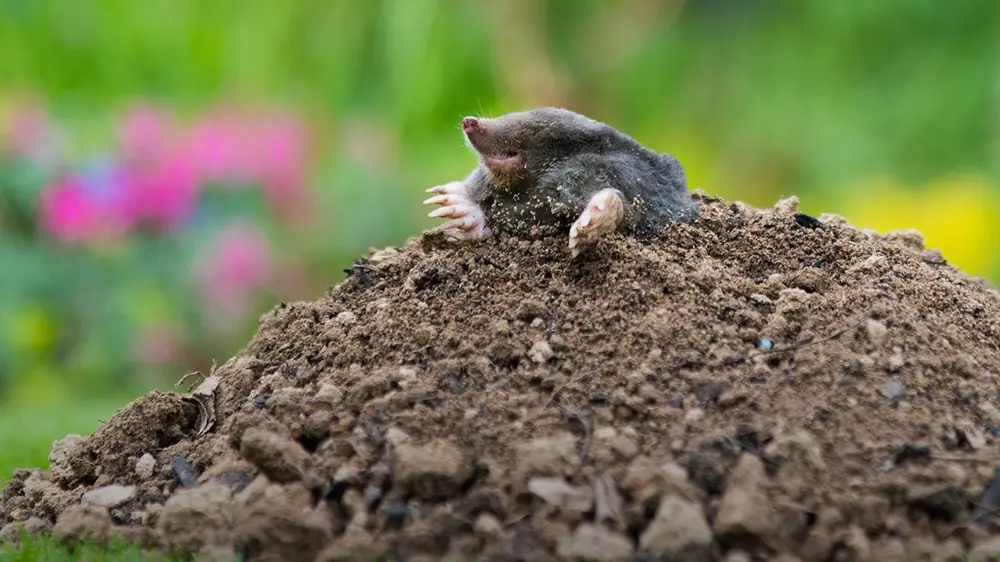
Mole control in Rosebank starts with working out which animal is digging. Mounds of loose soil usually mean a mole-rat feeding on roots and bulbs; raised ridges just under the surface usually mean a golden mole hunting insects. We locate the active tunnels, then trap or treat the system and advise on protecting the garden.
Why Rosebank gardens get moles
The older suburbs around Rosebank have some of the deepest, best-tended garden soils in Johannesburg. Parkview, Saxonwold, Houghton and Parktown have large lawns, established beds and decades of compost worked into the ground, with parks and open spaces nearby. Soft, rich, well-watered soil is exactly what burrowing animals look for, and irrigation keeps it workable through the dry Highveld winter when surrounding veld is rock-hard.
Mole-rat or golden mole?
People call both of these moles, but they are quite different animals, and the difference changes what we do.
Mole-rats
Mole-rats are rodents. They dig with their large front teeth, push soil up into rounded mounds and eat roots, bulbs and tubers. Disappearing agapanthus, wilting clivias, lilies pulled down from below and holes in the vegetable bed are their work. They are the ones that do real damage to a garden, and they are the main target of mole control.
Golden moles
Golden moles are not rodents at all. They swim through loose topsoil just below the surface, leaving raised ridges across the lawn, and feed on earthworms and insect larvae such as lawn grubs. They are a nuisance to a lawn's appearance but do little harm to plants. Several golden mole species are of conservation concern, so rather than killing them we focus on making the lawn less attractive by dealing with the grubs they are following.
How we deal with mole-rats
- Finding the active system. We open and check tunnels to see which ones are in use; a mole-rat will reseal an opened tunnel quickly.
- Trapping. Traps set in the main runs are the most reliable way to remove the animal itself.
- Treating the burrows. Where suitable, a registered product is placed into the tunnel system and sealed in, out of reach of pets and children.
- Follow-up. We check for new mounds, because a vacant tunnel system in good soil can be taken over by a neighbouring animal.
When the digging is worst
Mole-rats work all year, but you notice them most after the first good summer rains, when the soil softens and they push up fresh mounds almost overnight, and again in late autumn when they extend their tunnels to reach bulbs and roots. In midwinter, irrigated lawns and beds are often the only soft ground around, so watered gardens in the older suburbs can see activity when the veld outside is quiet. A new lawn laid on loose, freshly worked topsoil is particularly easy digging.
Is it moles, or something else?
Not every hole in a Rosebank lawn is a mole. Small open holes with short pieces of grass around them, and bare patches in winter, are harvester termites. Little volcano-shaped piles of fine sand along paving are ants. If your lawn is thinning rather than heaving up, our page on termites in Rosebank gardens and homes explains the difference, and a quick photo on WhatsApp will settle it.
What gardeners often get wrong
Pouring water, diesel or exhaust fumes into the mounds. Mole-rat tunnel systems are long and branched, the animal simply blocks off the affected section, and the chemicals end up in your soil. Planting a few castor oil plants or burying bottles is also widely recommended and rarely makes a lasting difference.
Starting a new lawn or bed
If you are re-landscaping a garden that has had mole-rats, deal with the animals before the new lawn or beds go in. Once instant lawn is down, the tunnels underneath are harder to find and every new mound lifts a sod. For vegetable beds, a layer of wire mesh at the bottom of a raised bed keeps them out completely.
A garden tip
Plant prized bulbs inside baskets of fine wire mesh. In gardens with a history of mole-rats, it is the only reliable way to protect agapanthus, clivias and lilies over the long term, and it costs far less than replacing them each season.
What mole control costs, and why
The cost depends on how many animals are active, the size of the garden and how many visits it takes to clear the system. A single mole-rat in a suburban lawn is a quick job; a large property backing onto open ground, where new animals keep arriving, may need several visits. See our guide prices for pest control for a starting point. If it is golden mole ridges and nothing else, we will tell you honestly that grub control and patience are usually enough.
Nearby help
Large Parkview gardens see a lot of this, and our Parkview pest control page covers the other pests common there. Gardens on the slopes towards Emmarentia face similar problems, covered by our mole control in Northcliff. For the wider picture, see mole control in Johannesburg, or our main Rosebank page for everything else we treat locally.
Jason van Heerden, owner of Combat Pest Control, has 25 years in the trade, and the business is SAPCA registered and registered with the Department of Agriculture. We offer service within 24 hours and a 3-month guarantee on the treatment. Call 084 200 2700, or WhatsApp us a photo of the mounds.
Questions we get asked
How do I tell a mole-rat from a golden mole?
Look at the damage. Rounded mounds of soil and missing bulbs mean a mole-rat. Raised ridges just under the lawn surface, with plants left alone, mean a golden mole.
How much does mole control cost?
It depends on the number of active animals, the size of the garden and how many visits are needed. One mole-rat in a lawn is a small job; we quote after looking at the activity.
Is mole treatment safe for my dogs?
Yes. Anything placed in the burrows is sealed inside the tunnel, out of reach, and traps are set below ground in the runs.
Do home remedies like castor oil plants work?
Rarely for long. Mole-rat tunnel systems are extensive, and deterrent plants or vibrating stakes tend to move the animal a few metres rather than remove it.
Why have the moles come back after a year?
Good garden soil is attractive, and an empty tunnel system can be taken over by an animal from next door or nearby open ground. Mesh baskets for valuable bulbs help a lot.
Will you kill golden moles?
We avoid it. Several species are of conservation concern, and they do little harm to plants. We focus on the grubs they feed on so they move on.