
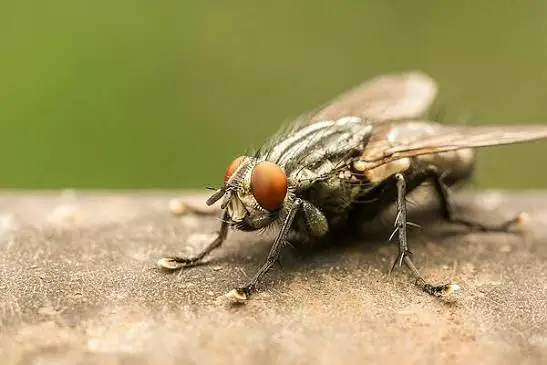
Fly control in Rosebank starts with finding where the flies are breeding, because spraying adults alone never solves it. We identify the species, track down the source, such as a bin room, drain, grease trap or rotting fruit, treat the surfaces flies rest on with residual products and set out the cleaning steps that stop them breeding again.
Why flies are a Rosebank problem
The Rosebank node has a heavy concentration of food businesses: restaurants, coffee shops, bars, hotel kitchens, food courts and delis, many of them sharing bin areas, loading bays and drainage. Flies breed in moist organic waste, and a summer weekend in a busy restaurant area produces plenty of it. On the residential side, compost heaps, pet waste and fruit trees in big gardens do the same on a smaller scale. From October to March, Highveld heat and humidity speed up the fly life cycle dramatically, so a small problem becomes a big one quickly.
Which fly is it?
House flies
The common grey fly that lands on food and surfaces. It breeds in rotting food waste, refuse and manure, and is the main problem around bin areas, outdoor dining and loading bays.
Blowflies
Larger, metallic green or blue flies, usually a sign of meat waste, a dead animal or a bin that has not been cleaned. A sudden burst of blowflies indoors often means a rodent has died in a ceiling or wall.
Fruit flies
Tiny, tan flies with red eyes that hover around fruit bowls, bars, juice machines and recycling bins. They breed in fermenting liquids and the film inside drains, empty bottles and drip trays.
Drain flies
Small, fuzzy, moth-like flies that rest on walls near sinks, showers and floor drains. They breed in the slime that builds up inside drains and grease traps, and spraying the room does nothing to them.
How we deal with flies
- Inspection. We check bins, bin rooms, drains, grease traps, dishwashing areas, bar drip trays and storage, and look for the larvae, because that is where the solution lies.
- Remove the source. We tell you exactly what needs cleaning or fixing: a drain to scrub, a bin area to wash down, a leaking seal, a gap where waste collects under equipment.
- Treat resting surfaces. We apply an odourless, non-staining residual treatment to the walls, ceilings, bin areas and outside surfaces where flies land, avoiding food-contact surfaces.
- Keep it up. Food businesses benefit from a scheduled service with written records, especially in summer.
Restaurants, bars and hotels
For food businesses, flies are a hygiene and reputation issue. Health inspectors look for them, and diners notice them immediately. We work around trading hours, coordinate with your cleaning schedule and leave a written record of each visit for your files. Shared bin rooms and loading bays in shopping centres often need the centre management on board, because one tenant's bins can feed flies for the whole row of shops. Where we find cockroaches in the same drains and kitchens, as we often do, we treat them on the same visit.
What people get wrong
Hanging up more fly strips and spraying more aerosol. Both kill a few adults while thousands of larvae keep developing in a drain or bin a few metres away. Pouring bleach down a drain is another favourite; it barely touches the slime layer where drain flies breed. A stiff drain brush and an enzyme cleaner do much more.
A Rosebank tip
Have your wheelie bins and bin area washed weekly through summer, not just emptied. The residue at the bottom of a bin can breed hundreds of flies in a few days of Highveld heat, and in busy commercial areas this one step often cuts the problem by more than any treatment.
At home
Most household fly problems come from compost heaps without a lid, pet waste left on the lawn, fruit left out on the counter and kitchen drains that have not been cleaned in a while. Covering the compost, picking up after dogs daily and cleaning the kitchen drain trap usually make a big difference before we have treated anything.
What fly control costs, and why
The size of the premises, the number of breeding sites, and whether you need a single treatment or a regular service through the warm months all affect the cost. A house with a fruit fly problem in the kitchen is a small job; a busy restaurant with outdoor dining and a shared bin room is best on a scheduled contract. See our fly control price guide for starting prices. If the flies are coming from your own fruit bowl, you may not need us at all.
Related pages
Restaurants with flies usually need to think about cockroaches too; see our Rosebank cockroach control page. Newtown's food and entertainment businesses are covered on our Newtown pest control page. For the Sandton CBD's restaurants and hotels, see fly control in Sandton, and for the whole city, fly control in Johannesburg. Our Rosebank pest control page lists every other local service.
For food businesses that need a registered contractor, Combat Pest Control is SAPCA registered and also registered with the Department of Agriculture. Owner Jason van Heerden brings 25 years of experience, we offer service within 24 hours, and fly treatments carry a 3-month guarantee. Call 084 200 2700, or WhatsApp us a photo of the flies or where they are gathering.
Questions we get asked
How much does fly control cost for a restaurant?
It depends on the size of the premises, the number of breeding sites and how often you need servicing. Busy restaurants usually do best on a scheduled contract, which we quote after an inspection.
Why do flies keep coming back after spraying?
Because spraying kills adults, while larvae keep developing in bins, drains and waste nearby. Removing the breeding source is what stops them.
Where do drain flies come from?
From the slime inside drains, grease traps and shower wastes. Scrubbing the drain and using an enzyme cleaner works far better than spraying the room.
Is fly treatment safe in a kitchen?
Yes. We treat walls, ceilings and outside resting surfaces, not food-contact surfaces, and plan the work around your trading hours.
Why are there suddenly lots of big green flies in my house?
A sudden burst of blowflies often means something has died nearby, such as a rodent in the ceiling or wall. Finding and removing it ends the problem.
Can you give us records for a health inspection?
Yes. Contract clients get a written record of every visit, including what was found and treated.