
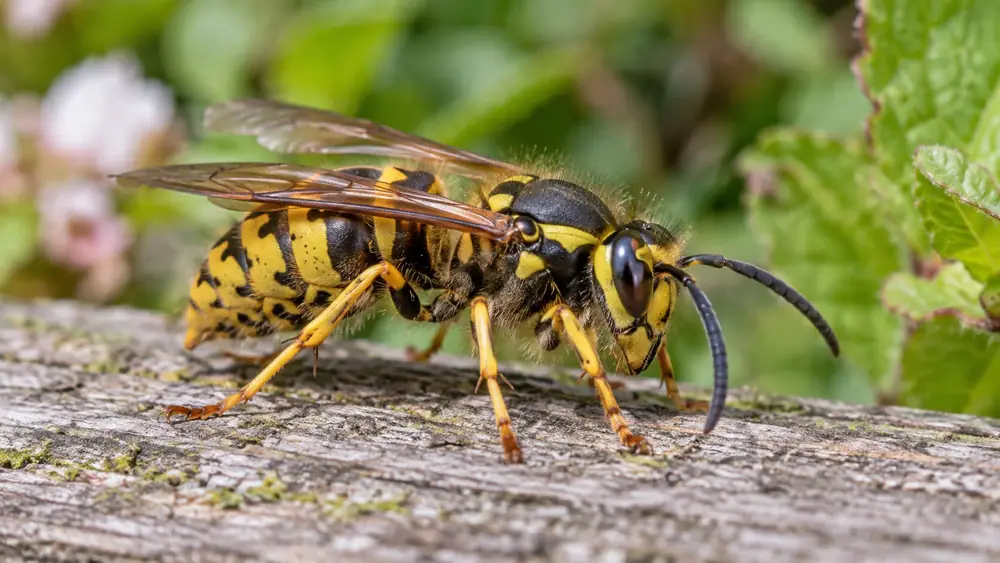
Wasp control in Bryanston is a targeted job: we find each nest, treat it so the adults and the developing brood die, and remove it once it is safe to do so. Most calls are paper wasps nesting under eaves, pergolas and patio roofs. We also check the rest of the property, because one nest often means several.
Why Bryanston gets so many wasp nests
Paper wasps need three things: a sheltered overhang for the nest, a source of wood fibre to chew into paper, and insects to feed their young. Large Bryanston homes offer plenty of each. Wide eaves, covered patios, timber pergolas, lapas, carports and pool-pump covers are all ideal nest sites. Old timber fencing, garden furniture and dead branches provide fibre. Big gardens supply caterpillars and other insects.
Nests start small in spring, often with a single queen and a handful of cells, and grow through the hot months. By late summer a nest under a patio roof can hold a good number of wasps, and that is when most stings happen: someone opens a sliding door, bumps the nest with a pool net or mows the lawn near a low bush.
Which wasp is it?
- Paper wasps: slender, long-legged, brown or yellow and black wasps that build open, umbrella-shaped grey nests with the cells visible from below. The most common call in Bryanston.
- Mud daubers: solitary wasps that build small mud tubes or pots on walls, in garages and inside window frames. They rarely sting people and are more a nuisance than a threat.
- Bees mistaken for wasps: hairy, rounder insects coming and going from a wall, a water meter or a tree hollow are usually honeybees, which are dealt with differently.
How we deal with wasp nests
Locating the nests. We walk around the house, outbuildings, pergolas and garden structures, checking eaves, roof overhangs, gate motors, meter boxes and dense shrubs. Many properties have more than the nest you have seen.
Targeted treatment. Each nest is treated directly with a registered product, ideally late in the day when most wasps are home. That way the adults and the developing young are killed together, rather than scattering.
Removal. Once activity has stopped, the nest is removed and the area treated, so returning wasps don't rebuild on the same spot.
Keep children and pets indoors while we work on nests near doors or the pool, and away from treated surfaces until they are dry.
Nests in awkward places
Not every nest is under the patio roof. On larger Bryanston homes we regularly find them inside gate-motor housings, behind electric fence energiser boxes, in the folds of a pool cover, under the seat of a garden swing, in the frame of a trampoline and high under a double-storey eave that can only be reached with a long pole or ladder. Wasps also build inside dense hedges, where they are found only when someone trims the hedge. If you are about to cut back a big hedge in late summer, walk along it slowly first and watch for wasps flying in and out.
Allergies and stings
For most people a wasp sting is painful but harmless: wash it, apply ice and take an antihistamine if needed. Anyone who has had a severe reaction before, or who shows swelling of the face or throat, difficulty breathing or dizziness after a sting, needs emergency medical help. If someone in your household is allergic, tell us when you call, and we will prioritise the job.
What people commonly get wrong
Knocking the nest down with a broom or hosing it at midday. The wasps are at their most active, they defend the nest aggressively, and the survivors simply rebuild nearby, often in a less visible place. Spraying a nest from a ladder is also a quick way to fall.
A Bryanston tip
Do a quick check under the patio roof, the pergola beams and the pool-pump cover every two weeks from September. A nest the size of a coin with a single wasp is easy to deal with and far less risky than the big nest you find in February when the family is using the pool every day.
What wasp control costs, and why
The cost depends on how many nests there are, how high and accessible they are and how large the property is. One low nest under a patio is a short job. Several nests spread across a big house, outbuildings and a lapa, or nests high under a double-storey roofline, take longer and may need extra equipment. This page shows a guide "from" price, and the full set is on our guide prices for Johannesburg. A tiny new nest with one wasp, low down and away from people, can sometimes be dealt with yourself at dusk; we will tell you honestly if that is the case.
If the insects are hairy and coming from a hole in the wall, they are probably bees, and our bee removal in Bryanston page explains what happens. We also handle wasp nests in Randburg, homes in Bryanston East, and properties across the city through wasp control in Johannesburg. The Bryanston pest control page covers the rest.
Combat Pest Control is SAPCA registered and registered with the Department of Agriculture, with owner Jason van Heerden's 25 years of experience behind every job. We offer service within 24 hours, and if the treated nest becomes active again within 3 months, we come back. Call 084 200 2700, or WhatsApp us a photo of the nest.
Questions we get asked
How much does wasp nest removal cost?
It depends on how many nests there are and how hard they are to reach. One low nest is a short job; several nests or nests under a high roofline take longer.
Is it safe to remove a wasp nest myself?
Only a very small new nest, low down, at dusk, with protective clothing. Larger or higher nests are best left to us, especially if anyone in the house is allergic.
Will the wasps come back to the same spot?
They can be attracted to old nest sites, which is why we remove the nest and treat the area. Regular checks in spring catch new nests early.
Is nest treatment safe with children around?
Yes, as long as they stay indoors while we work on the nest and keep off treated surfaces until they have dried.
When is wasp season in Johannesburg?
Nests start in spring and grow through summer, with the most wasps and stings from about December to March.
What if someone is allergic to stings?
Tell us when you call so we can prioritise the job. Anyone with swelling of the face or throat, breathing difficulty or dizziness after a sting needs emergency medical help.