
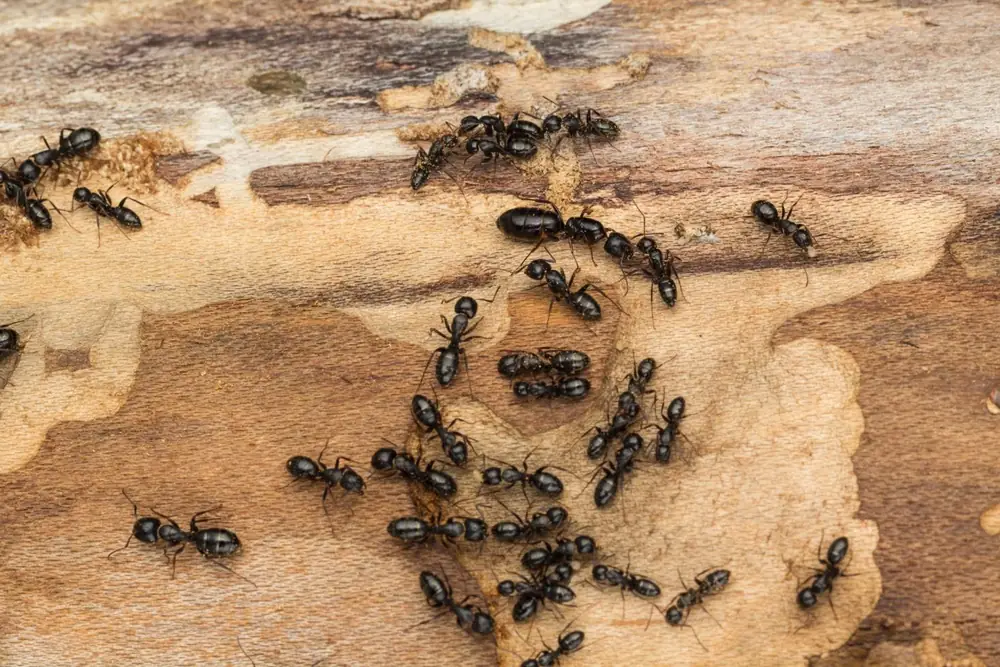
Ant control in Rosebank works by reaching the nest, not the trail. We identify the species, follow the line back to where it comes from, and place baits the workers carry home to the queen and brood. Where needed, we add a non-staining barrier treatment around the building so new colonies find it harder to get in.
Why ants are such a regular visitor here
The suburbs around Rosebank have exactly the conditions ants like: old paving laid on sand, brick edging, deep flowerbeds, mature trees and lawns that have been left undisturbed for decades. Colonies grow large and settled. When a Highveld thunderstorm is building, the air pressure drops, the soil starts to get wet and ants move indoors for food and dry ground, which is why so many people notice them on hot, heavy afternoons from October onwards.
Older homes give them more ways in than newer ones. Gaps along timber skirting boards, cracks in old plaster, the joint between a parquet or wooden floor and the wall, and window frames that have shrunk all serve as entry points. In offices and apartment blocks, ants follow cable runs and pipes up through the building and appear at the kitchenette or a desk where someone keeps sweets.
The ants you are most likely to meet
Small brown house ants
Tiny, light brown ants that form long trails to sugar, pet food and grease. Many colonies have several queens and split into new nests when disturbed, which is why spraying them so often makes things worse.
Black garden ants
Larger, darker ants that nest in lawns, under paving and in pot plants. Some bite, and some throw up little heaps of sand between pavers that loosen them over time.
Ants farming your trees
If you see ants running up and down a citrus tree, a rose or a big ornamental, look for aphids, mealybugs or scale. Ants protect these insects for the sticky honeydew they produce, and the sooty black mould that follows is often what people notice first.
Flying ants or termites?
Both swarm after the first summer rains, and it is worth knowing which you have. Flying ants have a pinched waist, elbowed antennae and front wings longer than the back ones. Termites have a thick waist, straight antennae and four equal wings that they shed quickly. If what flew out of your floor or wall was termites, read about termite control in Rosebank before anything else.
How we treat ants
- Identify and follow. We confirm the species and trace the trail back outside, into the paving, the wall or the lawn.
- Bait. We place ant baits on the trail and near the nest. Workers feed and carry the bait back, so it reaches the queens.
- Barrier where needed. For persistent problems we treat the perimeter, paving joints and entry points with an odourless, non-staining residual product.
- Check. Activity usually drops over several days as the bait works through the colony, and heavier problems get a return visit.
Our article on identifying ant activity explains how to read a trail before you call.
Ants in offices and blocks of flats
In a multi-storey building the nest may be in a wall cavity, a planter box on a balcony or the soil beside the basement, several floors from where the ants appear. We trace them through service ducts and cable runs and bait along the route, and for persistent problems we treat the common areas as well as the affected units. Office kitchens do best when sugar, honey and milk are kept sealed and the dishwasher is run at the end of each day rather than left full overnight.
The mistake almost everyone makes
Spraying the trail. It kills the ants you can see, leaves a scent barrier that diverts the rest, and with multi-queen house ants, can split one colony into several. Wiping the trail with soapy water and leaving the bait alone works far better while it does its job.
A local tip
Before summer, sweep fresh sand into the gaps between old pavers that run up against the house and lift any pot plants standing directly on the paving next to the walls. Those two spots account for most of the nests we find right at the back door in these suburbs.
What ant control costs, and why
The cost depends on how many colonies are involved, whether the problem is inside, outside or both, and whether a perimeter barrier is needed on top of baiting. A single trail into a kitchen is a small job; a large garden with several nests under the paving, or an office building with ants on several floors, takes longer. Our guide to treatment prices lists where ant work starts. If it is one small trail, a shop-bought ant bait placed on the trail, and left alone, may solve it, and we are happy to say so.
Nearby pages
Greenside's old gardens see a great deal of ant activity, as our Greenside pest control page explains. Further north we treat ants in Sandton, and across the city through ant control in Johannesburg. For everything else in the area, start at our Rosebank pest control page.
Combat Pest Control is owned and run by Jason van Heerden, who has 25 years of experience. We are SAPCA registered and registered with the Department of Agriculture, offer service within 24 hours and give a 3-month guarantee on ant treatments. Call 084 200 2700, or WhatsApp us a photo of the ants up close.
Questions we get asked
How much does ant treatment cost?
It depends on the number of colonies, whether the problem is inside or outside, and whether a perimeter barrier is needed. A single kitchen trail is a small job; we quote once we have seen the extent.
Why are there more ants before it rains?
Falling air pressure and wet soil push ants to look for dry shelter and food, so trails appear indoors on hot, heavy afternoons before a storm.
How long does ant bait take to work?
Usually a few days. Workers need time to carry the bait back and share it through the colony, so activity can even rise briefly before it drops.
Is the treatment safe for my children and pets?
Yes. Baits are placed in small amounts or in stations, and barrier treatments should be left to dry before children and pets go near them.
Should I spray the ants while waiting for you?
No. Spraying scatters them and can split a colony into several. Wipe the trail with soapy water if you must, and leave any bait we put down alone.
Why are ants climbing my lemon tree?
They are usually farming aphids, mealybugs or scale insects for honeydew. Dealing with the ants and those insects together protects the tree.