
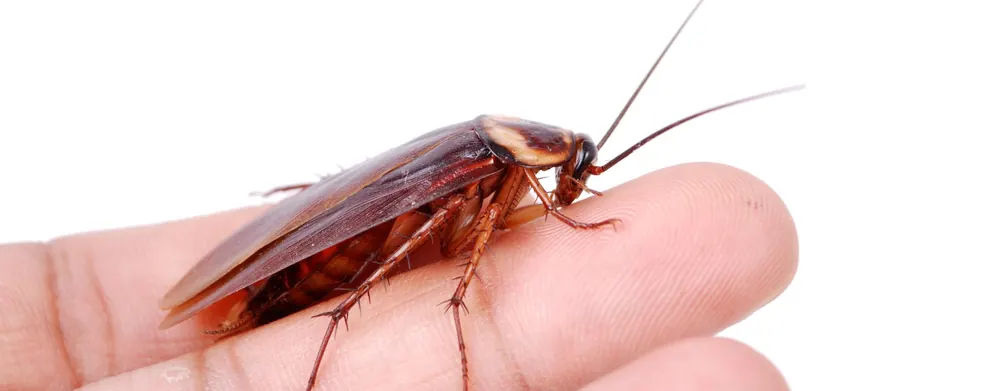
The common cockroaches in Johannesburg are the small German cockroach that breeds indoors, the large American cockroach that comes from drains, and the less common brown-banded and Oriental cockroaches. This identification guide explains how to tell them apart, where each one lives, why the treatment differs, and why the Parktown prawn isn't a cockroach at all.
German cockroach
What it looks like: small, about the length of a fingernail when adult, light brown, with two dark parallel stripes on the shield behind its head. Nymphs are darker and smaller with a pale stripe down the back. Females carry a light brown egg case at the tip of the body.
Where it lives: indoors only, in warm, humid hiding places near food and water: kitchen cupboard hinges, behind the fridge and stove, inside kettles and microwaves, dishwashers, under sinks and in bathroom cupboards. It's the cockroach of flats, townhouses, restaurants, takeaways and office kitchens.
Why it matters: it breeds faster than any other household cockroach and spreads easily between units through plumbing and wall voids. Seeing them in daylight usually means a large population. Most serious infestations we treat in Johannesburg are German cockroaches.
American cockroach
What it looks like: large, about the length of a thumb or more, reddish-brown and shiny, with a pale yellowish band around the shield behind its head. Adults have full wings and can glide or fly, especially on hot, humid nights.
Where it lives: mostly outside and underground: sewers, drains, manholes, gully traps, compost and refuse areas, and the basements and service ducts of bigger buildings. It wanders into homes through drains, gaps under doors and open windows.
Why it matters: one in the bathroom doesn't mean an indoor infestation. It means there's a way in from a drain or outside. Treatment focuses on drains, manholes and the outside of the building rather than indoor baiting.
Brown-banded cockroach
What it looks like: small, similar in size to the German cockroach, but with two light bands across the wings and body rather than stripes on the head shield.
Where it lives: drier, warmer spots than the German cockroach: high in cupboards, behind picture frames, inside electronics and appliance motors, and in bedrooms and lounges as well as kitchens.
Why it matters: because it spreads through the whole house rather than staying in the kitchen, baiting needs to cover more rooms.
Oriental cockroach
Less common in Johannesburg homes. Dark brown to almost black, medium to large, slow-moving, with short wings. It likes cool, damp places: drains, cellars, under floors and around leaking pipes. Like the American cockroach, it's mainly controlled at the drains and damp areas.
Not a cockroach: the Parktown prawn
Johannesburg's most famous creepy-crawly is a king cricket, not a cockroach. It's large, brownish-orange with striped legs, jumps when disturbed and can squirt a dark, smelly liquid. Parktown prawns live in gardens, compost and leaf litter, come out on warm, wet summer nights, and wander indoors through open doors. They don't infest kitchens or breed in cupboards. A residual barrier treatment around the outside of the house and keeping doors closed after dark usually deals with them.
Quick identification checklist
- Small, light brown, two stripes behind the head, in the kitchen: German cockroach.
- Large, reddish-brown, flies on hot nights, near drains: American cockroach.
- Small, light bands across the body, in bedrooms or electronics: brown-banded cockroach.
- Dark, slow, short wings, in damp areas: Oriental cockroach.
- Big, orange-brown, jumps, striped legs, garden: Parktown prawn.
Why the species changes the treatment
German and brown-banded cockroaches are best controlled with gel baits placed in the tiny cracks where they shelter, plus a follow-up visit to catch nymphs hatching from egg cases. Spraying them tends to scatter them. American and Oriental cockroaches need drains, manholes and outside areas treated, along with sealing the routes they use to get in. Our guide on getting rid of cockroaches step by step covers what you can do yourself, and the cockroach control guide explains their biology.
Where they cluster in the city
German cockroaches are most common where buildings are dense and kitchens share walls and plumbing: inner-city flats, older blocks around Hillbrow and Berea, townhouse complexes, and restaurant strips. The pest control in Hillbrow page covers flats in one of those areas. American cockroaches turn up anywhere with older sewer connections and drains, and in leafy suburbs with lots of garden debris. Busy commercial nodes, such as those on our Rosebank cockroach control page, see both.
What cockroach treatment costs, and why
The species makes a big difference. American cockroaches from drains are usually a quick treatment of drains and the outside of the house. German or brown-banded cockroaches need a baiting programme and a follow-up, which takes more time. The size of the property, how many units or rooms are involved and the size of the infestation also count. A restaurant or whole complex is quoted to suit the site. Our guide prices show the "from" price.
Keeping each type out
- Check grocery boxes and second-hand appliances before they come into the kitchen; German cockroaches often arrive in them.
- Keep gully traps covered and run water down unused drains so the water seal stays full against American cockroaches.
- Fix leaks under sinks and around geysers, which Oriental cockroaches depend on.
- Close doors and patio sliders after dark on wet summer nights to keep Parktown prawns outside where they belong.
Combat Pest Control is owned and operated by Jason van Heerden, who has been identifying and treating Johannesburg's cockroaches for 25 years. We're SAPCA registered and registered with the Department of Agriculture under Act 36 of 1947, offer service within 24 hours, and give a 3-month guarantee on cockroach treatments. Not sure which one you've found? Call 084 200 2700, or WhatsApp us a photo for a quick identification.

Questions we get asked
What is the most common cockroach in Johannesburg homes?
The German cockroach is behind most indoor infestations, especially in flats, complexes and restaurants. The large American cockroach is the one most often seen coming from drains.
How much does cockroach treatment cost?
It depends on the species and the size of the problem. Drain cockroaches are a quicker job; German cockroaches need baiting and a follow-up. Our price guide shows the starting price.
Is a Parktown prawn a cockroach?
No, it's a king cricket. It lives in gardens and wanders in on wet summer nights but doesn't breed indoors like cockroaches do.
Why do I see big cockroaches in the bathroom?
Usually because American cockroaches are coming up through drains or from a manhole outside. Keeping drain covers in place and treating the drains deals with them.
Do cockroaches carry disease?
They can carry bacteria from drains and waste onto food and surfaces, and their droppings and shed skins can trigger allergies and asthma in some people.
Is cockroach treatment safe for pets and children?
Yes, when done properly. Gel baits are placed in tiny amounts in cracks out of reach, and children and pets should stay off sprayed surfaces until they're dry.
Can German cockroaches fly?
They have wings but rarely fly. American cockroaches are the ones that glide and fly on hot, humid nights.