
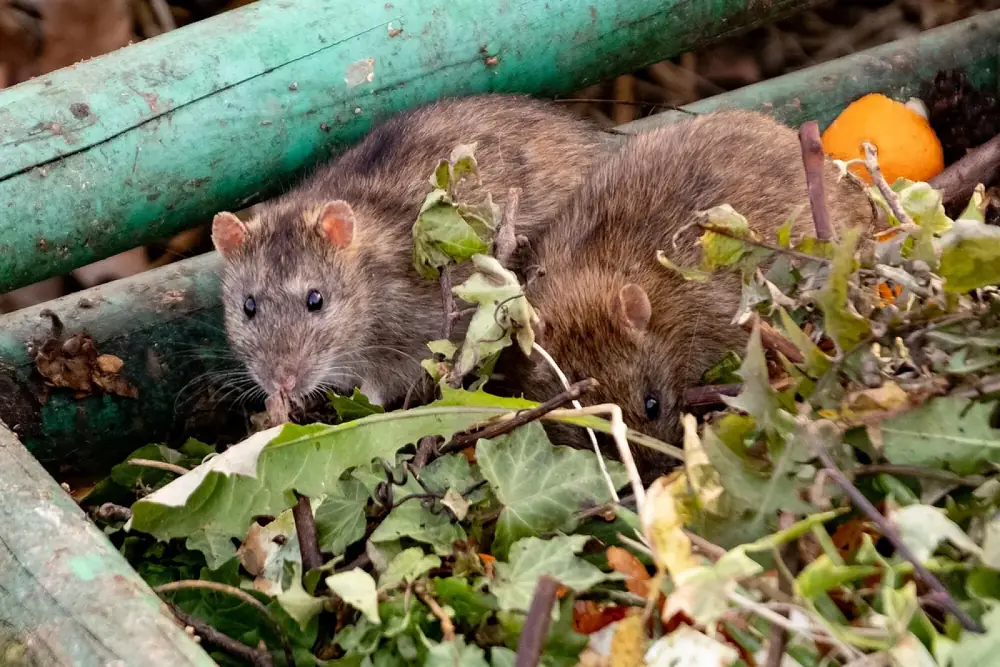
Rats in the roof give themselves away with scratching and scurrying after dark, raisin-sized droppings near the eaves, greasy rub marks on beams, and gnawed cables or insulation. This article explains how to check your roof space safely, how to tell rats from mice and birds, and what to do once you're sure, without making the problem worse.
Start with the sounds
The timing and type of noise tell you a lot. Rats are most active from dusk to the early hours, so noises that start as the house goes quiet and carry on through the night point strongly to rodents. Rats sound heavier than mice: a definite running or thumping, sometimes a dragging noise as they move food or nesting material. Mice make a lighter, faster pattering. Gnawing sounds, a steady scraping or rasping, mean something is chewing.
Noise at dawn and during the day, with scratching and fluttering near the gutters or under the tiles, is more often birds such as mynas or pigeons nesting at the eaves. Clicks and creaks in the early evening are often just the roof sheets and timbers cooling after a hot Highveld day.
Checking the roof space safely
If you can get into the roof, do it during the day with a good torch, long sleeves and gloves, and step only on the joists or trusses, never between them on the ceiling boards. Rat droppings and urine can carry disease, so don't touch anything with bare hands and wear a dust mask if there's a lot of mess. Look for:
- Droppings. Rat droppings are dark, shiny when fresh and roughly the size of a raisin. Mouse droppings are much smaller, like a grain of rice. Lots of droppings along one beam show a regular route.
- Rub marks. Dark, greasy smears where a rat's body brushes the same spot again and again, often on beams, the top of walls and around holes.
- Gnawing. Chewed electrical cables, plastic pipes, insulation, the edges of ceiling boards or the corners of stored boxes.
- Nests. Shredded insulation, paper, fabric or plastic pulled into a heap, usually in a warm corner near the eaves or above the geyser.
- Runways in insulation. Flattened tunnels or paths through the roof insulation.
- Food remains. Avocado skins, pet food pellets, seed husks or fruit pips carried up from the garden.
If you can't get into the roof, look at the outside: droppings on the top of boundary walls, chewed fascia boards, gaps under the eaves with dark staining around them, and burrows in the garden beds.
Rats or mice?
It matters, because the size of the gaps they use and the treatment differ. Mice can get through a hole about the width of a pencil and often come in through gaps at ground level, then climb inside the walls. In Johannesburg roofs it's usually the roof rat, a good climber that uses trees, creepers, cables and boundary walls to reach the eaves. If the droppings are small and the noises light, our mouse control in Johannesburg page will be more useful.
How rats get into a Johannesburg roof
- Overhanging branches and trees close to the house, a big factor in the leafy northern suburbs
- Creepers growing up walls to the eaves
- Gaps under the first row of roof tiles and at the edges of IBR or corrugated sheeting
- Gaps where an extension or patio roof meets the original house
- Holes where pipes, cables, gas lines and solar or geyser plumbing enter
- Broken air bricks and vents
Winter makes all of this worse. When Highveld nights get cold from May onward, rats that spent summer in gardens, along spruits and under compost move into warm roof spaces.
Why it's worth acting quickly
Rats breed fast, and a pair in the roof in autumn can become a colony by spring. Gnawed electrical cables are a real fire risk. Urine and droppings soak into insulation and ceiling boards, and a rat that dies in a cavity creates a smell and, soon afterwards, flies and maggots. Our maggot guide explains what happens if a carcass is left there.
What not to do
Don't throw loose poison into the roof. It's the most common mistake we see. Rats carry and hoard it, some die inside walls where they can't be reached, and pets or children can come across bait that's been dragged out of the roof. And don't block every hole while rats are still inside; they'll chew a new way out, sometimes through the ceiling.
What professional treatment involves
We inspect the roof and the outside of the house to find where the rats are getting in and where they're living. Outside, we place lockable, tamper-resistant bait stations along their routes, out of reach of children, pets and wildlife. Inside the roof we generally use traps, so there's no risk of rats dying in the ceiling. Once activity stops, we show you exactly which gaps to close and which branches to cut back. The rodent control guide explains the biology behind the method, and our rat treatments across Johannesburg page covers how we work for homes, complexes and businesses.
What rat removal costs, and why
Cost depends on the size of the house, how many bait stations and traps are needed, how easy the roof space is to work in, and how many follow-up visits it takes. A single home with a few rats is a straightforward job. A townhouse complex with shared roof spaces, where every unit needs attention, costs more but works far better than treating one unit at a time. If it turns out to be a single mouse, a couple of snap traps may be all you need. Our guide prices for rodent work show the "from" figure.
A tip from the leafy suburbs
Stand in the garden at dusk and watch the roofline and the trees for twenty minutes. Roof rats often use the same branch or wall every night, and seeing the route tells you exactly which branch to cut and which gap to seal. In suburbs like those covered on our rats in Bryanston page, with big trees on every stand, that single observation saves a lot of guesswork.
Combat Pest Control is owned and run by Jason van Heerden, who has been dealing with rats in Johannesburg roofs for 25 years. We're SAPCA registered and registered with the Department of Agriculture under Act 36 of 1947, offer service within 24 hours, and our rodent treatments carry a 3-month guarantee. Hearing something overhead? Call 084 200 2700, or WhatsApp us a photo of the droppings and we'll tell you whether it's rats or mice.

Questions we get asked
How do I know if it's rats or mice in my roof?
Look at the droppings and listen to the noise. Rat droppings are about the size of a raisin and rats sound heavier; mouse droppings are like rice grains and the pattering is lighter and faster.
How much does it cost to get rats out of the roof?
It depends on the size of the house, the number of bait stations and traps, roof access and how many follow-ups are needed. Complexes with shared roofs cost more but work better. Our price guide shows the starting price.
Is it safe to go into the roof to check?
Yes, if you go in daylight, wear gloves and a mask, and step only on the beams. Don't touch droppings with bare hands.
Why can I only hear the noise at night?
Rats are nocturnal. They leave the roof at dusk to feed and move around most from dusk until the early hours.
Will rats leave the roof on their own?
Rarely. A warm, dry roof with food nearby is ideal for them, and they breed quickly. The problem usually grows until the entry points are closed.
Is rat treatment safe for my pets?
Yes, done properly. Bait goes into lockable stations pets can't open, and we use traps inside the roof.
What should I do before you arrive?
Leave droppings where they are, clear access to the roof hatch, and don't put down poison. Note where the noises are loudest and at what time.