
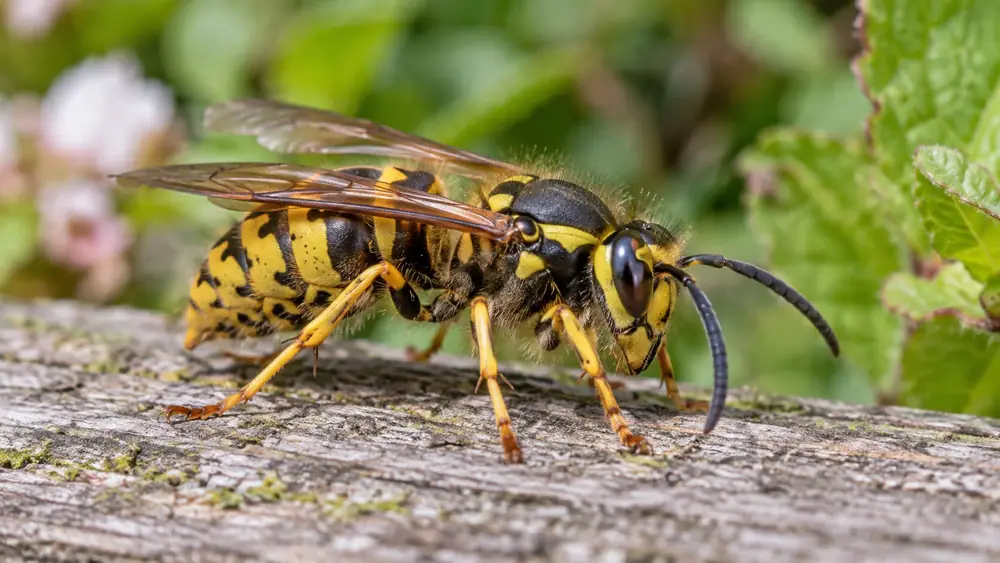
Wasp control in Soweto usually means paper wasps nesting under roof sheeting, eaves, carport roofs, gate frames and window burglar bars. We treat each nest directly so the whole colony is killed, then remove it, and point out the sheltered spots wasps are likely to use again so you can stop new queens settling in.
Why wasps choose Soweto homes
Paper wasps need a sheltered, dry overhang to hang their nests from, close to water and insect prey. Soweto homes offer plenty. Corrugated iron roofs with open edges and no fascia board, carports made from steel poles and sheeting, burglar bars and security gates, the underside of a stoep roof, the frame of a washing line shelter and meter boxes all give a queen exactly the cover she wants. Backyard rooms built with a simple lean-to roof are especially popular, because the gap between the sheeting and the wall is perfect for a nest.
The season follows the warm weather. A single queen starts a small nest in spring, around September. Through the summer the colony grows, and by late summer a nest can have dozens of wasps and become aggressive when disturbed. In autumn the colony dies off and new queens look for a sheltered gap to spend the winter in, often in the same roof.
Paper wasps and mud wasps
Paper wasps are the long-legged, brown and yellow wasps that build open, grey, honeycomb-like nests hanging from a single stalk. They're the ones that sting when you get too close, and they're behind almost all our wasp calls in Soweto.
Mud wasps (mud daubers) build small clay tubes or pots on walls, ceilings and inside garages. They're solitary and very rarely sting people. Old mud nests can be scraped off, and they usually don't need treatment at all.
Wasps and the dry winter
People often think wasp problems end when summer does. The nests do die off as the Highveld cools, but the mated queens that leave them in autumn spend winter tucked into a gap in the roof, behind a loose fascia or inside a hollow gate post. That's why the same house gets nests in the same places year after year. Clearing old nests in winter and sealing the obvious gaps before September breaks that cycle, because the queens waking in spring have to look elsewhere.
When a nest is a real risk
- It's near a door, window, gate or washing line that people use every day.
- Children play nearby, or there's a crèche or school on the property.
- Someone in the house is allergic to stings. Signs of a severe reaction include swelling of the face or throat, difficulty breathing or dizziness, and need urgent medical help.
- The nest is large and the wasps have started chasing people.
How we remove wasp nests
- Locate every nest. There's often more than one, under different parts of the same roof or in neighbouring backyard rooms.
- Targeted nest treatment. We treat the nest directly with a registered product, ideally early in the morning or late in the day when most of the wasps are home.
- Removal. Once the colony is dead, we take the nest down so it can't attract other insects or be reused.
- Residual treatment of hotspots where wasps keep returning, such as the open ends of roof sheeting.
You don't need to leave home, but keep children, pets and visitors away from the area while we work and until it's safe.
What people get wrong
Knocking the nest down with a broom or hosepipe, or burning it with a rolled-up newspaper. The wasps escape angry and sting whoever is nearest, and the survivors simply rebuild a few metres away. Burning nests under a roof is also a serious fire risk. And spraying a nest with ordinary insect spray in the middle of the day often misses the wasps that are out foraging, which return to a damaged nest and attack.
A tip for Soweto homes
In early spring, take a torch and look along the open edges of the roof sheeting, inside the carport and under the stoep roof. A new nest with only one queen and a few cells is easy to deal with at that stage, and sealing open sheeting edges with foam filler or a fascia board stops new queens settling in at all.
What wasp control costs
The price depends on the number of nests, how high and hard to reach they are, and whether residual treatment of the roof edges is needed. One small nest at head height is a quick job; several large nests across the house and backyard rooms take longer. See our wasp removal and pest control prices for the guide price. A tiny new nest with no wasps on it can sometimes be scraped off in early spring.
Bees are different
If the insects are furry, honey-coloured and flying in and out of a wall or meter box, they're probably bees, not wasps, and we handle them differently; see bees in Soweto homes. Families in Orlando have their own local page, and the pest control in Soweto page lists everything else. We also remove wasp nests in Johannesburg South, and offer wasp control across Johannesburg.
Combat Pest Control has 25 years of pest control behind it, under owner Jason van Heerden, and is SAPCA registered and Department of Agriculture registered. We can offer service within 24 hours, and treatments carry a 3-month guarantee. Call 084 200 2700, or WhatsApp a photo of the nest from a safe distance.
Questions we get asked
How much does wasp nest removal cost?
It depends on how many nests there are and how hard they are to reach. One low nest is a quick job; several high ones take longer. We confirm after seeing them.
Can I remove a wasp nest myself?
A tiny new nest with no wasps on it, in early spring, yes. A nest with an active colony, no. Knocking it down usually means stings and a new nest nearby.
Will the wasps come back to the same spot?
New queens often choose the same sheltered spot. Removing the old nest and sealing open roof edges reduces that a lot.
Is the treatment safe for my family?
Yes. The product goes directly into the nest. Keep children and pets away while we work and until we say the area's clear.
What should I do if I'm stung?
Wash the area and apply something cold. If there's swelling of the face or throat, difficulty breathing or dizziness, get medical help immediately.
When is the best time to deal with wasps?
Early spring, when nests are small. By late summer they're much bigger and more aggressive.