
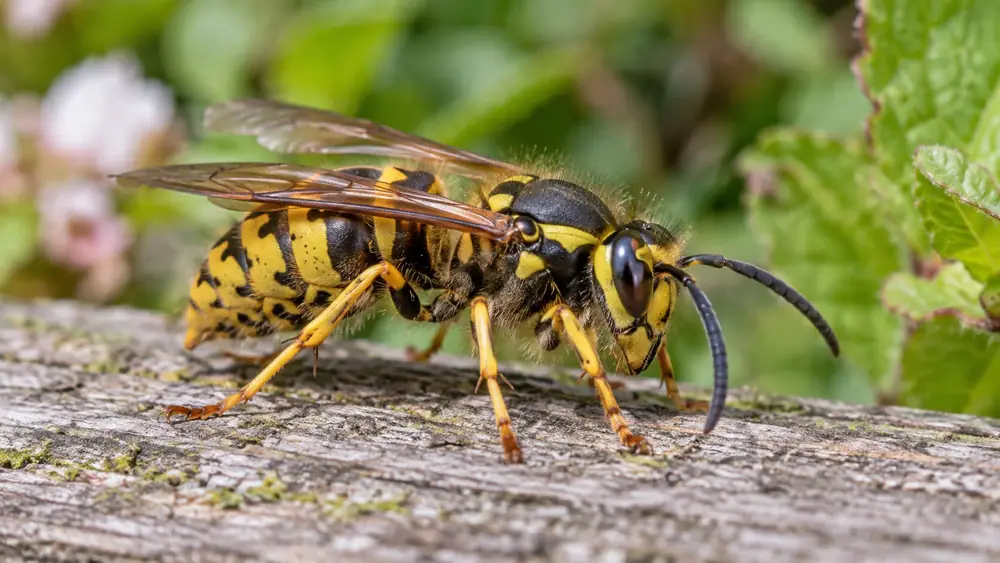
Wasp control in Johannesburg South is mainly about treating and removing paper wasp nests from eaves, carports, gutters, pergolas and outbuildings before they grow. We treat the nest directly so the whole colony is dealt with, take it down, and treat the spots wasps tend to rebuild in, so you can use your garden again.
Why wasps are a summer problem down south
Wasps start building in spring, when a single female begins a small nest and lays the first eggs. Through summer the colony grows and the nest expands, and by the hottest months a nest can have many wasps defending it. Southern homes have a lot of what wasps look for: deep eaves on older houses, carports, pergolas, outbuildings, wooden fences, garden sheds and window frames. Gardens with pools, birdbaths and dripping taps give them water, and fruit trees and vegetable patches give them food.
Most of our calls come in from about November through to March, often after someone has been stung while cutting the hedge, hanging washing or opening a garage door.
The wasps we deal with
Paper wasps
The most common. They build open, umbrella-shaped nests of grey papery cells, hanging from a single stalk under eaves, gutters, the underside of a carport roof or a window ledge. They're not aggressive when left alone, but they defend the nest if it's disturbed, and the stings are painful.
Mud wasps
Mud daubers and potter wasps build small mud cells or tubes on walls, in garages and inside window frames. They're solitary and rarely sting, but the mud nests make a mess and block gaps and vents.
If what you're seeing is a busy stream of insects going in and out of a hole in a wall, or a cluster hanging on a branch, it's more likely bees. They need different handling, and our page on bees in Johannesburg South explains what we do.
How we deal with wasp nests
- Locate the nest. Watch the wasps' flight path and we'll find it, including nests hidden in roof gaps, hedges or behind cladding.
- Treat the nest. We apply a registered product directly to the nest so the adults and the developing brood are killed, not just the wasps that happen to be outside.
- Remove it. Once the colony is dead, we take the nest down so it can't be re-used and so other insects don't move in.
- Treat rebuild sites. Wasps like particular spots, so we treat the surrounding eaves and surfaces to discourage a new queen from starting there.
Signs of a nest nearby
- Wasps flying repeatedly to and from the same corner of the eaves, carport or hedge
- Several wasps hovering at the pool edge, birdbath or a dripping tap
- Small grey papery cells appearing under a ledge, gutter or window frame
- Wasps scraping fibres from wooden fences, garden furniture or pergola beams, which they chew into nest paper
Spotting those signs in October or early November usually means a small nest that's quick to deal with.
Why you shouldn't knock it down yourself
Hitting a nest with a broom or a hosepipe is the quickest way to get stung, and it doesn't solve anything. The wasps that were out foraging come back, find the nest gone and rebuild nearby, often in a spot you won't see until it's big. Spraying from a ladder is worse, because a few stings while balancing on the rungs can easily cause a fall. Anyone allergic to stings should stay well away.
A tip for southern homes
In spring, walk round the house once a week and look under the eaves, the carport and the gutters. A new paper wasp nest is tiny, just a few cells with one wasp, and it's far easier to deal with at that stage than in January. Fix dripping outside taps too, because a steady water supply keeps wasps around the house all summer.
Schools, complexes and businesses
Wasp nests near school play areas, complex entrances, office smoking areas and shop fronts need dealing with quickly because of the number of people passing. We can treat these out of hours where it's safer to do so, and add regular checks of eaves and outbuildings to a scheduled service.
What wasp control costs, and why
Wasp nest treatment is a fairly modest job. The price depends on how many nests there are, how high and hard to reach they are, whether a nest is inside a roof or wall cavity, and whether you want surrounding areas treated to discourage rebuilding. A single small nest under a low eave is quick; several large nests on a double-storey house take longer. See our current guide prices for the starting point.
For local information, there's pest control in Alan Manor and our overview of the southern suburbs. We also handle wasp nests in Soweto and wasp control throughout Johannesburg.
Combat Pest Control has been treating wasps for 25 years and is SAPCA registered and registered with the Department of Agriculture. We offer service within 24 hours, and if the treated nest becomes active again within 3 months, we come back. Call 084 200 2700, or WhatsApp us a photo of the nest.
Questions we get asked
How much does wasp nest removal cost?
It's usually a fairly modest job. The price depends on the number of nests, how high they are and whether one is hidden inside a roof or wall cavity.
Can I remove a wasp nest myself?
A tiny new nest, low down, can be dealt with carefully. For anything larger, high up, or if anyone in the house is allergic to stings, call us.
Will the wasps come back after the nest is removed?
The treated colony won't. A new queen may start elsewhere, which is why we treat the surrounding eaves to discourage rebuilding.
Is it a wasp or a bee?
Wasps are slimmer and smooth with a narrow waist and build papery or mud nests. Bees are hairier and live in colonies in cavities or hanging clusters.
When is the best time to treat a wasp nest?
As early as possible. In spring, a nest is small and quick to treat; by mid-summer it can be large and well defended.
What should I do if I'm stung?
Move away from the nest, wash the sting and use a cold compress. Get medical help immediately if there's swelling of the face or throat, or difficulty breathing.