
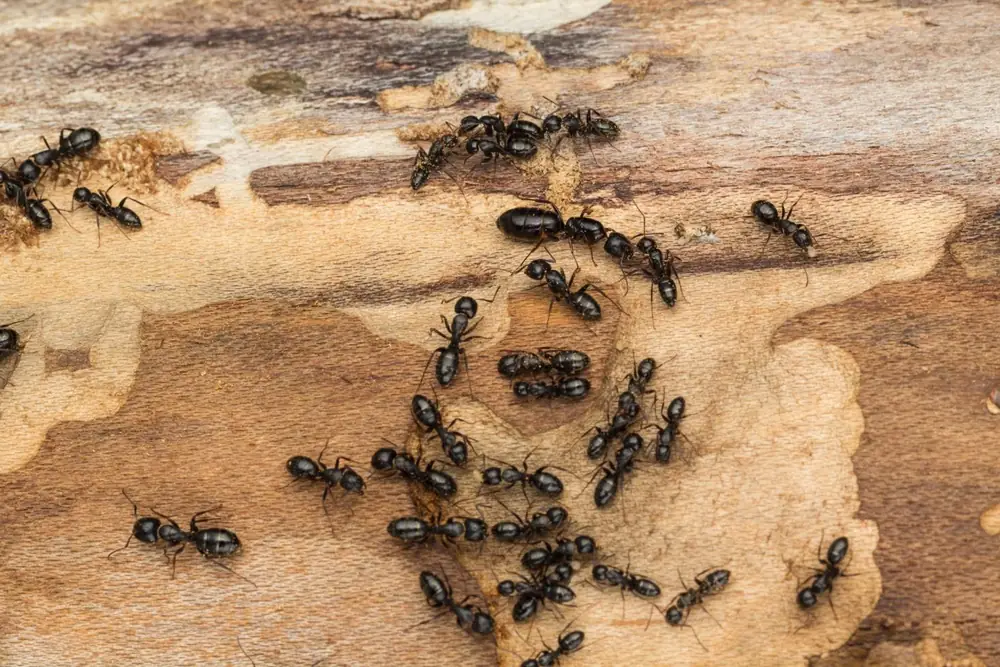
Ant control in Johannesburg works when the treatment reaches the nest. Spraying the trail you can see kills a few workers while the colony keeps producing more. We identify the ant, find where the trail leads, and use baits the workers carry home, backed by targeted treatments around the house where they get in.
Johannesburg's ants
Highveld gardens host many ant species, but a handful cause most of the calls.
- Small trailing ants: tiny brown or black ants that march in long lines to anything sweet or greasy. They often have many nests and queens spread through the garden and walls, which is why they reappear so fast.
- Brown house ants: small ants that push little heaps of sand up between paving bricks and along the bottom of walls. Some workers have very large heads. Large colonies can undermine paving over time.
- Pugnacious ants: the large, fast, dark ants that build nests in lawns and flowerbeds and bite when disturbed. They're common in Highveld gardens and a real nuisance for children and dogs playing on the grass.
- Ants in the walls: some species nest inside cavity walls, behind skirting boards or under tiles, and appear from plug points or cracks.
Our article on identifying ant activity explains how to read the trails and nest signs.
When ants are worst
Ant calls follow the Highveld weather. Activity builds in spring as temperatures rise, and peaks just before and after summer thunderstorms, when rain floods nests and pushes colonies indoors or up through paving. Winged ants often appear after the first big rains too. In dry winters, trailing ants move inside looking for water, especially around kitchen sinks and bathrooms.
How we get rid of ants
- Identify the ant. Sweet-feeding and protein-feeding ants accept different baits, and some species nest indoors while others don't.
- Follow the trail. We trace it from the kitchen or bathroom back outside, to the nest, the crack in the paving or the gap under the door.
- Bait the colony. We place ant baits along active trails and near nests. Workers feed and carry the bait back, sharing it through the colony including the queens.
- Treat entry points and nests. Where it suits the species and the site, we apply odourless, non-staining residual treatments around the outside of the house, door frames and nest openings in lawns or paving.
- Review. Large colonies may need a second round, especially in big gardens.
Baiting takes a few days to work, and you'll often see more ants at the bait at first. That's a good sign: they're taking it home.
Where we see the most ants
Estates with large irrigated gardens and extensive paving, like those around Fourways, have constant ant pressure because the colonies under the paving are huge. Older homes on the slopes of Northcliff and Linden often get ants coming in through cracks in older walls and floors. Big gardens and cluster complexes in Bryanston fall somewhere in between. Restaurants, hospitals and food factories need ant control as part of a scheduled service with written records.
Ants in kitchens, clinics and food businesses
In a home, ants are mostly an irritation. In a commercial kitchen, a bakery, a clinic or a food packing line they are a contamination risk, because foraging workers walk through drains and bins before they reach food and clean surfaces. Businesses need a different approach: a site plan, baits placed where they can never touch stock, a record of every visit and quick action when a new trail appears. Many of the small trailing ants also nest inside the building itself, in wall voids, under equipment and in expansion joints in the floor, so we inspect inside as carefully as outside. In complexes, the colonies under shared paving and gardens are a body corporate matter rather than one owner's problem, and treating the common areas at the same time as the units works far better than doing units one by one.
The mistake that makes ant problems worse
Spraying the trail with insect spray or wiping it with bleach. You kill the workers in front of you, but the colony feels threatened and can split into several new nests. Repellent sprays also stop ants taking bait. If you want to do something before we arrive, wipe up the food source and leave the trail alone.
Prevention that works
- Keep sugar, honey, pet food and fruit sealed or in the fridge.
- Fix leaking taps and irrigation, especially in winter when ants hunt water.
- Cut back shrubs and branches touching the walls; ants use them as bridges.
- Seal gaps around window frames, skirtings and plug points on outside walls.
- Rinse recycling before it goes in the bin.
What ant control costs, and why
The price depends on the size of the property and garden, the species, how many nests are involved and whether paving or lawns need treatment as well as the house. A kitchen trail in a townhouse is a small job; a large garden full of paving colonies takes more time and product. Our price guide shows the starting price for ant treatments. If it's a few ants after a storm, a shop-bought bait station placed on the trail may be all it needs. Our ant guide covers colony biology in more depth.
Ants are a quick fix once the nest is found, and finding it is what 25 years in pest control teaches you. We're SAPCA registered and registered with the Department of Agriculture, we offer service within 24 hours, and ant treatments are guaranteed for 3 months. Ring 084 200 2700, or send a WhatsApp photo of the trail.
Questions we get asked
How much does ant control cost?
Ant treatments are priced on the size of the property, the type of ant and the number of nests. A kitchen trail is a small job; a big garden with colonies under the paving takes longer. We confirm the price after looking.
Why are there more ants after the treatment?
With baiting, that's normal for a day or two. Workers swarm the bait and carry it back to the colony, and the numbers drop as the bait spreads through the nest.
Why do ants come inside before it rains?
Rain floods their nests, so colonies move to drier ground, often under paving, inside walls or into the kitchen.
Is ant bait safe with pets?
Yes, used correctly. We place baits where pets can't reach them or in tamper-resistant stations, and the amounts used are small.
How do I stop ants pushing sand up through my paving?
Those are usually brown house ants with large colonies under the paving. Treating the nest openings and baiting along the edges is far more effective than sweeping the sand away.
Can ants damage my house?
Most don't, but colonies under paving can loosen bricks over time, and ants nesting inside walls and plug points can be a nuisance. Biting garden ants make lawns unpleasant to use.
What should I avoid doing before you arrive?
Don't spray the trail or wipe it with bleach. Clean up the food source but leave the ants alone so we can follow them to the nest.