
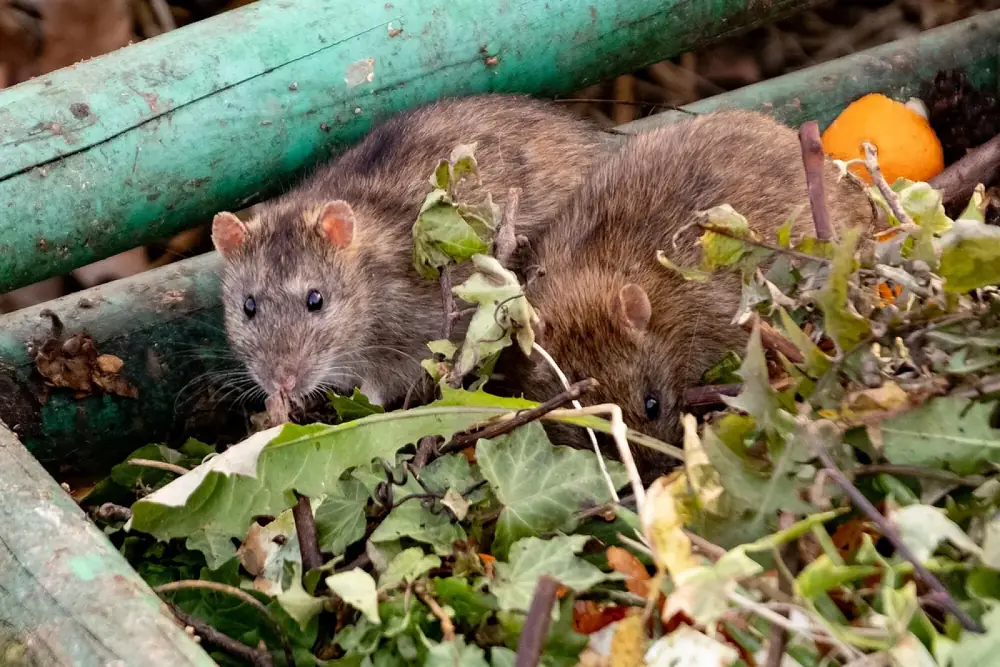
Rat control in Rosebank works best when it targets the right rat. Roof rats come in from the tree canopy and live in ceilings; brown rats come up from drains and refuse areas. We identify which one you have, bait it in lockable stations or trap it, and close the routes it is using.
Two rats, two routes in
Around Rosebank the split is fairly clear. In the leafy streets of Melrose, Parkhurst, Saxonwold and Houghton, the rat in your ceiling is almost always the roof rat: slim, long-tailed and an excellent climber. It uses overhanging branches, creepers, telephone and power lines and the tops of boundary walls to reach the eaves, then slips in where old timber fascias and roof sheeting have shrunk away from the wall.
In the commercial blocks, along the restaurant strips and towards the inner city, the more common culprit is the brown rat. It is bulkier, swims well and lives in sewers, stormwater pipes and burrows under paving. It reaches kitchens and basements through floor drains, broken manhole covers, gaps under roller doors and holes around pipes. The parkland around Zoo Lake and the Zoo gives both species plenty of cover and food along its edges.
What rats in Rosebank usually tell you
- Thumping or running overhead from just after dark, often quietest before dawn.
- Raisin-sized droppings in the roof space, on top of kitchen cupboards or behind the fridge.
- Chewed geyser insulation, electrical cables or the corners of plastic bins.
- A dark, greasy rub mark along a beam or where a wall meets the roof.
- Avocados, guavas or citrus hollowed out on the tree.
- Fresh burrows along the base of a retaining wall or under the compost.
If you are trying to work out whether the noise is rats, mice or something bigger, our guide to rat activity in the roof walks through the clues.
How we clear rats from a Rosebank property
First, the walk-around. We trace the runways from where the rats feed to where they nest, and look at the roof line from outside to find the gap they are using.
Second, secure baiting. Bait goes into lockable, tamper-resistant stations anchored along walls and outbuildings, away from where dogs and children play. Nothing is thrown loose into the ceiling.
Third, traps where bait is not suitable. In roof spaces, kitchens and food storerooms we use traps, so there is no risk of a rat dying inside a wall cavity.
Finally, proofing. Once activity drops, we give you a list of gaps to close. In older homes these are typically the gap where a newer extension roof meets the original one, missing air bricks, open eaves and pipes entering through rough holes.
Restaurants, shops and blocks of flats
Food businesses around Rosebank need a scheduled programme rather than a once-off visit, because the food supply never stops. We set up a station map, visit on a fixed schedule and leave a record that satisfies health inspections and franchise audits. For apartment buildings we work with the body corporate on bin rooms, basements and the perimeter, because baiting one unit while the refuse area feeds the colony achieves very little.
What people get wrong
The most common error in old houses is sealing the roof before the rats are gone. A rat trapped inside will chew its way out somewhere new, often through a ceiling board. We clear the activity first and close the gaps after. The other one is ignoring the fruit tree: ripe avocados and citrus left on the branch or on the ground keep a roof rat population going all winter.
A Rosebank tip
Look at the lines running from the street pole to your roof. Roof rats walk telephone and electricity cables like a tightrope, and in the older suburbs those lines often run straight through the canopy. Trim branches well back from where the cables attach, and from the roof itself.
What rat control costs, and why
The cost depends on the size of the property, how many bait stations are needed, whether we are working in a roof space, and how many follow-up visits it takes. A house with rats in the ceiling is a straightforward job; a restaurant or a block of flats is quoted for the site and, usually, for regular servicing. Our guide to pest control prices shows where rat treatments start. If you have one rat raiding the compost, a well-placed trap may be enough, and we will tell you so.
More help nearby
Rats and mice often turn up together, so see getting rid of mice in Rosebank if the droppings are smaller. Melrose homes get much the same roof rat pressure, covered on our Melrose pest control page. Further south, there is rat control in Johannesburg South, and city-wide, rat control in Johannesburg. The full local picture is on our Rosebank pest control page.
Combat Pest Control has 25 years of experience, is SAPCA registered and is registered with the Department of Agriculture. Jason van Heerden runs the business himself, we offer service within 24 hours, and rat treatments carry a 3-month guarantee. Call 084 200 2700, or WhatsApp us a photo of what you have found.
Questions we get asked
How much does rat control cost in Rosebank?
It depends on the property size, the number of bait stations and whether we need to work in the roof. A house is a fairly modest job; restaurants and blocks of flats are quoted for the site, usually with regular servicing.
Should I seal the roof gaps straight away?
Not until the activity has stopped. Rats trapped inside chew new holes, sometimes through the ceiling. We clear them first, then you close the gaps.
Will a dead rat smell in my ceiling?
It can with loose poison, which is why we use traps in roof spaces and keep bait in stations outdoors. That greatly reduces the chance of a rat dying out of reach.
Are rats dangerous to my family?
They can carry diseases, contaminate food and chew electrical wiring, which is a fire risk. They are worth dealing with promptly rather than waiting for them to leave.
What should I do before you arrive?
Note where you have heard or seen activity, keep any droppings in place, clear access to the roof hatch and pick up fallen fruit in the garden.
Can you treat our restaurant without closing it?
Yes. We work around trading hours, use traps and lockable stations in food areas and keep a written record for your inspections.