
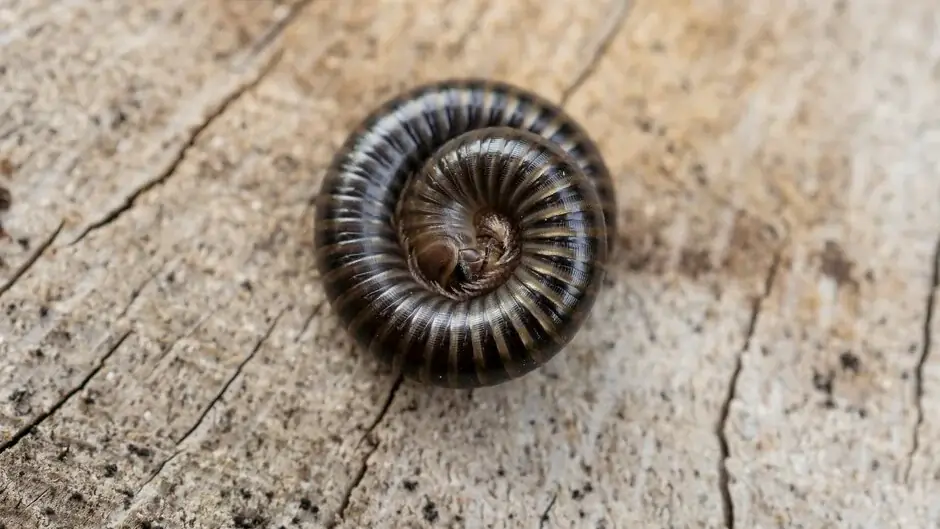
Millipede control in Rosebank is needed when shongololos move out of the garden in large numbers after rain and invade patios, pools, walls and the house. We treat the perimeter, the base of walls and the mulched garden edges where they gather, and advise on the leaf litter and moisture that build up such large numbers.
Why millipedes build up around Rosebank
Millipedes eat decaying plant material: fallen leaves, rotting mulch, compost and soft dead wood. The older suburbs around Rosebank, from Dunkeld and Melrose to Saxonwold, drop an enormous amount of leaf litter from their old trees every autumn, and many gardeners leave it on the beds or add thick layers of bark mulch and compost. That is a feast. Millipedes breed in it through the year, largely unnoticed, until the conditions change.
Two things trigger the invasions people call us about. Heavy summer rain floods the soil and leaf layer, and millipedes climb out to higher, drier ground: walls, steps, doors and the house. Later, warm, humid nights after the rains send them wandering in search of mates and new feeding ground. They are slow, but there can be hundreds at a time.
Are millipedes harmful?
Not really. Millipedes do not bite or sting and are useful in the garden, breaking down dead plant matter. The problems are nuisance ones: crawling into the house in numbers, drowning in the pool and blocking the skimmer, crunching underfoot on the patio, and, when disturbed or crushed, releasing a defensive fluid that smells unpleasant and can stain skin, tiles and light fabrics. Some people's skin reacts to it, so wash your hands after handling them and keep them away from your eyes. Dogs that pick them up often drool and paw at their mouths; it is usually unpleasant rather than dangerous, but call a vet if the dog seems unwell.
Millipede or centipede?
Millipedes are rounded, slow and have two pairs of legs per segment; they curl into a tight coil when touched. Centipedes are flatter, fast and have one pair per segment, and they hunt insects. If what you are seeing is fast and flat, our Rosebank centipede treatment page is the one to read.
How we treat a millipede invasion
- Find where they are coming from. We trace the movement back to the beds, compost, leaf piles or mulch they are leaving.
- Treat a perimeter band. We apply an odourless, non-staining residual treatment around the base of the house walls, along the edges of patios and paving, at door thresholds and around the pool surround.
- Treat the source edges. The edges of heavily mulched beds and leaf-filled corners next to the house are treated to reduce numbers before they move.
- Advise on the garden. We show you where to thin the mulch and clear leaf litter to stop such large numbers building up again.
You can stay home during the treatment. Keep pets and children off treated surfaces until they are dry.
What gardeners often get wrong
Laying thick mulch right up against the house walls and then wondering why the shongololos are in the lounge. Mulch is good for plants, but a damp layer against the foundation is a millipede highway. The other mistake is sweeping them into a heap and leaving them; they simply move back. Sweep them into a bucket of soapy water or move them well away.
A Rosebank tip
In autumn, when the big trees drop their leaves, rake them off the beds next to the house and compost them at the bottom of the garden instead. A clear strip of a metre or so around the house, gravel or paving rather than mulch, breaks the millipede route after the summer rains.
Pools and patios
Pools surrounded by mulched beds catch millipedes by the hundred after a storm. A treated band around the pool coping, combined with keeping the bed edges back from the paving, keeps most of them out of the water. Empty the skimmer basket often in wet weeks.
What millipede control costs, and why
The cost depends on the length of the perimeter being treated, the size of the garden and patio areas, and whether the pool surround is included. A small garden with one problem wall is quick; a large property with long bed edges and a pool takes longer. Our prices page shows where millipede treatments start. If it is a brief burst after one big storm, sweeping and patience may be enough, as the numbers drop on their own once the soil drains.
More nearby
Dunkeld gardens see a lot of this; see our Dunkeld pest control page. On the slopes around Emmarentia and Northcliff, we handle millipedes in Northcliff, and across the whole city through millipede control in Johannesburg. For everything else locally, see our Rosebank pest control overview.
Millipede treatments are applied by Combat Pest Control, which is SAPCA registered and holds Department of Agriculture registration, backed by Jason van Heerden's 25 years of experience. We offer service within 24 hours, and millipede treatments carry a 3-month guarantee. Call 084 200 2700, or WhatsApp us a photo of the invasion.
Questions we get asked
How much does millipede control cost?
It depends on the length of perimeter, the size of the garden and patio, and whether the pool surround is treated. A small garden costs much less than a large property with long bed edges.
Are shongololos poisonous?
They do not bite or sting. They release a defensive fluid when disturbed that smells bad and can stain or irritate skin, so wash your hands after handling them.
Why are there so many millipedes after rain?
Heavy rain floods the leaf litter and soil where they live, so they climb onto walls, paving and into houses to reach drier ground.
Will the millipedes come back next year?
Some will, because they are part of a healthy garden. Clearing leaf litter and mulch away from the house walls keeps the numbers down.
Is the treatment safe for my dog?
Yes, once dry. Keep pets off treated areas until then. If your dog has mouthed a millipede and seems unwell, call your vet.
Can I just remove them myself?
For a small number, yes. Sweep them into a bucket of soapy water or move them to the bottom of the garden. Large, repeated invasions are when a treatment helps.