
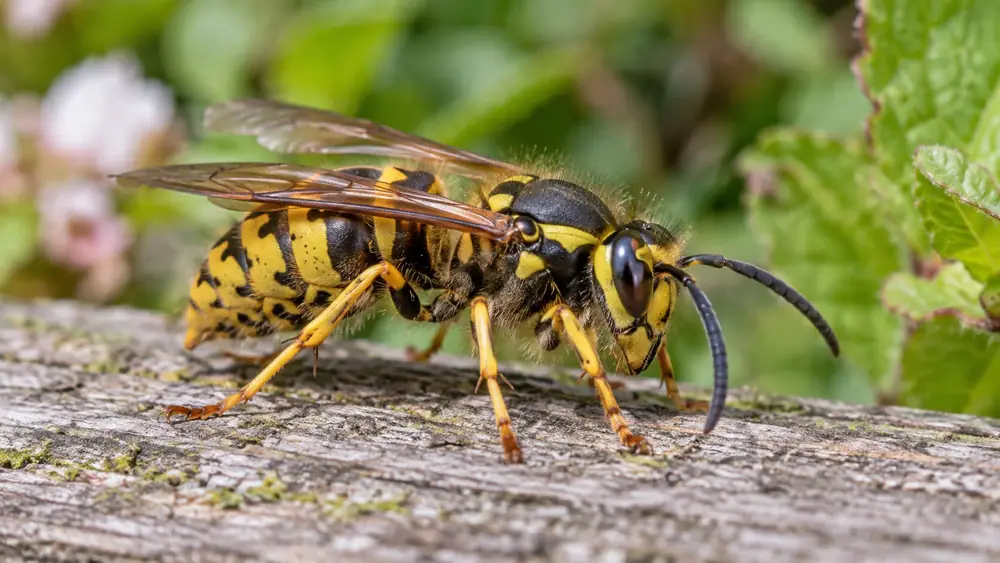
This wasp guide covers the paper wasps and mud daubers that build under Johannesburg eaves, patio roofs and pool pumps. Small, early nests are easy to deal with, but large or hidden nests can sting repeatedly. Wasp control means treating the nest directly, ideally at dusk when the wasps are home, then removing it.
The wasps you'll meet around the house
Paper wasps
Slender wasps, usually brown, reddish or yellow and black, with long legs that dangle in flight. They build open, umbrella-shaped nests of grey paper made from chewed wood fibre, hanging from a single stalk. The cells are visible from below. Nests are found under eaves, gutters, window sills, patio roofs, carports, shade cloth, playground equipment, and inside gate motor covers and electrical boxes. Paper wasps defend their nests and sting when disturbed.
Mud daubers
Very thin-waisted, often black or metallic blue wasps that build small mud cells or tubes on walls, ceilings, in garages and inside rolled-up blinds. They're solitary, stocking each cell with paralysed spiders or caterpillars for their young. Mud daubers rarely sting people and are more of a nuisance than a hazard.
Potter and other solitary wasps
Some solitary wasps build small pot-shaped mud nests or use holes in wood and walls. Like mud daubers, they seldom bother people.
The wasp year on the Highveld
In spring, as the weather warms, a single queen or a small group of females starts a new paper wasp nest. At first it's only a few cells, and the nest grows through summer as workers hatch and join in. By late summer a well-placed nest can hold a large number of wasps, and they become more defensive as it grows. In autumn the nest declines, and new queens find sheltered spots to spend the winter. The old nest isn't reused, though wasps often build in the same sheltered places year after year.
Wasp or bee?
Wasps are smooth, shiny and slim-waisted, and can sting more than once. Honeybees are hairy, golden-brown and stockier, and a worker honeybee dies after stinging. Bees build wax comb, usually hidden inside a cavity, not a grey paper umbrella in the open. The difference matters, because bees are dealt with very differently, and our bee guide explains how.
Stings and allergies
For most people, a wasp sting causes sharp pain, redness and swelling that settle within a day or two. Wash the area, apply a cold compress and take an antihistamine if it helps. Get emergency help straight away if anyone develops swelling of the face, lips or throat, difficulty breathing, dizziness or a widespread rash after a sting. These are signs of a serious allergic reaction. Multiple stings are also more dangerous, especially for children.
Why DIY wasp removal is risky
Knocking down a nest with a broom in daylight, when the wasps are active, often leads to multiple stings. Spraying a nest from a ladder is worse, because a startled person on a ladder is likely to fall. Supermarket sprays may not reach into the comb, so surviving wasps rebuild nearby. And blocking the entrance of a nest inside a wall cavity or roof can drive wasps indoors through another gap.
How we treat wasp nests
We locate the nest, including any you haven't found, then treat it directly with a registered product, usually at dusk or early morning when the wasps are inside and less active. Once the nest is dead, it's removed so it doesn't attract other insects. Nests in wall cavities, roof spaces or electrical equipment are treated through the entry point. Where several nests keep appearing, we treat the sheltered surfaces where wasps like to build. You don't need to leave home; keep children and pets indoors while we work on the nest.
Prevention and early action
- Check eaves, patio roofs, gate motors and playground equipment in early spring, when nests are tiny.
- Remove a very small, new nest at night, with long sleeves and gloves, if you're confident and not allergic.
- Seal gaps in eaves, fascias and wall cavities where wasps build hidden nests.
- Keep bins closed, and cover sugary drinks and food outdoors.
- Fit covers to meter boxes and gate motor housings.
Wasps in schools, offices and estates
Schools, crèches, sports clubs and estates with playgrounds and large eaves can't afford a nest near children. A scheduled inspection in spring and summer catches nests early. We work around school hours and keep areas closed until it's safe.
What wasp nest removal costs, and why
The cost depends on the number of nests, their size, how high or hard to reach they are, and whether they're inside a wall, roof or electrical equipment. A single, easily reached nest under the eaves is a small job; several nests, a nest high on a double-storey or one inside a cavity costs more. Our guide prices show where wasp work starts. A tiny spring nest with a few wasps can safely be dealt with yourself if you're careful and not allergic.
For local service, see wasp control in Johannesburg or wasp nest removal in Bryanston, where big gardens and covered patios give paper wasps plenty of options. If flies and other flying insects are also a problem, see our flying insect treatments.
Combat Pest Control is owned by Jason van Heerden, with 25 years in pest control, SAPCA membership and registration with the Department of Agriculture under Act 36. Service within 24 hours is available, and wasp treatments carry a 3-month guarantee. Call 084 200 2700, or WhatsApp a photo of the nest from a safe distance.

Questions we get asked
How much does wasp nest removal cost?
It depends on how many nests there are, their size and how hard they are to reach. A single nest under the eaves is a small job; nests in cavities or high on double-storeys cost more.
Can I remove a wasp nest myself?
A very small, new nest, yes, at night with protective clothing if you're not allergic. Large, high or hidden nests are best left to a professional.
Will the wasps come back to the same spot?
The old nest isn't reused, but wasps often build again in the same sheltered places. Sealing gaps and checking in spring helps.
Is wasp treatment safe for children and pets?
Yes. The treatment goes directly into the nest. Keep children and pets indoors while we work and away from the area until we say it's clear.
What should I do if I'm stung?
Wash the sting, apply a cold compress and take an antihistamine if needed. Get emergency help for swelling of the face or throat, or difficulty breathing.
Why do you treat nests at dusk?
Because most of the wasps are home and less active, so the treatment reaches more of them and the risk of stings is lower.
How do I know if it's a wasp or bee nest?
Wasps build grey paper nests, often hanging in the open. Bees build wax comb, usually hidden inside a cavity, with bees flying in and out of one hole.