
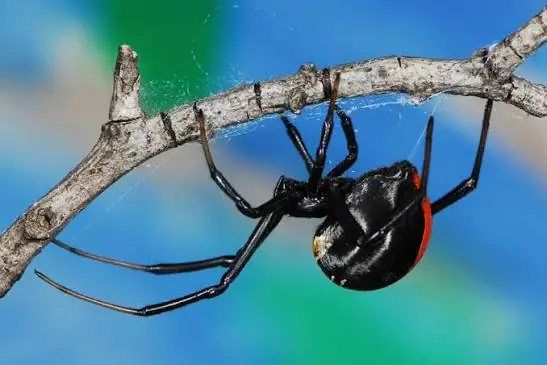
Spider control in Rosebank starts with knowing which spiders you actually have. Most are harmless and even useful, but button spiders and sac spiders deserve respect. We identify the species, treat the eaves, outbuildings, garden furniture and wall gaps where they shelter, and reduce the insects that attract them in the first place.
Why the area has so many spiders
Spiders follow food, and the old gardens around Rosebank are full of it. Huge trees, thick creepers, compost heaps, stone walls, rockeries on the Parktown and Westcliff ridges, and outbuildings full of stored garden furniture all give spiders shelter and a steady supply of insects. Outside lights attract moths and flies on summer nights, which in turn draw spiders to windows and eaves. Indoors, older homes have plenty of gaps around window frames, under doors and in pressed ceilings, so spiders come and go easily.
The spiders people ask us about
Button spiders
The black button spider and the brown button spider are the ones to take seriously. Both make untidy webs in sheltered spots close to the ground: under garden furniture, in pot plant rims, in meter boxes, among bricks and in the corners of sheds. The black button spider's bite is the more serious and needs medical attention. The brown button spider is more common around houses and its egg sacs, round and covered in small spikes, are easy to recognise.
Sac spiders
Pale, yellowish spiders that hunt at night and shelter in a silk sac in curtain folds, ceiling corners and behind pictures by day. Their bites can cause a slow-healing sore, and they are behind many of the "something bit me in my sleep" calls we receive.
Rain spiders and baboon spiders
Rain spiders are large, flat and fast, and often come indoors before summer storms. They look alarming but are not dangerous to people. Baboon spiders live in burrows in undisturbed soil and seldom come into homes. We will usually advise leaving both alone, or moving them outside.
How we treat spiders
- Identify first. We look at what you have found, the webs and the egg sacs before deciding what to treat.
- Treat the shelter. We apply an odourless, non-staining residual treatment to eaves, window frames, door surrounds, garages, outbuildings, under garden furniture and along wall gaps.
- Remove webs and egg sacs. Clearing egg sacs, especially button spider sacs, prevents the next generation.
- Cut the food supply. If flying insects around lights are the draw, we may suggest treating for those too.
You can stay home during treatment. Children and pets should stay off treated surfaces until they have dried.
Offices, flats and shopfronts
In the commercial blocks around Rosebank, spiders are mostly a cleanliness and appearance issue: webs across shopfront windows, balcony corners and the undersides of signage, where night lighting brings in a steady stream of insects. We treat the window frames, ledges, balconies and soffits, and for buildings with a lot of glass and lighting, a regular service keeps the frontage clear. Inside offices, sac spiders occasionally turn up in storerooms and behind filing cabinets, and a crack-and-crevice treatment usually sorts them out.
A common mistake
Spraying every spider web in sight with a household aerosol. It kills the spider in front of you and nothing else, and does nothing to the egg sacs tucked into the corners. The other mistake is panicking over a rain spider while ignoring the button spider under the garden chair the children sit on.
A Rosebank tip
Before you sit on stored garden furniture or lift pots that have stood for a while, tip them up and look underneath. Button spiders love the hollow underside of plastic chairs, pot rims and the space inside upturned buckets, and the old gardens here have plenty of quiet corners for them.
If you are bitten
Stay calm and, if you can, safely catch or photograph the spider. Wash the bite and seek medical advice, urgently if you have severe muscle pain, cramping or sweating after a bite, which can follow a button spider bite. A photo helps the doctor and helps us know what to treat.
What spider control costs, and why
The cost depends on the size of the house, how many outbuildings, garages and outdoor areas need treating, and whether we are dealing with a specific species around a play area or a general reduction across the property. A flat with spiders around the windows is a small job; a large garden with outbuildings and stone walls takes more time. Our pest control prices show the starting point. If it is the odd rain spider, a glass and a piece of card is honestly all you need.
More nearby
Spiders and scorpions often share the same rocky spots; see scorpion control in Rosebank. Parktown homes on the ridge are covered on our Parktown pest control page. We deal with spiders in Northcliff gardens too, and city-wide through spider control in Johannesburg. For other local pests, see our Rosebank area page.
Combat Pest Control has 25 years of experience and is SAPCA registered and registered with the Department of Agriculture. We offer service within 24 hours, and spider treatments carry a 3-month guarantee. Call 084 200 2700, or WhatsApp us a photo of the spider so we can identify it.
Questions we get asked
How much does spider control cost?
It depends on the size of the house, the number of outbuildings and outdoor areas and whether we are targeting a specific species. A flat costs much less than a large property with sheds and stone walls.
Which spiders in Johannesburg are dangerous?
The black and brown button spiders and sac spiders are the ones to watch. Rain spiders and baboon spiders look frightening but are not a real danger to people.
Can my kids play in the garden after a spider treatment?
Yes, once the treatment has dried. We apply it to eaves, frames and outdoor shelter rather than open lawn, and we will tell you which spots to avoid until then.
Will the spiders come back after treatment?
Some will, because spiders follow insects into gardens. The treatment reduces them significantly and carries a 3-month guarantee, and cutting outside lighting helps.
What do button spider egg sacs look like?
Brown button spider sacs are round, cream to tan and covered in small spikes, like a tiny sea mine. Black button spider sacs are smooth and round. Both should be removed.
Should I kill rain spiders?
There is no need. They are harmless to people and eat insects. Catch them under a glass and move them outside.