
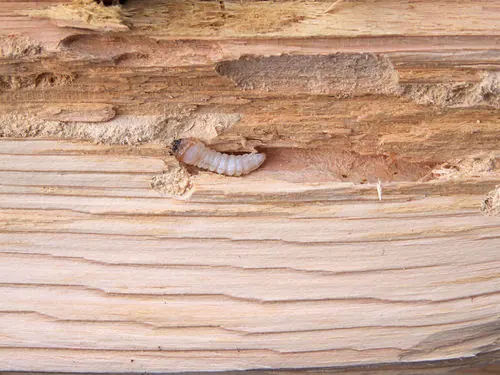
Wood borer treatment in Johannesburg begins with confirming the beetle is still active, because many old holes are decades old. We inspect floors, roof timbers and furniture, identify the borer, treat infested timber with a registered product that penetrates the wood and kills larvae inside, and tell you honestly if any piece is too weak to keep.
What wood borer actually is
Wood borer is the larva of a small beetle. The adult lays eggs in cracks and pores in timber, and the larvae tunnel inside the wood for years, feeding as they go. You don't see them. What you see is the exit hole, made when an adult chews its way out to mate and lay the next generation, and the fine, powdery dust called frass that falls out. By the time holes appear, the larvae have usually been in the timber for a long time.
The common types in Johannesburg homes
Common furniture beetle
This is the one in pine floors, skirting boards, roof trusses, built-in cupboards and old furniture. It leaves small round holes about the size of a pencil lead, and gritty dust underneath. Older homes in the established suburbs, with original timber floors and pine roof structures, are where we find it most.
Powderpost beetle
These go for hardwoods with a high starch content: some imported hardwood furniture, parquet, door frames and new timber products. The dust is very fine, like flour, and the holes even smaller. Infestations sometimes appear within a few years of new furniture or flooring being installed.
Wood borer or termites?
People mix them up all the time, and they need completely different treatment. Wood borer leaves neat round holes and loose powder, with no soil involved. Subterranean termites leave mud tubes, soil packed into tunnels, and timber that's hollowed out along the grain behind an intact surface. If you see mud, it's termites, and our page on termite control in Johannesburg is the place to start.
Signs the borer is active
- Fresh, pale dust below holes, especially if it comes back after you've vacuumed it
- Holes with clean, sharp edges rather than dark, dirty ones
- Small beetles near windows in late spring and summer, when the adults emerge
- Timber that feels soft or crumbles when pressed with a screwdriver
- New holes appearing in a floor or piece of furniture you know well
How we treat wood borer
- Inspect. We check floors from above and below where possible, roof timbers, cupboards and any furniture you're worried about, and we check whether the activity is current.
- Assess the timber. Lightly affected timber can be treated and kept. Heavily damaged boards or roof members may need replacing, and we'll advise if a builder or carpenter should look at structural pieces.
- Treat. A registered wood borer treatment is applied to the affected and surrounding timber so it soaks into the wood and kills larvae as they feed. Sealed or varnished surfaces may need treating from the unsealed side or by injection into exit holes.
- Furniture and loose items. Badly infested furniture that can't be treated in place may be better handled by gas fumigation with a registered fumigant.
Roof timbers, floors and the buying process
Roof trusses are easy to forget because few people go into the roof. Borer in a truss or purlin can weaken it over years without any sign in the rooms below, apart from a little dust on top of the ceiling boards. When you're buying an older house, it's worth having the roof timbers and floors checked as part of the process, and an entomological inspection covers both borer and termites. If activity turns up, treatment before transfer is far simpler than dealing with it after you've moved your furniture in.
The mistake that costs the most
Sanding and resealing an old floor without checking for borer first. The new varnish goes straight over a live infestation, the larvae keep eating underneath, and fresh holes punch through the new finish a season or two later. Have it inspected and treated before the floor is refinished, while the timber is still bare.
A Johannesburg tip
Look at the timber you rarely see: the underside of stair treads, the back of built-in cupboards, the roof trusses near the hatch and the floor inside the cupboard under the stairs. Dust and holes show up there long before anyone notices them in the lounge.
What it costs and why
Wood borer treatment is priced on the area of affected timber and how easy it is to reach. A few boards or a single piece of furniture is a small job. A whole floor, a roof structure, or timber that has to be treated from underneath through a crawl space takes more time and product. Replacement of damaged timber is a separate building cost. Our guide price for wood borer shows where it starts, and we quote after the inspection. If the holes turn out to be old and inactive, we'll tell you, and you won't need treatment at all.
Wood borer near you
Heritage homes and original pine floors make wood borer in Rosebank one of our more common jobs, and older homes and roof structures keep wood borer treatment in Northcliff busy too. For the beetle's life cycle and how to identify each species, read the wood borer guide.
Jason van Heerden has spent 25 years in pest control and owns and operates Combat Pest Control, which is SAPCA registered and registered with the Department of Agriculture. Book with us for service within 24 hours; treatments are covered by our 3-month guarantee. Call 084 200 2700, or WhatsApp a photo of the holes and the dust.

Questions we get asked
How much does wood borer treatment cost?
It depends on how much timber is affected and how easy it is to reach. A few boards or one piece of furniture is a small job; a whole floor or roof costs more. The price guide shows the starting price, and we quote after inspecting.
How do I know if the wood borer is still active?
Fresh, pale dust under holes, especially dust that returns after vacuuming, and clean-edged holes suggest activity. Dark, dirty holes with no new dust are often old.
Can wood borer spread to other furniture?
Yes. Adult beetles fly and lay eggs in other untreated timber nearby, so an infested piece of furniture can affect floors and other pieces over time.
Is the treatment safe for my family?
Yes, when applied correctly. You can stay at home; keep children and pets off treated timber until it's dry.
Do I need to replace my floor?
Usually not. Most affected floors can be treated and kept. Only boards that are badly weakened need replacing, and we'll tell you which ones.
Is it wood borer or termites?
Round holes and loose powder mean wood borer. Mud tubes or soil inside the timber mean termites. They're treated differently, so it's worth confirming.
What should I do before you come?
Don't sand, varnish or vacuum away the dust. It helps us see where the activity is and whether it's current.