
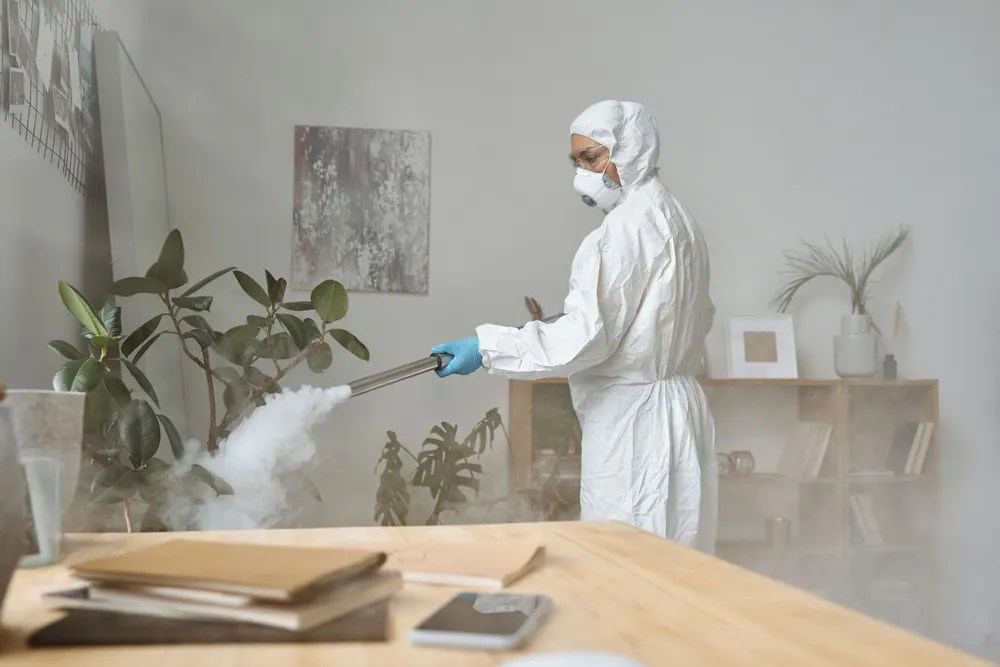
Pest control in Marshalltown is mostly high-rise commercial work: German cockroaches in office kitchens and food outlets, rats in basements and service areas, pigeons on ledges and window sills, and flies around refuse. We also treat converted residential buildings for cockroaches and bed bugs. Everything starts with an inspection and ends with a written service record.
The old financial heart of the city
Marshalltown is the southern half of Johannesburg's central business district, home to many of the city's historic bank and mining company buildings, office towers and the Gandhi Square transport hub. Street level is lined with shops, food outlets and informal traders, while basements hold parking, plant rooms and refuse areas. In recent years a number of older office blocks have been converted to apartments, so many buildings now combine offices, retail and residential space.
Tall buildings have long vertical routes for pests: service shafts, lift pits, plumbing stacks and cable risers. Food courts, canteens and street food bring food waste close to the buildings. And city pigeons are everywhere. Pest control here is less about any single flat or office and more about managing a whole building over time.
Office kitchens, canteens and food outlets
German cockroaches are the most common complaint in office buildings. They live in tea kitchens, under vending machines, behind fridges and in the warm housings of coffee machines, and they spread between floors through service ducts. Gel baits placed in those spots, plus targeted treatment of ducts and refuse areas, control them without closing kitchens. Restaurants and takeaways at street level get the same approach, with scheduled visits and records for health inspections.
Basements, refuse rooms and rodents
Rats come in from storm drains and the sewer network and live in basements, cable trenches and refuse rooms, while mice move up through the building in service risers. We place lockable, tamper-resistant stations in basements and around refuse areas, check them on a schedule and keep a written record, which is what building owners, tenants and auditors usually want to see. Gnawed cables in a riser or plant room are worth reporting straight away, because rodent damage to wiring is a fire and downtime risk as well as a hygiene one.
Pigeons on ledges
Historic buildings with deep window sills, cornices and carved facades are perfect pigeon roosts. Droppings damage stonework, block gutters and drains, and nesting brings bird mites indoors. We fit spikes, netting and gap sealing to suit the building, and remove existing nests and debris. See bird proofing for Johannesburg buildings.
Flies around refuse
House flies and blowflies breed in food waste and bins that aren't emptied often enough. Closing bin lids, washing refuse areas and dealing with leaking bags matters most, with treatment of resting and breeding areas to bring numbers down. Our fly control in Johannesburg page has more.
Converted residential buildings
In apartments created from old offices, residents deal with German cockroaches from shared plumbing and bed bugs carried in with furniture. A building-wide treatment, with follow-up, works far better than individual flats calling us one at a time. We give residents short preparation notes and plan the visits floor by floor, so access is easier for everyone.
How we fit around a working building
We can work early mornings, evenings or weekends, floor by floor, so tenants and customers aren't disturbed. Our insect treatments are odourless and non-staining, and nobody needs to leave the building for them. For stored goods with a serious infestation, fumigation with registered fumigants is sometimes needed; then the sealed area must be vacated until it is cleared.
The mistake facilities managers make
Treating each tenant's complaint as a separate call-out. It is expensive, there's no overall record, and the pests keep circulating through the shafts and refuse system. A single building contract with a monitoring plan costs less and works better.
A Marshalltown tip
Look at the refuse room's door. If it is propped open for convenience, or the seal at the bottom has worn away, rats and cockroaches have free access from the basement to the rest of the building. A self-closing door with a good bottom seal is one of the cheapest pest controls a city building can have.
What it costs and why
For a building, the cost depends on the number of floors and tenants, the size of the basement and refuse areas, the number of stations and how often we visit. Bird proofing is quoted on the length of ledges and the access needed, which may include working at height. A single office kitchen or flat is a small job. Guide "from" prices are shown on this page, with the full list on our Johannesburg pricing guide.
Marshalltown falls under our Rosebank and central Johannesburg area, and neighbouring Newtown has its own page.
Combat Pest Control is owned and run by Jason van Heerden, with 25 years in pest control. We're SAPCA registered and registered with the Department of Agriculture under Act 36, offer service within 24 hours and guarantee general treatments for 3 months. Facilities managers can call 084 200 2700 or WhatsApp us photos from site.
Questions we get asked
Do you service high-rise office buildings?
Yes. We set up building-wide programmes with stations, cockroach treatment, bird proofing where needed and a written record of each visit.
Can you work after hours?
Yes. We can treat early, in the evening or over weekends, floor by floor.
How much does a building pest control contract cost?
It depends on floors, tenants, basement and refuse areas, and visit frequency. We quote after a site inspection.
How do we stop pigeons on our historic facade?
Spikes, netting and sealing gaps, chosen to suit the building's ledges and cornices, plus removal of existing nests.
Why do cockroaches keep appearing on different floors?
They travel through service ducts and plumbing stacks. Treating the ducts and refuse system, not just the floor that complains, is the fix.
Do tenants need to leave during treatment?
No, not for normal insect treatments. Fumigation is different: the sealed area must be vacated until it's cleared.