
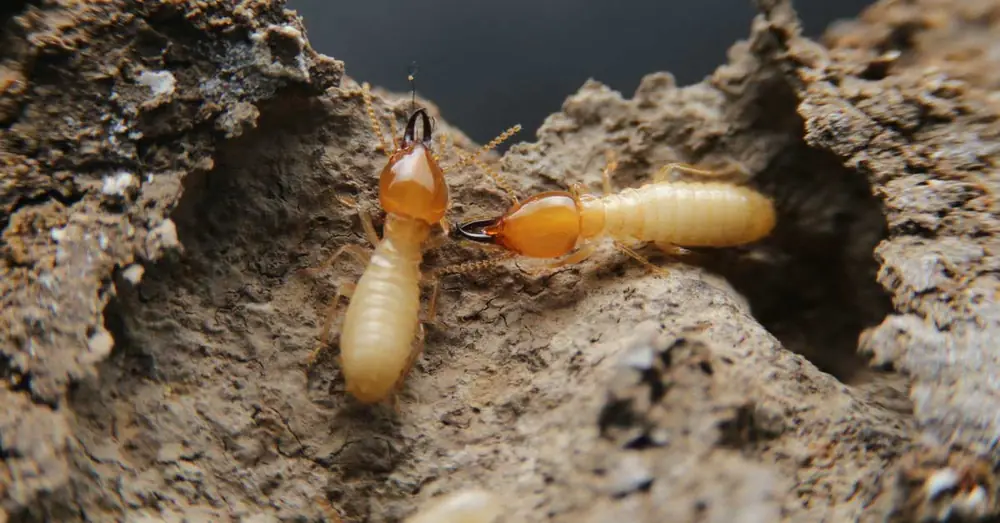
Termite control in Sandton means finding out which termite you have before anything is treated. Subterranean termites damage timber in homes, while harvester termites strip lawns. We inspect, trace the activity to where the colony is getting in, and apply registered soil treatments or baiting that reach the colony, backed by a 5-year guarantee and certificate.
Why Sandton gets so many termite calls
Three things come together here. The first is the soil. Like the rest of the Highveld, Sandton sits on deep soils that stay cool and damp below the surface even in a dry winter, and the summer thunderstorms from October to March soak the ground right when colonies are growing. The second is the gardens. Big stands with mature trees, irrigation systems, water features, compost and thick mulched beds keep the soil moist and supply dead roots and branches all year. The third, and the one most owners don't think about, is building work.
Sandton changes constantly. Older family homes are extended, renovated or knocked down and rebuilt, large stands are subdivided into cluster complexes, and new estates and office parks go up on cleared ground. Every one of those projects risks leaving timber offcuts, formwork, old tree stumps and broken roots buried under paving, lawn and foundations. A colony can feed on that buried timber for years before it reaches the house. When we trace termites in a Sandton home that is only a few years old, a buried stump or a pile of builder's rubble is very often the start of it.
The two termites we deal with in Sandton
Subterranean termites: the building risk
These live in the soil and reach food through sealed mud tubes, because open air dries them out. In Sandton we find them in door frames next to showers, skirting boards and built-in cupboards against outside walls, timber window sills, wooden decks around pools, garage storage, and the timber poles of lapas and pergolas. Homes with suspended timber floors and older pine roof trusses are especially exposed.
Harvester termites: the lawn risk
Harvester termites don't touch your house. They cut grass and carry it underground, and in a dry Highveld winter, when kikuyu goes dormant and stressed, they can clear large patches in a few weeks. Look for small round holes with loose soil heaps and short cut pieces of grass around them, mostly in the morning and late afternoon. It is a common problem on big lawns in the established suburbs, in complex common gardens and on office park landscaping.
Signs to look for
- Brown mud tubes running up a foundation, a garage wall or the inside of a cupboard
- Skirting boards, door frames or floorboards that sound hollow or feel soft
- Paint bubbling or cracking in a straight line along timber
- Winged termites coming out of a wall, floor or frame indoors after the first summer rains
- Bare lawn patches with small holes and soil heaps during winter
How we treat termites in Sandton
- Inspection. We check the foundations, walls, roof space, cupboards, frames, decks and garden, confirm the species and map where the activity is.
- Tracing the entry. Expansion joints, cracks in the slab, pipe and cable penetrations, flowerbeds built up above the damp course and timber touching soil are the usual ways in.
- Treating the colony. For subterranean termites we apply registered soil treatments around and under the structure to create a treated zone, drilling through paving where needed, or use baiting where drilling isn't practical. For harvester termites we treat the active nest openings so the workers take the product down to the colony.
- Follow-up and certificate. Heavy infestations get a return visit. Structural termite treatments come with a treatment certificate and a 5-year guarantee.
Damaged timber may still need a carpenter once the termites are dead, and if you're not sure whether the holes in a floor are termites or beetles, our wood borer treatment in Sandton page explains the difference.
Building or extending in Sandton?
The best time to stop termites is before the slab is cast. A termite pre-treatment of the soil for new building work creates a treated barrier under the foundations and floors, and banks and building inspectors often ask for proof it was done. An extension needs its own pre-treatment, or it becomes a bridge into the original house. Ask your builder to remove stumps, roots and offcuts from site rather than burying them.
Selling a property
Many Sandton sales need an entomological certificate before transfer. We inspect for termites and wood borer, report what we find and issue the certificate if there's no active infestation.
What people get wrong
The most common mistake is breaking open the mud tubes and spraying them with a household insecticide. A few workers die, the colony underground carries on, and it simply builds a new tube somewhere you can't see. Leave the tubes for us; they are the trail we follow. The second mistake is assuming a house that was pre-treated when it was built is still protected decades later. New paving, raised flowerbeds and extensions break the treated zone.
What termite control costs in Sandton, and why
Termite work varies more than almost any other pest job. The main cost drivers are:
- Which termite it is: a harvester termite treatment on a lawn is far smaller than a structural treatment
- The length of the building's perimeter, and whether we have to drill through paving, decking or a slab
- Whether baiting suits the building better than a soil treatment
- For new builds, the area of slab and foundations to be pre-treated
This page shows a guide 'from' price, and you can see how termite jobs compare on our Johannesburg pest control price guide. We quote after inspecting, and if a few harvester termite holes in a corner of the lawn are something you can manage yourself, we'll tell you.
Prevention for Sandton gardens
Keep soil, mulch and paving below the damp-proof course. Move firewood, timber and cardboard off the garage floor and away from outside walls. Fix leaking irrigation lines and drippers that keep soil wet against the foundations. And when a large tree comes down, have the stump ground out rather than left to rot under the lawn, because in Sandton's big gardens that stump is often where the next colony starts.
Termites are only one part of what we do here; the full Sandton pest control overview covers the rest, and our page on pest control in Rivonia looks at one of the area's leafiest suburbs. Next door, we also handle termite treatments in Bryanston, and the city-wide picture is on termite control across Johannesburg.
Combat Pest Control is run by Jason van Heerden, who has 25 years of experience. We're SAPCA registered and registered with the Department of Agriculture under Act 36 of 1947, and we offer service within 24 hours. Call 084 200 2700 to book a termite inspection, or WhatsApp us a photo of the mud tubes or the lawn and we'll tell you which termite it is.

Questions we get asked
How much does termite treatment cost in Sandton?
It depends mainly on which termite you have and the size of the building. Harvester termites in a lawn are a much smaller job than a structural treatment, which is priced on the perimeter, the paving and the treatment method. We quote after inspecting.
My house is new. Why does it have termites?
New homes often have termites because timber offcuts, formwork, stumps and roots were buried during building. The colony feeds on that first and then finds the house. A pre-treatment before the slab is cast is the best protection.
What does the 5-year guarantee cover?
Our structural termite treatments carry a 5-year guarantee and a treatment certificate. If termites return to the treated area in that time, we come back. Building work that breaks the treated zone, such as new paving or an extension, should be checked and treated.
Are flying termites in the garden a problem?
Not on their own. Swarms after the first summer rains are normal on the Highveld. If they come out of a wall, floor or door frame inside the house, a colony is using the building and needs an inspection.
Can harvester termites damage my house?
No. Harvester termites eat grass, not timber, so they only damage lawns. They are treated through the nest openings, and the lawn recovers once it's watered and fed.
Do I need a termite certificate to sell my Sandton home?
Often, yes. Many banks, buyers and conveyancers ask for an entomological certificate before transfer. We inspect for termites and wood borer and issue it if there's no active infestation.
Is the treatment safe for my dogs and the koi pond?
Yes, when applied correctly and kept away from water. We avoid ponds and water features, and pets should stay off treated soil and paving until it's dry.
Should I break the mud tubes to see if they're active?
No. Leave them intact. Broken tubes make the colony reroute, and an intact tube is what we use to trace the activity back to where it enters.