
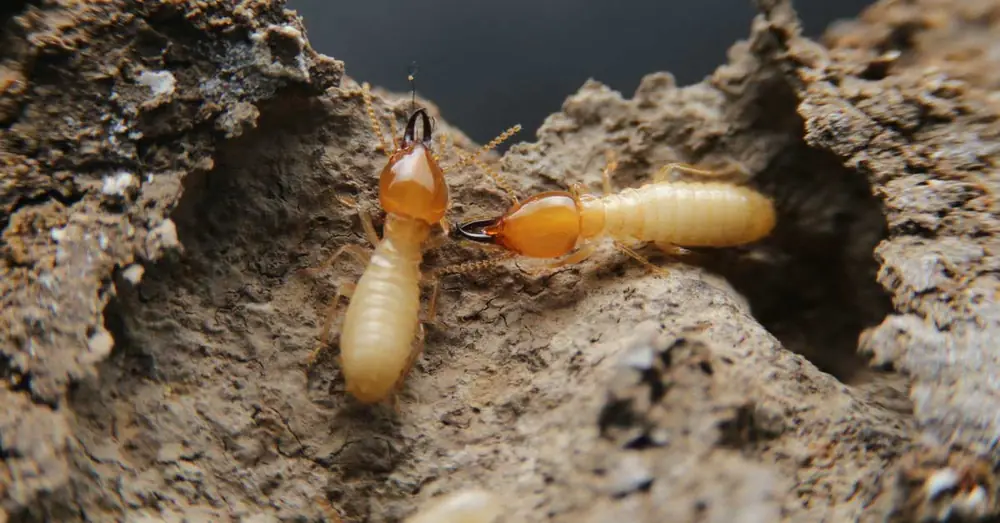
Termite control in Midrand means dealing with colonies that were living in the veld long before the estates, complexes and office parks arrived. We confirm whether you have harvester termites in the lawn or subterranean termites in the building, treat the colony with registered soil treatments or baiting, and back structural work with a 5-year guarantee.
Built on termite country
Much of Midrand was farmland and veld until a few decades ago, and a lot of it is still being built on. When a developer scrapes a site and puts down a slab, the termite colonies in that soil do not disappear. They lose their natural food for a while, then find the next best thing: lawn, mulch, buried offcuts and, eventually, the timber in your house.
The Highveld climate helps them along. Summer thunderstorms soak the ground from October to March, the deep soils hold moisture under the surface through the dry winter, and the first heavy rain of the season triggers the swarms of winged termites that people notice around their outside lights. Swarms in the garden are normal; winged termites emerging from a skirting board or cupboard are not.
Two termites, two completely different jobs
Harvester termites in the lawn
These are the ones most Midrand homeowners meet first. Harvester termites do not touch buildings. They cut grass and carry it underground, and in the dry months from about May to September they can strip a lawn down to bare soil in patches. Look for small open holes ringed with loose soil and short pieces of cut grass. Estates, school fields and homes on the veld edge get hit hardest, as colonies forage in from the grassland next door.
Subterranean termites in the structure
These live in the soil and travel to food through mud tubes, sealed tunnels they build so they never dry out in open air. They eat door frames, skirting boards, cupboard backs, roof timbers and cardboard on garage floors. In Midrand we find them in two kinds of property. Older houses on the original plots and smallholdings often have timber floors, wooden outbuildings and stables, and decades of contact between wood and soil. Newer homes on estates are at risk for a different reason: rubble, timber offcuts and formwork buried during building, and flowerbeds piled up against the walls above the damp-proof course.
Signs to check for on your property
- Brown mud tubes running up a foundation wall, the inside of a garage, or the back of a cupboard on an outside wall.
- Skirting boards or door frames that sound hollow or feel soft when pressed, sometimes with paint bubbling in a straight line.
- Winged termites or their shed wings on window sills inside the house after the first summer storm.
- Small soil-filled holes in the lawn, bare patches spreading through winter, and cut grass lying on the surface.
How we treat termites in Midrand
- Inspection. We check the foundations, inside and outside walls, cupboards, door and window frames, the roof space and the garden, and on plots the outbuildings and stables.
- Tracing the entry. Expansion joints, slab cracks, pipe penetrations and soil heaped above the damp-proof course are the usual routes.
- Treatment. For subterranean termites we apply a registered soil treatment to create a treated zone around and beneath the building, drilling through paving where needed, or use baiting where trenching and drilling are not practical. For harvester termites we treat the active foraging holes so the workers carry the product down to the colony.
- Follow-up. Heavy activity gets a return visit to make sure the tubes stay dead and the lawn holes have stopped reopening.
You do not need to move out. The treatment goes into the soil and specific points around the building; keep children and pets off treated soil until it has dried.
New builds, extensions and the next estate
Because Midrand is still growing, a large share of our work here happens before the house exists. Treating the soil before the slab is poured is the cheapest protection a building will ever get, and banks and inspectors often want proof that it was done. Our termite pre-treatment for new building work covers that process. Adding a granny flat, a patio or a garage? The new section needs its own treatment where it meets the soil, otherwise it becomes a bridge into the treated house.
What termite control costs, and why
A harvester termite treatment on a normal suburban lawn is a fairly small job. Treating a house for subterranean termites costs more, and the price is driven by:
- the length of the building's perimeter and how much paving or slab we must drill through;
- how much timber is already affected, and whether outbuildings or stables need treating too;
- whether baiting suits the building better than a soil treatment;
- for new builds, the slab area to be pre-treated.
Our guide to pest control prices in Johannesburg shows where termite treatments start, and this page shows its own "from" price. After the inspection you get a written quote. If it is only a few harvester holes in one corner of the lawn, we will tell you honestly if it can be managed without a full treatment.
The mistake we see on new estates
Homeowners assume that because their house is new, the soil under it is still protected. A pre-treatment does not last forever, and landscapers regularly break the treated zone by trenching for irrigation, laying new paving or building raised beds against the walls. Spraying broken-open mud tubes is the other one: it kills a few workers and the colony simply reroutes out of sight.
Prevention that suits Midrand stands
- Dig out buried rubble, tree stumps and formwork timber before landscaping, rather than covering them with topsoil.
- Keep soil, bark mulch and paving below the damp-proof course, with a visible gap at the base of the walls.
- Keep firewood, hay bales and stored timber off the ground and away from house walls.
- Water the lawn through winter where you can; harvester termites prefer dry, stressed grass.
Termites and their look-alikes
Not every hole in timber is termite damage. Small round exit holes with fine powder underneath point to beetles instead, and our wood borer treatment in Midrand page explains that problem. If you live on the western side, the conditions are similar to those on our termite control in Fourways page, and owners on the larger plots of Glen Austin deal with the same mix of veld and timber outbuildings. For the city-wide view, read about treating termites across Johannesburg, or go back to our Midrand pest control overview.
Why owners call Combat
Jason van Heerden has 25 years of experience in pest control, and the business is SAPCA registered and registered with the Department of Agriculture under Act 36 of 1947. Every termite treatment comes with a 5-year guarantee and a treatment certificate you can keep for the bank, the body corporate or a future buyer. We offer service within 24 hours. Phone 084 200 2700, or WhatsApp us a photo of the mud tubes or lawn damage and we will tell you which termite you are dealing with.

Questions we get asked
Are the termite mounds in the veld next to my estate a risk to my house?
They can be. Mounds show colonies are established nearby, and foragers will move into irrigated lawns and, if they find a way, into timber. An inspection tells you whether they have reached your property yet.
How much does termite treatment cost in Midrand?
It depends mainly on which termite it is and how big the building is. Harvester termites in a lawn are a smaller job; subterranean termites in a house are priced on the perimeter, the paving to drill and the damage found. We quote in writing after inspecting.
What does the 5-year guarantee cover?
It covers the treated area against termite activity for five years, and you receive a treatment certificate. If termites come back in the treated zone in that time, we come back.
My house is only a few years old. Can it still get termites?
Yes. A pre-treatment weakens over time and is often broken by later paving, irrigation trenches or flowerbeds. Buried building rubble also feeds colonies close to the walls.
Will the treatment harm my horses, dogs or chickens?
Not when it is applied correctly. Keep animals off treated soil until it has dried, and we will show you exactly which areas those are.
Why do flying termites appear after rain?
The first good summer storm softens the soil and triggers mature colonies to release winged termites to start new colonies. Seeing them outside is normal; seeing them come out of a wall or floor indoors means a colony is in the building.
Should I water my lawn to stop harvester termites?
It helps, because they target dry, stressed grass, but it will not remove an active colony. The nest openings need treating, and then the lawn recovers with water and feeding.
What should I do before you arrive?
Do not break or spray the mud tubes. Clear access to cupboards, the garage, the roof hatch and any outbuildings, and note where you have seen activity.