
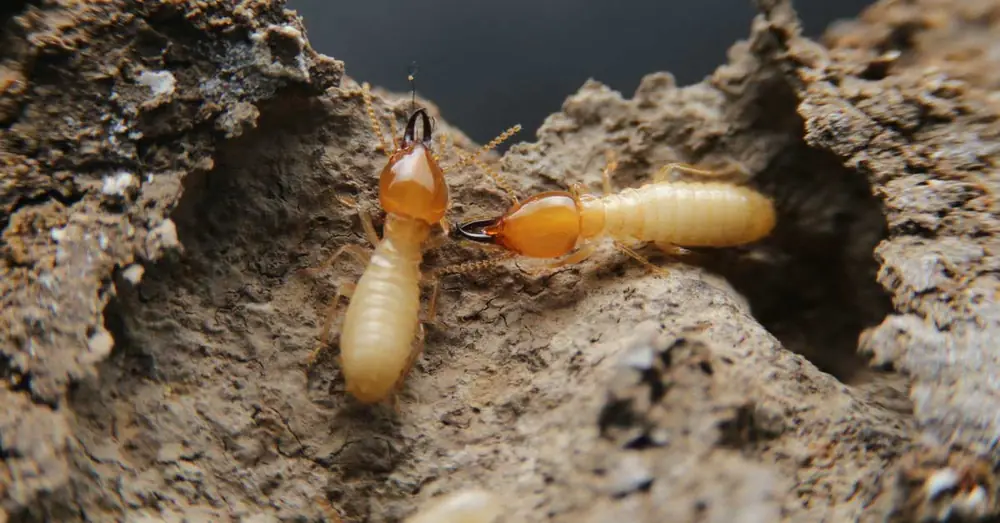
Termite control in Northcliff starts with working out which termite you have and how it's using the slope. Harvester termites strip lawns in winter; subterranean termites tunnel through retaining-wall backfill into timber. We inspect, treat the colony with registered soil treatments or baiting, and back structural work with a 5-year guarantee and certificate.
Why the ridge is good termite country
Northcliff Ridge is one of the highest points in Johannesburg, and that height shapes the soil. Near the crest the ground is shallow and stony, with rock close to the surface. Lower down the slopes, and into Fairland, Blackheath and Cresta, it deepens and holds moisture far longer. Termites follow that moisture. They also follow the work people have done to tame the hill: terraced gardens, stepped driveways and long retaining walls, each backfilled with soil and often with builder's rubble, timber offcuts and old formwork that nobody dug out.
That buried timber is the problem we find most often on hillside stands. A subterranean colony feeds on it for years, then reaches the house through the backfill, which sits right against the wall and frequently above the damp-proof course. From there it's a short trip into a door frame, a built-in cupboard or the bearers of a timber deck.
Then there's the weather. Summer storms soak the slope from October to March, and water draining downhill keeps the lower side of a property damp long after the rain stops. In winter the opposite happens: north-facing lawns on the ridge bake dry, and that's when harvester termites move in.
Which termite is it?
Harvester termites in the lawn
These don't touch your house. They cut grass and carry it underground, leaving small round holes with little soil heaps and short cut pieces of grass around them. On sunny ridge gardens, a kikuyu lawn can go patchy and bare in a few dry weeks between June and September. We treat the active openings so foraging workers carry the product down to the colony, then you water and feed the lawn so it recovers.
Subterranean termites in the structure
These are the ones that cost money. They live in the soil, travel in sealed mud tubes and eat timber, cardboard and the paper on drywall. Signs include thin brown tubes on a foundation, a retaining wall or inside a cupboard; skirting boards that sound papery; paint bubbling along a straight line; and winged termites coming out of a wall or floor after the first big storm of spring. A swarm on the lawn is normal. A swarm inside means a colony is using the building.
Where we find termites on Northcliff properties
- Behind retaining walls: tubes on the face of the wall, or soil packed against the house where a terrace meets it.
- Under timber decks: the view decks built out over the slope on many ridge homes have bearers and posts close to damp soil.
- Split-level rooms: rooms cut into the hillside, with one wall against the ground, often stay damp and give termites a quiet way in.
- Built-in cupboards and door frames: especially in the older homes, many with original timber floors and wooden roof trusses. We see this often in the family homes of Linden and in Melville.
- Garages and storerooms: cardboard boxes and stacked timber on a concrete floor that sits low on the slope.
How we treat termites here
- A full inspection. We check the house, the roof space, cupboards, frames and every level of the garden, including the face and base of each retaining wall. We confirm the species and map the activity.
- Finding the route. On a slope that's usually backfill against the wall, cracks and expansion joints in the slab, pipes entering the house, or timber in contact with soil.
- Treating the colony, not the tubes. For subterranean termites we apply registered soil treatments to create a treated zone around and under the affected structure. Where drilling through paving or stone isn't practical, or a terrace makes trenching impossible, baiting is the better option.
- Removing the food. We'll point out buried timber, old stumps and stacked wood that should go, because leaving them invites the next colony.
- Follow-up. Heavy activity gets a return visit to make sure tubes stay dead and new ones don't appear.
Structural termite treatments come with a treatment certificate and a 5-year guarantee. For the full picture of how colonies work, see our page on termite control across Johannesburg.
Building, extending or selling
Plenty of ridge homes are being extended, often downhill with a new level or a bigger deck. The new section needs its own treatment where it meets the soil, ideally a termite pre-treatment before the slab is cast, or termites simply use it as a bridge into the old house. If you're selling, buyers and banks often want an entomological certificate; we inspect, report and issue it if there's no active infestation.
Termites or wood borer?
Older homes around the ridge get both, and the treatments are completely different. Termites leave mud and hollowed timber; borer leaves neat round exit holes and fine powder. Our page on wood borer treatment in Northcliff explains the difference in more detail, and our overview of pest control around Northcliff covers the other pests these older homes attract.
The mistake that makes it worse
Breaking open tubes and spraying a supermarket can over them. It kills the workers you can see and does nothing to the colony underground, which builds a new route somewhere you can't see. Leave the tubes intact: they show us exactly where the termites are coming from. The second mistake is re-terracing or building a new flowerbed against the house without thinking about the treated zone. Fresh soil heaped above the damp-proof course undoes it.
What termite control costs, and why
There's no fixed price, because two termite jobs on the ridge are rarely alike. A harvester termite treatment on a lawn is a small job. Treating a house for subterranean termites depends on the length of the perimeter, how many levels the property has, whether we're drilling through paving, stone or a slab, and whether baiting suits the site better. Our guide prices for pest control show where termite work starts, and we give a firm quote after the inspection. If a few holes on the lawn are all you have, we'll say so.
Prevention for hillside gardens
- Keep soil and mulch below the damp-proof course, especially where a terrace meets the house.
- Clear blocked weep holes in retaining walls so water can drain out rather than soak the backfill.
- Dig out old stumps and buried timber when you re-landscape.
- Lift deck posts onto concrete or steel shoes so timber isn't touching soil.
- Water sunny lawns through winter if you can; stressed grass draws harvester termites.
Jason van Heerden has 25 years of termite work behind him. Combat Pest Control is SAPCA registered and registered with the Department of Agriculture under Act 36, we offer service within 24 hours, and every structural termite treatment carries a 5-year guarantee with a certificate. Call 084 200 2700, or WhatsApp us a photo of the tubes or the lawn damage.

Questions we get asked
How do I tell harvester termites from the ones that damage houses?
Harvester termites leave small holes and cut grass on the lawn, mostly in winter. Termites that damage buildings build brown mud tubes and hollow out timber. Send us a photo on WhatsApp if you're not sure.
How much does termite treatment cost in Northcliff?
It depends on which termite it is and on the property. A lawn treatment is modest; a structural treatment depends on the perimeter, the number of levels and the paving. We quote after inspecting.
What does the 5-year termite guarantee cover?
It covers the structural termite treatment we carry out, and you receive a treatment certificate. If building work breaks the treated zone, call us so we can check and re-treat that section.
Can termites get in through a retaining wall?
Yes. They tunnel through the soil and rubble behind the wall and reach the house where the backfill meets it. Mud tubes on the wall face or at its base are the warning sign.
Do we need to move out for a termite treatment?
No. The treatment goes into the soil and specific points around the structure, so you stay at home. Keep children and pets away from treated areas until they've dried.
Why did flying termites come out of my wall after the storm?
A mature colony sends out winged termites after the first good summer rain. If they emerge indoors, the colony is using your building and needs an inspection.
Should I treat before building an extension down the slope?
Yes. Pre-treating the soil before the slab is cast is the cheapest way to protect the new section and stop it becoming a bridge into the old house.
Is it safe to keep using the garden after treatment?
Yes, once the treated areas have dried. We'll show you which areas those are so children and pets can stay clear until then.