
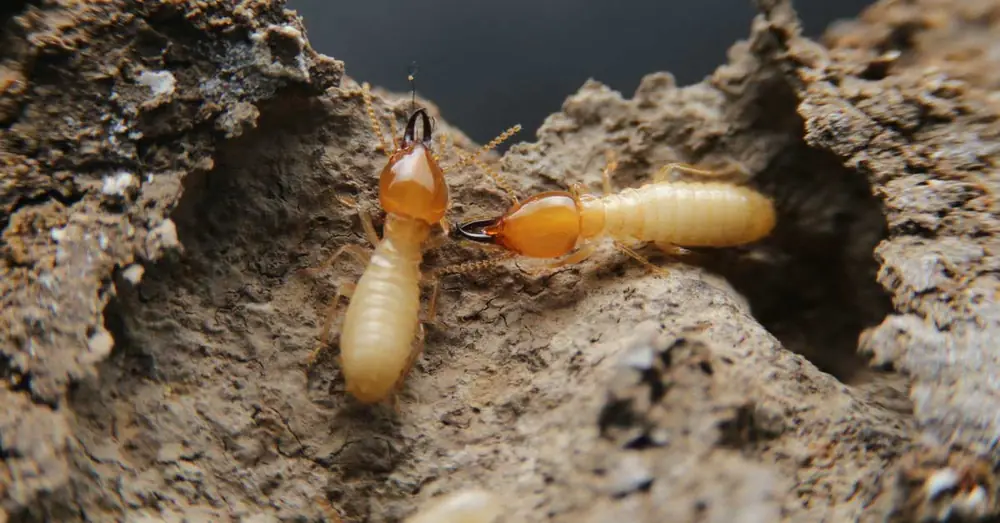
Termite control in Fourways starts with working out which termite you're dealing with. Subterranean termites eat the timber in buildings; harvester termites strip lawns and leave houses alone. We inspect, confirm the species, then treat the colony with registered soil treatments or baiting, backed by a 5-year guarantee and a treatment certificate.
Why Fourways has so many termite calls
Three things work in the termites' favour here. The first is the ground. Fourways sits on the granite that underlies much of northern Johannesburg, and it weathers into sandy, loose soil that colonies can tunnel through with very little effort. It drains quickly after a storm, yet stays cool and slightly damp a little way down, which suits a subterranean colony well.
The second is history. Most of Fourways was veld, plots and grassland before the estates and complexes arrived, and termites were already living in that ground. Building on top of an established colony doesn't remove it. It hands the colony a new food source.
The third is how the area was built. On a busy building site, offcuts, formwork timber, broken pallets and old tree roots often end up buried under the garden or paving. A colony can feed on that for years before it reaches the skirting boards above.
Subterranean termites in Fourways homes
These are the termites that cause structural damage. They live in the soil and move through sealed mud tubes, because open air dries them out. In Fourways we most often find them in:
- Built-in cupboards and kitchen units that sit on the slab against an outside wall, where they eat the chipboard backs and kickplates out of sight.
- Door frames and skirting boards near a shower, a leaking geyser overflow or a flowerbed that has been built up above the damp-proof course.
- Garages and storerooms with cardboard boxes, old furniture and timber stored on the floor, which is the first place many people notice mud tubes.
- Timber decks, pergolas and wooden boundary features around patios and pools, popular in estate gardens and often set straight into the soil.
- Older buildings on the plots towards Chartwell and Witkoppen, where farmhouses, stables and outbuildings may have roof timbers and floors that have never been treated.
Harvester termites in estate lawns
Harvester termites are a very different animal. They cut grass into short pieces and carry it underground, and they do most of their damage in the dry months from May to September, when lawns are dormant and stressed. Fourways estates, with their large kikuyu lawns, verges and golf course edges, see a lot of it. Look for small round holes in bare patches, little heaps of loose sandy soil beside them, and cut bits of grass on the surface in the cool of early morning.
Harvester termites won't eat your house, but they can wreck a lawn in a few weeks and keep coming back to the same patches year after year. We treat the active foraging holes so the workers carry the product down to the colony. Treating only the visible patch, or reseeding before treating, rarely works.
Flying termites after the first rains
After the first proper summer storm, winged termites swarm out of the ground across Fourways. A swarm on the lawn or around outside lights is normal. One that comes out of a skirting board, wall or floor indoors means a mature colony is living in or under the building. Flying ants look similar, but termites have a thick waist and four wings of equal length; our page on ant control in Fourways covers the ant side.
How we treat termites
- Inspection. We go through the house, the garage, the roof space and the garden, tap timber, follow mud tubes and look at where paving, flowerbeds and decks meet the walls. We identify the species and map where the colony is active.
- Finding the routes. In Fourways the usual ones are expansion joints in the slab, gaps where pipes and drains come through, cracks in garage floors, and soil or mulch piled against the walls.
- Treatment. For subterranean termites we apply registered soil treatments to create a treated zone around and under the structure, drilling through paving where needed, or use baiting where drilling isn't practical. For harvester termites we treat the active nest openings in the lawn.
- Follow-up and certificate. We come back where the activity was heavy, and every termite treatment comes with a treatment certificate and a 5-year guarantee.
You don't need to move out. Keep children and pets off treated soil and paving until it's dry, and we'll show you which areas those are.
Building or extending in Fourways?
New houses and extensions are still going up all over the area, and the cheapest protection is put down before the slab is cast. A termite pre-treatment for new building work treats the soil under the foundations and floor, and we issue the paperwork the building inspector, bank or estate may ask for. An extension needs its own treatment where it meets the soil, otherwise it becomes a bridge into the original house.
The most common termite mistake we see
Assuming a newer estate home is protected because it was pre-treated when it was built. Soil treatments wear down over the years, and every new paved area, swimming pool, garden bed and pergola breaks the treated zone. The other mistake is opening up mud tubes and spraying them with a household insecticide. It kills a handful of workers, the colony reroutes, and the tracks we would have used to find it are gone.
A local prevention tip
Fourways gardens are often heavily mulched and irrigated, which keeps the sandy soil against the walls damp all year. Keep mulch, bark chips and soil a hand's width below the damp-proof course, point irrigation sprayers away from the walls, and don't build raised beds against the house. In winter, water the lawn when restrictions allow; harvester termites go for dry, stressed grass.
What termite control costs, and why
Termite jobs vary a lot, so we quote after the inspection. What drives the cost:
- Which termite it is. A harvester termite treatment in a garden is far smaller than treating a home for subterranean termites.
- The size of the building's perimeter, and how much paving, decking or slab we have to drill through.
- Whether baiting suits the building better than a soil treatment.
Our guide prices for termite treatment show where the work starts. If a few lawn holes are something you can manage with lawn care alone, we'll tell you.
For the bigger picture, see termite control across Johannesburg. We also treat termites in Midrand, where Kyalami's plots have the same sandy ground, and you'll find local detail on our Dainfern pest control page and the main Fourways pest control overview.
Combat Pest Control is owned and run by Jason van Heerden. We're SAPCA registered and registered with the Department of Agriculture under Act 36 of 1947, with 25 years in pest control and service within 24 hours. Found mud tubes or a swarm indoors? Call 084 200 2700, or WhatsApp us a photo and leave the tubes as they are until we get there.

Questions we get asked
Do I have harvester termites or the kind that eat houses?
If the damage is bare patches in the lawn with small holes and loose soil heaps, it's harvester termites. Mud tubes on walls, hollow timber or swarmers coming out indoors point to subterranean termites.
How much does termite treatment cost in Fourways?
That depends on which termite you have and on the building. A lawn treatment for harvester termites is a modest job; treating a house for subterranean termites depends on the perimeter, the paving and the extent of activity. We quote after inspecting.
Our estate home was pre-treated when it was built. Are we still covered?
Probably not fully. Soil treatments wear down over time, and pools, paving, pergolas and garden beds added since then break the treated zone. An inspection will show whether termites have found a way through.
How long does the 5-year guarantee last and what does it cover?
It runs for five years from the treatment, and you receive a treatment certificate. If termite activity returns in the treated area in that time, we come back and deal with it.
Can termites come in from the veld next to our estate?
Yes. Colonies don't stop at the boundary wall. Properties that back onto open veld, green belts or the river often have termite activity right along that edge.
Will the treatment harm our dogs or the koi pond?
Not when it's applied correctly. Keep pets off treated soil until it's dry, and tell us about ponds and water features so we keep the treatment well away from them.
Should I reseed the lawn after harvester termites?
Only after the colony has been treated. Reseeding first just gives the termites fresh grass to cut. Treat, then water and feed the lawn so it recovers.
Do we need a termite certificate to sell our Fourways house?
Many buyers, banks and conveyancers ask for one. We inspect the property and issue a certificate if there's no active infestation, or explain the treatment needed if there is.