
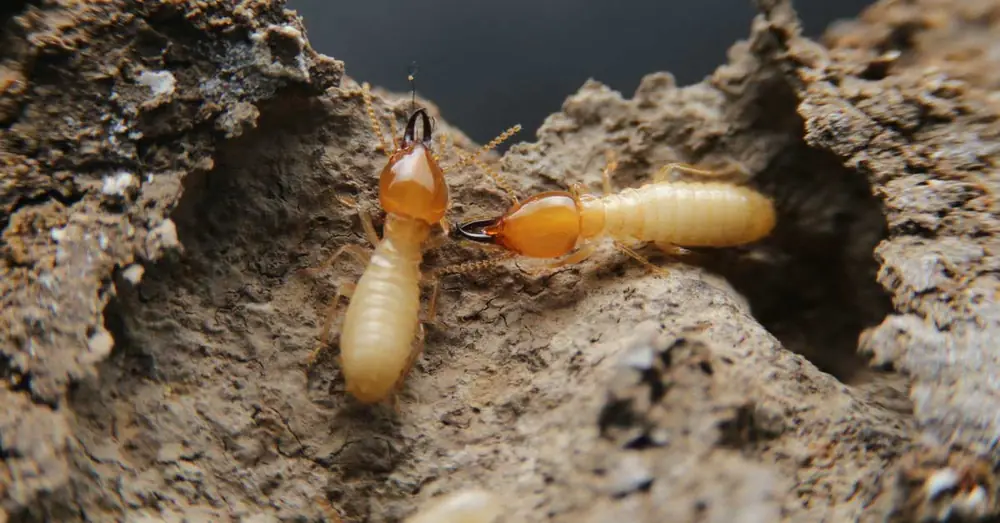
Termite control in Bryanston starts with finding out which termite you have and where the colony is getting in. Subterranean termites damage timber in homes; harvester termites strip lawns. We inspect the house and garden, treat the soil or the nest so the colony itself is dealt with, and back the work with a 5-year guarantee and certificate.
Why termites are at home in Bryanston
Bryanston was built as a garden suburb, and many of its stands have carried the same trees, hedges and flowerbeds for several decades. Underground, that means a lot of food. Dead roots from felled trees, old stumps that were ground down rather than dug out, thick mulch on the beds, and wood that was buried when a pool, a wall or an extension went in all feed termite colonies quietly for years.
The Highveld soil helps them too. Deep, well-drained ground holds moisture below the surface through the dry season, and summer thunderstorms soak it from October onwards. Big gardens are often irrigated as well, so the soil next to the foundations rarely dries out. A colony can sit under a Bryanston lawn indefinitely, and the house only becomes part of its range when a convenient route appears.
Where we find termite damage on Bryanston properties
Inside the house
Built-in cupboards against outside walls are top of the list, because termites can climb the back panels unseen for a long time. After that come door frames near bathrooms or leaking pipes, skirting boards in rooms that back onto a flowerbed, timber window frames on the weather side, and parquet or strip floors laid directly on the slab. In older homes we also check the roof timbers above gutters that overflow during storms.
Around the garden
Outbuildings are often hit before the main house: staff rooms, store rooms, garden sheds and pool-pump rooms with timber doors and boxes on the floor. Timber pergolas, lapas, decks around the pool, sleeper steps and raised vegetable beds all sit on or in the soil, which makes them easy targets. A sleeper retaining wall that has started to sound hollow is a common early warning.
In cluster complexes
Bryanston's cluster developments have their own pattern. Units share a perimeter, so a termite route found in one unit usually means the soil along the whole block needs attention. Paving, new patios and added flowerbeds over the years break any treated zone that was laid when the complex was built. We often work with the body corporate so the treatment covers the whole structure rather than one owner's corner.
The two termites, and how each shows itself
Subterranean termites are the structural ones. You will see thin mud tubes on foundations, walls or cupboard backs, timber that sounds papery when tapped, and paint that blisters along a line. Winged swarmers coming out of a wall or floor after the first summer rain tell you a mature colony is using the building, not just the garden.
Harvester termites don't touch timber. They cut grass and carry it underground, leaving small round openings with loose soil around them and short pieces of grass scattered on the lawn. On large Bryanston lawns the damage often shows in a dry July or August, when kikuyu is already stressed and patches suddenly turn bare and sandy.
If you are seeing powdery dust and small round holes in old timber rather than mud and tunnels, the culprit is more likely beetle larvae; our wood borer treatment in Bryanston page covers that.
How we treat termites in Bryanston
- Inspection of house and garden. We check foundations, cupboards, frames, the roof space where accessible, outbuildings and the garden, and map where the activity is.
- Confirming the species. Subterranean and harvester termites are treated in completely different ways, so this decides the rest of the job.
- Treating the colony. For subterranean termites we apply registered soil treatments to create a treated zone along and under the structure, drilling through paving where needed, or use baiting where trenching isn't practical. For harvester termites we treat the active nest openings so workers take the product down to the colony.
- Removing the food source. We show you the stumps, sleepers, buried timber and soil-to-wood contact that keep feeding the problem.
- Follow-up and certificate. Heavy activity gets a return visit. Every termite treatment comes with a treatment certificate and a 5-year guarantee.
Renovations, rebuilds and extensions
Big stands in Bryanston see a lot of building work: extensions, new garages, cottages and full rebuilds. Each one disturbs the soil and the old treated zone. New foundations should be pre-treated before the slab is poured, and the join between an extension and the original house needs particular care, because termites use that seam as a bridge. If you are about to build, ask your contractor when the soil treatment is scheduled and make sure the paperwork reaches you.
The mistake we see most often
Pulling down the mud tubes and spraying them. It feels like action, but it only kills the workers you can see. The colony is underground and simply builds a new route, often somewhere you won't notice for another year. Leave the tubes in place until we arrive; they show us exactly where the termites are getting in.
A Bryanston tip
When a large tree comes down, have the stump and main roots removed rather than ground to just below the lawn. A buried stump that size can feed a colony for many years, and in Bryanston gardens it is one of the most common reasons termites keep coming back to the same corner.
What termite control in Bryanston costs, and why
Termite jobs vary more than almost any other pest work, so the quote depends on what we find:
- Harvester termites in a lawn are a much smaller job than a structural subterranean treatment.
- The length of the building's perimeter, and on large Bryanston homes that can be considerable, sets the amount of product and labour.
- Drilling through paving, patios or a slab adds time.
- Outbuildings, decks and pergolas may need treating as well as the house.
- For complexes, the number of blocks and how much of the perimeter is paved.
Our termite and pest control price guide shows where termite work starts, and the guide "from" price appears on this page. You get a written quote after the inspection, and if a few harvester holes are something you can handle yourself, we will say so.
Termites across the area
Our Bryanston pest control overview covers the rest. For homes a little further north, see our work on termites in Fourways estates, and neighbours in Epsom Downs have their own page. For how termites behave across the city, read about termite treatment throughout Johannesburg.
Jason van Heerden runs Combat Pest Control and has 25 years of experience treating termites on the Highveld. We are SAPCA registered and registered with the Department of Agriculture, and we offer service within 24 hours. Call 084 200 2700, or WhatsApp us a photo of the mud tubes or the lawn and we will tell you which termite it is.

Questions we get asked
How much does termite treatment cost in Bryanston?
It depends on the type of termite and the size of the job. Treating harvester termites in a lawn costs much less than a full subterranean treatment around a large house with paving to drill through. We quote in writing after the inspection.
What does the 5-year termite guarantee cover?
If termite activity returns in the treated area within five years, we come back and deal with it. You also receive a treatment certificate, which is useful when you sell the property.
My lawn has bare patches with little holes. Is that termites?
Probably harvester termites, especially if it appears in a dry winter and you see short cut pieces of grass near the holes. They don't damage the house, but they can clear a lawn quickly, so it is worth treating the nest openings.
Can termites spread from my neighbour's garden?
Yes. Colonies forage well beyond one property, which is common in Bryanston where gardens and old trees join up. That is why we treat the route into your building rather than chasing termites around the garden.
We are renovating. When should we think about termites?
Before the new foundations or slab go down. A soil pre-treatment at that stage is far cheaper than treating later, and the join between old and new sections needs attention so termites can't use it as a way in.
Do I have to move out during treatment?
No. Termite treatments go into the soil and specific points in and around the building, so you can stay at home. Keep children and pets away from treated soil until it has dried.
What should I do before the inspection?
Leave any mud tubes intact, clear access to cupboards, the garage, outbuildings and the roof hatch, and note where you have seen activity. Don't spray anything; it makes the activity harder to trace.