
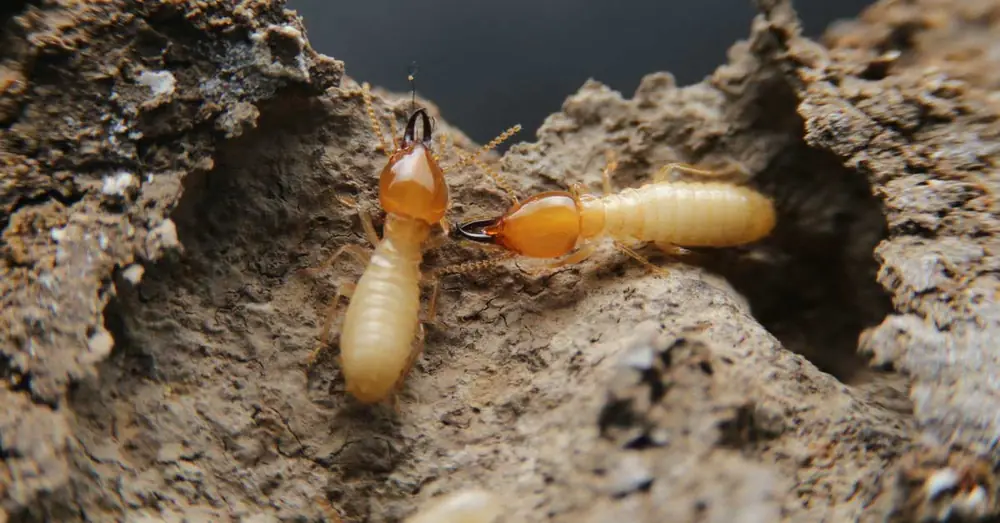
Termite control in Johannesburg South covers two separate problems: harvester termites that strip the big lawns of suburbs like Mondeor and Glenvista, and subterranean termites that eat the timber in older homes closer to town. We confirm which one you have, treat the colony at its source, and back structural work with a 5-year guarantee.
Two termites, two very different jobs
Most people who phone us from the south say "termites" and mean one of two things. The first is a lawn full of small holes ringed with loose soil and patches that go from green to bare in a few weeks. That's harvester termites. The second is damaged timber inside the house: a hollow door frame, mud tubes in the garage, or flying termites coming out of a skirting board after a storm. That's subterranean termites, and they're the ones that cause structural damage.
Harvester termites don't eat your house, and a soil barrier around the foundations won't fix your lawn. So on any termite call we first work out which one it is, because the treatment and the cost are different.
Why the south gets so much termite activity
Several things about this part of Johannesburg suit termites. The southern suburbs sit on the Highveld, with dry winters and heavy summer storms. In winter the grass goes dormant and dry, which is exactly when harvester termites come up to forage, and the big, open lawns of Mondeor, Glenvista, Mulbarton and the newer suburbs further south give them plenty to work with. Lawns on the sunny, exposed slopes below the Klipriviersberg dry out fastest and are often the first to show bare patches.
Closer to town, the housing changes. Rosettenville, Turffontein, Kenilworth, Regents Park and their neighbours have many older houses and semis, often with timber floors on joists, wooden roof trusses and built-in cupboards that have been in place for decades. Over that time, flowerbeds get built up against walls, paving gets laid over old soil treatments, and additions go on at the back. Each change can open a new way in for subterranean termites. In rows of semis, a colony working in one property can also be close to the next one.
Then there's the ground itself. Building rubble, old timber offcuts and tree stumps buried during past renovations are common on older stands, and they feed termite colonies for years before the termites reach the house.
Signs to look for
In the garden
- Small round holes in the lawn, each with a ring of loose soil, often appearing overnight after a cool, still evening
- Short lengths of cut grass near the holes, sometimes being carried into them in the early morning or late afternoon
- Bare, sandy patches that spread through winter even though you water
- Small, pale-headed termites on the surface when you turn over a fresh heap of soil
In the house
- Pencil-thin mud tubes on foundation walls, in the garage or inside cupboards on outside walls
- Skirting boards, door frames or floorboards that sound hollow or give way when pressed
- Paint that bubbles or cracks in a line along timber
- Winged termites inside after the first heavy rains of spring and summer, or piles of their shed wings on window sills
How we treat termites in Johannesburg South
Harvester termites in lawns
We treat the active foraging holes with a registered product that the workers carry underground to the rest of the colony. Timing matters: the treatment works best when the termites are actively foraging, which in the south usually means the dry months. Once the activity stops, the lawn needs water and feeding to recover. Re-seeding or laying new turf before the colony is dealt with simply gives the termites fresh food.
Subterranean termites in buildings
- Inspection. We check foundations, walls, floors, cupboards, door and window frames and the roof space, and trace the mud tubes back to where they enter.
- Finding the routes in. In older southern homes the usual suspects are expansion joints, cracks in old slabs, gaps around pipes, timber touching soil and flowerbeds piled above the damp-proof course.
- Treatment. We apply a registered soil treatment to create a treated zone along and under the structure, drilling through paving or a slab where we need to. Where drilling isn't practical, baiting is an option.
- Follow-up. We come back to check that the tubes stay dead and no new activity appears.
Every structural termite treatment comes with a treatment certificate and our 5-year termite guarantee. If termites return to the treated zone in that time, we come back.
Extensions, new builds and house sales
A lot of building work in the south is additions to older houses: a new bedroom, a flat at the back, an enclosed patio. Each one needs the soil under it treated before the slab is cast, or termites use the new section as a bridge into the old house. Our soil pre-treatment for new building work page explains how that works and what paperwork you get. If you're selling, buyers and banks often want an entomological certificate, and we inspect and issue one when there's no active infestation.
The mistake we see most
Pouring a home-made mixture or a supermarket spray into the lawn holes or onto a mud tube. It kills the termites you can see and nothing else. In the lawn, the colony carries on foraging from other holes. In the house, the termites abandon that tube and build another one you can't see. Leave the tubes intact until we've looked; they're what we follow to find the source.
What termite treatment costs, and why
Termite work varies more than any other job we do. Treating harvester termites in an ordinary lawn is a fairly small job. Treating a house for subterranean termites depends on the length of the walls, how much paving or slab we need to drill, how much timber is affected and whether baiting suits the building better. Pre-treatment depends on the slab area. Our guide prices for termite work show where each starts, and we quote properly after an inspection.
A tip for southern gardens
Keep watering the lawn through the dry months if you can, and don't let it get too short. Harvester termites go for stressed, dry grass first, and a lawn that stays healthy through winter is much harder for them to strip. Around the house, keep flowerbeds and mulch below the damp-proof course and dig out buried stumps rather than paving over them.
Termites are often found alongside wood borer in older southern homes, and the two are treated differently, so we always confirm which is which. For the wider picture, see termite control across Johannesburg, our Johannesburg South pest control overview, termite treatments in Soweto to the west, or pest control in Mondeor.
Combat Pest Control is SAPCA registered and registered with the Department of Agriculture, and owner Jason van Heerden has 25 years of experience with Highveld termites. We offer service within 24 hours. Call 084 200 2700, or WhatsApp us a photo of the lawn or the damage and we'll tell you which termite it is.

Questions we get asked
How much does termite treatment cost in Johannesburg South?
It depends on the termite and the property. Harvester termites in a lawn are a modest job; a house treated for subterranean termites costs more, depending on the perimeter, the paving and the slab. We quote after inspecting.
Will the harvester termites in my lawn damage my house?
No. Harvester termites cut and store grass and don't eat building timber. They can still ruin a lawn, so they're worth treating, but they're a separate problem from structural termites.
When is the best time to treat harvester termites?
When they're actively foraging, which in the south is mostly during the dry winter months. That's when they carry the treatment back to the colony most effectively.
What does the 5-year termite guarantee cover?
It covers the treated zone for structural subterranean termite work. You get a treatment certificate, and if termites come back to the treated area within five years, we come back.
Do I need to treat the soil before building an extension?
Yes. The soil under a new slab should be pre-treated before the concrete goes down, otherwise termites can use the new section to reach the old house.
Is termite treatment safe for dogs and children?
Yes, when applied correctly. Keep them away from treated soil and lawn holes until dry, and we'll show you exactly which areas those are.
I found flying termites in the house. Is that serious?
Inside, it's worth checking. A swarm in the garden after rain is normal, but winged termites coming out of a wall or floor usually mean a colony is working in the building.
Should I spray the mud tubes before you arrive?
No. Leave them alone. Breaking or spraying them drives the termites elsewhere and makes it harder for us to trace them to where they're getting in.