
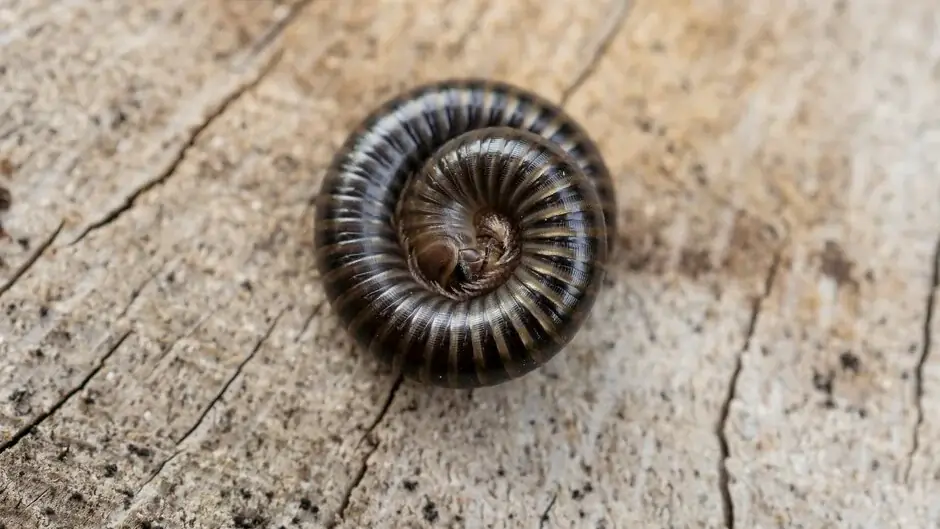
Millipede control in Northcliff is mainly about stopping the mass movements that follow summer rain, when millipedes leave soaked gardens and pour onto patios, into pools and under doors. We apply a residual barrier around the house and outdoor living areas, treat the damp mulched beds they breed in, and suggest garden changes that reduce numbers.
Why millipedes are a ridge problem
Millipedes eat decaying plant material: leaf litter, rotting wood, compost and mulch. Northcliff's big old trees drop a lot of leaves, and terraced gardens collect them in every corner and along every retaining wall. Mulched beds, compost heaps, damp lawns and shaded lower terraces give millipedes ideal breeding ground.
Then the summer rains arrive. After heavy storms from October onwards, millipedes leave waterlogged soil and move up and across to drier ground, often in large numbers. On a slope, water drains downhill, and so do the millipedes. Houses, patios and pools at the bottom of a terrace catch them.
Shongololos and the small ones
There are two broad groups people notice. The big shongololos, the long, black or dark brown millipedes children love to pick up, are usually seen one at a time in the garden and do no harm. The ones that cause the trouble are smaller, brownish millipedes that appear in hundreds after rain, crawl up walls, gather in doorways and drown in pools and buckets. When crushed, they can stain tiles and paving and leave an unpleasant smell.
Millipedes don't bite and aren't dangerous to people. Some produce a defensive fluid that can irritate the skin or stain hands, so wash after handling them, and keep them away from pets' mouths.
How we treat millipedes
- Inspection. We look at where they're breeding and how they're moving towards the house, usually from beds against the walls or a lower terrace.
- Barrier treatment. An odourless residual treatment around the foundations, door thresholds, patio edges, the pool surround and any other entry points.
- Treating breeding areas. Mulched beds and damp areas next to the house where millipedes are concentrated.
- Timing. The best results come from treating at the start of the rainy season, before the first big movements, with a follow-up if the season is very wet.
You can stay home during treatment. Keep children and pets off treated areas until they're dry.
Complexes, schools and businesses
Millipedes aren't only a homeowner's headache. Townhouse complexes with shared gardens and long lawned walkways, schools with sports fields and pathways, and offices with planted courtyards can all see waves of millipedes in entrance halls and stairwells after storms. Crushed millipedes on tiled entrances leave stains and a smell that cleaning staff hate. For these sites we treat the common areas and building edges as one job, and time it with the start of the rains, which is far more effective than each unit or classroom dealing with it alone.
The mistake: sweeping them into the garden bed
Sweeping millipedes off the patio into the flowerbed beside it just puts them back where they came from. They'll be at the door again after the next storm. Collect them into a bucket and move them well away from the house, or let the barrier treatment do its work.
Garden changes that help
- Rake leaf litter away from walls, steps and the pool area, particularly in autumn.
- Keep mulch a hand's width or more from the foundations.
- Move compost heaps away from the house and patio.
- Clear blocked weep holes in retaining walls so terraces drain properly.
- Fit seals under doors that open directly onto the garden.
A Northcliff tip
If the pool sits on a lower terrace, a narrow strip of gravel or paving between the lawn and the coping makes it much harder for millipedes to reach the water. They cross dry, bare ground far less readily than damp grass.
What millipede control costs, and why
Cost is driven by the length of the perimeter to treat, how much of the patio and pool area is included, how many breeding beds need attention and whether a follow-up is needed in a wet season. A townhouse is a small job; a large property with terraces and a pool takes longer. Starting prices are on our price page. In a dry year, garden changes alone are often enough.
For wider information, see millipede control in Johannesburg. Millipedes are often confused with centipedes in Northcliff homes, which are faster and flatter and need a slightly different approach. We also treat millipede problems in Roodepoort, and gardens in nearby Linden see the same after-rain invasions. The full list of local services is under pest control in Northcliff.
Combat Pest Control is owned by Jason van Heerden, who has 25 years of pest control behind him. We're SAPCA registered and registered with the Department of Agriculture under Act 36, we offer service within 24 hours, and millipede treatments carry a 3-month guarantee. Call 084 200 2700, or WhatsApp us a photo of the millipedes after the next storm.
Questions we get asked
Are millipedes harmful?
No. They don't bite or carry disease. Some release a fluid that can irritate skin or stain hands, so wash after touching them and keep pets from chewing them.
How much does millipede control cost?
It depends on the perimeter, the patio and pool area and how many beds need treating. Our price guide shows the starting price.
When is the best time to treat millipedes?
At the start of the rainy season, before the big movements after the first heavy storms. A follow-up may be needed if the summer is very wet.
Why are there so many in my pool?
After rain, millipedes leave soaked soil and move across lawns and paving. They fall into the pool and can't climb out. A dry strip around the pool and a barrier treatment help.
Is the barrier treatment safe around the pool?
Yes. We apply it to the surround and edges, not into the water, and keep children and pets off treated areas until dry.
Will they die out on their own?
Numbers usually drop as the soil dries between storms, but they return after the next heavy rain if the breeding areas stay the same.