
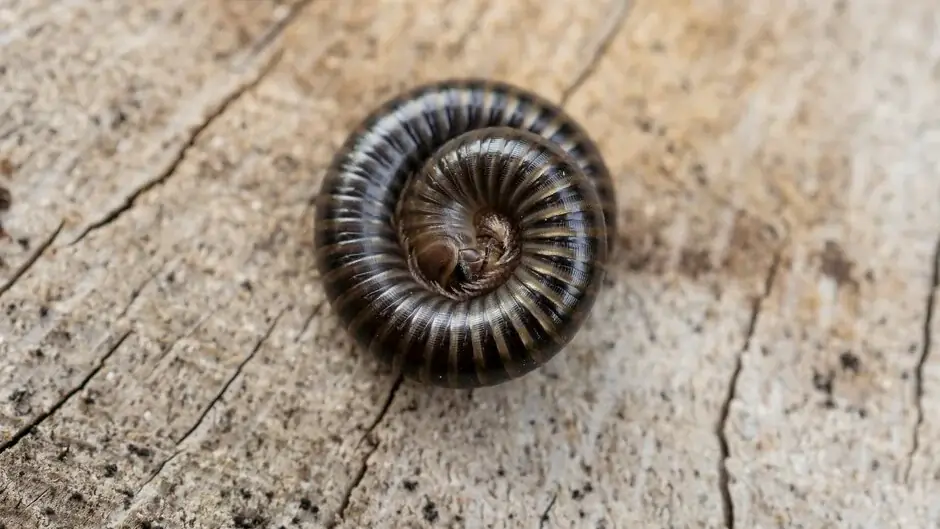
Millipede control in Johannesburg South usually comes down to two things: a barrier treatment around the house to stop millipedes coming inside, and changes to the garden, mulch and damp spots where they breed. Millipedes swarm after summer rains in the south, and we treat the edges of the house and the beds they're moving out of.
Why millipedes invade after rain
Millipedes live in damp soil, leaf litter, compost and mulch, feeding on decaying plant material. Most of the time you hardly notice them. Then the Highveld summer storms arrive. Heavy rain saturates the soil and they come up and move, sometimes in large numbers, looking for better conditions. Southern homes with big beds of mulch, lawns that stay wet, compost heaps and leafy gardens near open veld often see the biggest movements. Patios, garages, back doors and air bricks are where they end up.
In the south, people tend to see two kinds. The big black or brown shongololo, which everyone recognises and most people don't mind, and swarms of smaller, darker millipedes that coil up when touched and can cover a patio after a wet night. It's those smaller swarms that lead to most calls.
Are millipedes harmful?
Not seriously. Millipedes don't bite or sting. Some release a defensive fluid with a strong smell that can stain skin and irritate eyes, so it's best not to handle them and to wash your hands if you do. Inside, they usually die quickly because the house is too dry for them, leaving small dried bodies along skirting boards. The real nuisance is the numbers, the smell when they're crushed, and the mess they make in pools, garages and on outdoor furniture.
Signs of a millipede problem
- Dozens or hundreds of millipedes on patios, walls and paving after rain
- Millipedes inside, especially at ground level near doors and air bricks
- Dead, curled millipedes along skirting boards in the morning
- Millipedes in the pool, the pool filter or the skimmer basket
- Damage to seedlings and soft vegetables where numbers are very high
How we treat millipedes
First we look at where they're coming from: the mulch beds, compost, damp lawn edges, leaf piles and the soil along the walls. Then we apply a residual barrier treatment along the base of the house, around doors, garage entrances and air bricks, and treat the flowerbeds and soil next to the house where they're breeding. Inside, any that have got in can be swept up; we treat thresholds and the gaps at floor level. Timing helps: a treatment just before or during the wet season gives the barrier the best chance of stopping the movement before it starts.
You can stay at home throughout. Keep children and pets off treated soil and surfaces until they've dried.
The common mistake
Spraying the millipedes on the patio every morning. It deals with last night's arrivals but does nothing about the thousands still in the mulch, and tomorrow brings more. The other mistake is laying thick fresh mulch right up to the house walls in spring. It's good for the garden, but it's the perfect breeding bed for millipedes and puts them right on your doorstep.
A tip for southern gardens
Rake mulch and fallen leaves back from the walls to leave a bare strip, and water the garden in the morning rather than the evening so the soil surface dries out before night. Millipedes move at night, and a dry, bare band around the house is something they're reluctant to cross. Keep compost heaps well away from the house as well.
Gardens, pools and complexes
Pool owners in the south often find millipedes clogging the skimmer after a storm, which is a sign the beds around the pool need attention. In complexes, millipedes often come from shared gardens and verges, so a treatment around the boundary or of the common beds, arranged with the body corporate, works better than treating one unit at a time.
What millipede control costs, and why
The cost depends on the length of the perimeter we're treating, how much garden and flowerbed is involved, and whether a second treatment is needed during a long wet season. A standard house perimeter is a fairly modest job; a large garden or a complex boundary takes more. Our Johannesburg pest control costs page has the guide prices. If you only see the odd shongololo, you don't need us; they're doing your garden a favour.
Centipedes often come out with millipedes after rain, so you might also want centipede control in the south. For local information, see pest control in Meredale and our Johannesburg South page. Elsewhere, there's millipede treatment around Rosebank and millipede control in Johannesburg.
We're SAPCA registered and registered with the Department of Agriculture, with 25 years in pest control. Jason van Heerden offers service within 24 hours, and our treatments carry a 3-month guarantee. Call 084 200 2700, or WhatsApp us a photo of the patio after the next storm.
Questions we get asked
How much does millipede control cost?
It depends on the length of the perimeter and how much garden needs treating. A standard house perimeter is a fairly modest job.
Why are there so many millipedes after rain?
Heavy rain saturates the soil where they live, so they come up and move in search of better conditions, often towards patios and houses.
Do millipedes bite?
No. They don't bite or sting, but some release a smelly fluid that can stain skin and irritate eyes, so it's best not to handle them.
Will the millipedes damage my garden?
Usually not much. They eat decaying plant material. In very large numbers they can nibble seedlings and soft vegetables.
Is the barrier treatment safe for my dog?
Yes, once it's dry. Keep your dog off treated soil and paving until it has dried.
How long does a millipede treatment last?
A barrier treatment usually lasts through the worst of the wet season, though a very long or heavy rainy season may need a second treatment.