
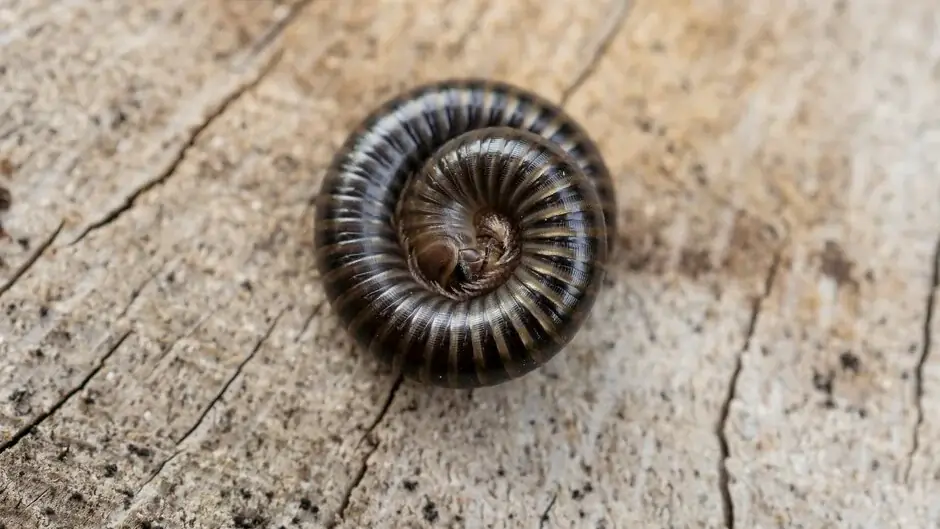
Millipede control in Bryanston focuses on the strip around the house, because that is where the invasion happens. We treat moist beds, leaf litter and the foundations with an odourless residual barrier, seal off the gaps where millipedes get indoors, and help you change the garden conditions that let numbers build up near the walls.
Why millipedes swarm in Bryanston
Millipedes, the shongololos many of us grew up with, are recyclers. They eat decaying leaves, rotting wood and mulch, and they need moisture to survive. Bryanston's established gardens are ideal: big trees drop leaves for months, beds are mulched deeply, irrigation keeps the soil damp, and wood edging, sleepers and compost bays rot slowly into food.
For most of the year you hardly see them. Then the Highveld summer storms arrive, the soil becomes waterlogged, and millipedes come up and move in large numbers, often in the same few weeks each year. They climb walls, cross paving, collect in garages and pool areas, and find their way under doors and into living rooms, where they quickly dry out and die.
Are millipedes harmful?
They don't bite or sting. Many species defend themselves by releasing a fluid that can stain skin and irritate the eyes, so wash your hands after handling them and keep them away from your face. Dogs that mouth them sometimes drool or foam briefly. The bigger nuisance is the sheer number, the dead ones collecting in corners and the smell when they are crushed underfoot.
In vegetable gardens, millipedes can also nibble seedlings, strawberries and other soft produce lying on damp soil, especially when numbers are high.
Millipede or centipede?
Millipedes are slow, round in cross-section and have two pairs of legs per segment. They curl into a spiral when disturbed. Centipedes are flat, fast, have one pair per segment and can bite. The treatment overlaps, but the risk is different.
How we treat a millipede invasion
- Find where they are coming from. We check the beds, mulch, leaf litter and moist spots next to the house, and see where they are getting in.
- Garden strip treatment. An odourless, non-staining residual product is applied to the beds and leaf litter closest to the house.
- Perimeter barrier. We treat the foundations, door thresholds, garage doors, weep holes and patio edges so millipedes that cross the strip don't make it inside.
- Indoor clean-up advice. Dead millipedes indoors are best swept up and removed; we don't need to treat inside the house in most cases.
Children and pets should stay off treated beds and paving until they have dried. In very heavy seasons, a second treatment may be needed while the rains continue.
Cluster complexes and estates
In cluster complexes, millipedes move along shared garden beds and common lawns, and an invasion is usually complex-wide. Treating the common property along the walls of every block, rather than individual patios, gives far better results. Body corporates often book this as a pre-season treatment just before the main summer rains.
Pools, garages and vegetable beds
Three spots on big Bryanston properties collect millipedes more than any others. Pools trap them in large numbers after a storm, and they clog the skimmer basket and weir; empty it daily during an invasion. Garages with a gap under the door fill up with millipedes that crawl in for shelter and die on the floor. And raised vegetable beds or strawberry patches, with their rich, moist soil, become feeding grounds. Lifting fruit off the soil with straw and sealing the garage door gap both help.
What people get wrong
Treating indoors and ignoring the garden. Millipedes found inside the house are already dying; the population is in the beds outside. The other mistake is heaping fresh mulch and compost right up against the walls every spring, which builds a millipede nursery just outside the patio door.
A Bryanston tip
In late winter, before the rains start, rake back leaf litter and mulch from a strip about half a metre wide along the house walls and leave it as gravel or bare soil. Reduce evening irrigation on the beds closest to the house. That one change does more to prevent the summer invasion than any amount of spraying once it has started.
What millipede control costs, and why
The quote depends on the length of the house perimeter, how much of the garden next to it needs treating, whether outbuildings and pool areas are included, and whether a repeat treatment is needed during a long wet season. A cluster unit with a small garden is a short job. A large stand with deep beds around a long house takes more time and product. A guide "from" price is shown on this page, and our pest control price list covers the rest. If the invasion is light and short-lived, sweeping them up and clearing the mulch strip may be enough.
Centipedes like the same damp beds; our Bryanston centipede control can be done on the same visit. We also treat millipedes in Fourways estates, gardens in Epsom Downs, and homes across the city through millipede control in Johannesburg. For everything else, see our Bryanston pest control page.
Combat Pest Control is owned and run by Jason van Heerden and has 25 years of experience. We are SAPCA registered and registered with the Department of Agriculture, we offer service within 24 hours, and millipede treatments carry a 3-month guarantee. Call 084 200 2700, or WhatsApp us a photo of the invasion.
Questions we get asked
How much does millipede control cost?
It depends mainly on the length of the house perimeter and how much of the garden beside it needs treating. A small garden is quick; a large stand with deep beds takes longer.
Are millipedes poisonous?
They don't bite or sting, but many release a fluid that can stain and irritate skin and eyes. Wash your hands after touching them.
Why are there so many millipedes after rain?
Heavy rain waterlogs the soil and leaf litter where they live, so they come up and move in large numbers, often towards drier ground like your patio and house.
Will they damage my house?
No. Millipedes don't harm buildings. Inside the house they dry out and die quickly; the nuisance is the numbers and the mess.
Is the treatment safe for my dogs?
Yes, once it is dry. Keep dogs and children off treated beds and paving until the surfaces have dried.
When is the best time to treat?
Just before the main summer rains, or as soon as the invasion begins. A pre-season treatment along the house walls works best.