
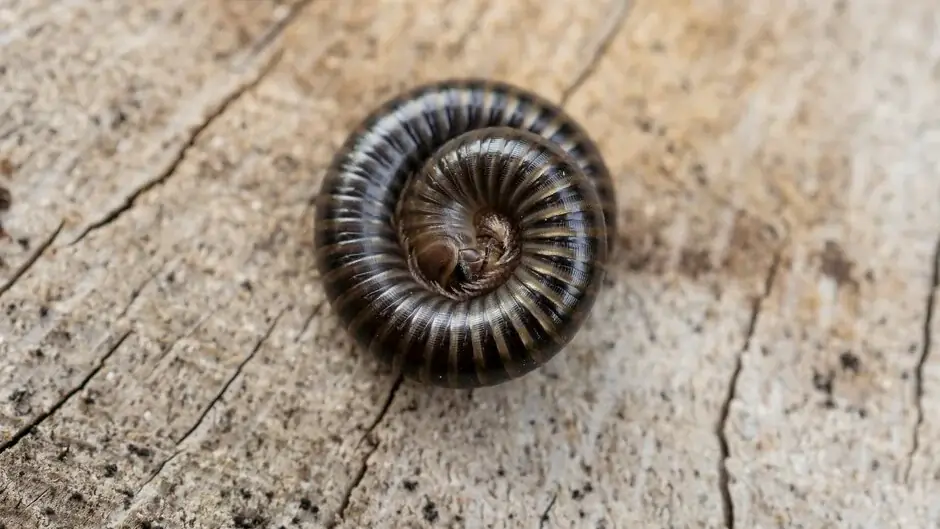
Millipede control in Roodepoort is about stopping the summer invasions that follow the first heavy rains. We apply an odourless residual barrier around the base of the house and entry points, treat damp beds and paving edges where they gather, and help you clear the mulch and leaf litter that breeds them. That keeps them out of the house.
Why millipedes appear after the rain
Millipedes spend most of the year buried in damp soil, compost, mulch and leaf litter, feeding on decaying plant material. When the first heavy thunderstorms soak the Highveld, usually in October or November, they come out in large numbers to feed and mate. Waterlogged soil also pushes them up and onto paving, walls and into houses. In Roodepoort, gardens near the ridges, veld and open green spaces, and those with thick mulched beds and lots of leaf litter, see the biggest movements.
They're slow and can't bite or sting, but when dozens come through gaps under doors every night, or pile up on the patio and in the pool, they become a real nuisance.
Are they harmful?
Not to people in any serious way. Millipedes don't bite. When disturbed, many curl into a tight coil and release a defensive fluid that can stain skin and surfaces brown or yellow and irritate the eyes. Wash your hands after touching them and keep them away from your eyes. Dogs that pick them up sometimes drool or foam at the mouth from the taste; if your dog seems unwell, check with your vet. In large numbers they can nibble seedlings and soft fruit lying on the ground.
Millipedes or centipedes?
Millipedes are rounded, slow, have two pairs of legs per body segment and curl up when touched. Centipedes are flat, fast hunters with one pair of legs per segment and can bite. If you're seeing fast, flat creatures in damp corners, see our centipede control in Roodepoort page.
How we deal with millipede invasions
- Inspection. We look at where the millipedes are coming from and where they're getting in: mulched beds against the walls, compost heaps, leaf litter, lawn edges and gaps under doors and around air bricks.
- Barrier treatment. We apply an odourless, non-staining residual treatment in a band around the base of the house, at doorways, sliding doors, air bricks and along paving edges, so millipedes trying to cross it are stopped.
- Habitat treatment. Damp beds near the house and other gathering points are treated where needed.
- Advice. We show you which mulch, leaf litter and damp areas to clear or move back from the house, because that's what keeps the numbers down long term.
You don't need to leave home. Keep pets and children off treated areas until they're dry.
The common mistake
Sweeping them up and spraying the patio every morning. It feels productive, but the source is the wet mulch, compost and leaf litter right next to the house, and more millipedes come out every night. Thinning the mulch near the walls, moving the compost heap away from the house and keeping the strip along the walls dry makes far more difference.
A Roodepoort tip
Before the first big storms each spring, rake back thick mulch and bark chips to leave a dry, bare band of about half a metre along the house walls, and clear leaves from paving corners and under decks. That band, combined with a barrier treatment, stops most millipedes before they reach the doors.
Complexes and businesses
Townhouse complexes with landscaped common areas often see millipedes moving across shared paving into units. Treating the perimeter of each block and the landscaped beds, arranged through the body corporate, works better than treating unit by unit. Schools and offices with large lawns and beds benefit from a treatment just before the rainy season starts.
What millipede control costs, and why
The price depends on the length of the house perimeter, how many doors and entry points there are, the size of the garden, and whether common areas in a complex need treating. A townhouse is a quick job; a large property next to the veld or a whole complex is more involved. If you're only seeing a few, clearing mulch from the walls may be all you need. There's a guide "from" price on this page, and our pest control price guide has the others.
Nearby
Homes around the lake can see pest control in Florida, Roodepoort. We also treat millipedes in Soweto, and the main page on millipede control in Johannesburg covers the rest of the city. Everything else we do here is on our Roodepoort pest control overview.
The best time to call is just before the storms set in. Combat Pest Control is owned and operated by Jason van Heerden, who has 25 years in pest work, and is SAPCA registered with Department of Agriculture registration under Act 36 of 1947. We offer service within 24 hours and a 3-month guarantee on millipede barriers. Ring 084 200 2700, or WhatsApp a photo of what's coming in.
Questions we get asked
How much does millipede control cost?
It depends on the house perimeter, the number of doors and entry points, the size of the garden and whether complex common areas are included. A townhouse costs less than a large property.
Do millipedes bite or sting?
No. They can release a fluid that stains skin and irritates the eyes, so wash your hands after touching them, but they don't bite or sting.
Why are there so many millipedes after it rains?
The first heavy rains of summer bring them out of the soil to feed and mate, and waterlogged ground pushes them onto paving and into houses.
Are millipedes dangerous to my dog?
Not usually, but their defensive fluid tastes bad and can make a dog drool or foam. If your dog seems unwell, call your vet.
How long does a barrier treatment last?
It keeps working for weeks, covering the main invasion period, and our treatments carry a 3-month guarantee.
When should I book a millipede treatment?
Ideally just before or as the first heavy rains arrive, usually in October or November, so the barrier is in place when they start moving.