
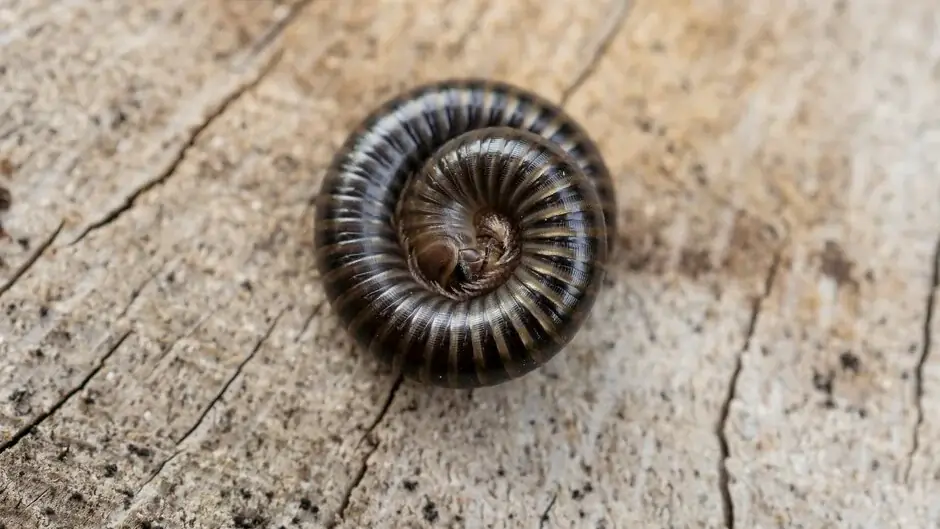
Millipede control in Randburg is usually needed after summer rain, when shongololos leave saturated gardens in large numbers and climb into homes, garages and ground-floor units. We apply a residual barrier treatment around the outside of the building and treat their shelter in beds and paving, then show you how to make the edge of the house less inviting.
Harmless, but a real nuisance
Millipedes don't bite or sting, they don't eat your house and they don't breed indoors. They eat decaying leaves, mulch, compost and soft plant roots, and in a garden they're part of breaking down organic matter. The trouble is numbers. On some Randburg properties, especially after the first heavy storms of November and December, hundreds appear overnight on walls, patios, pool edges and kitchen floors. They die indoors within a day or two because the air is too dry, leaving curled bodies to sweep up. Some species also release a defensive fluid that can stain tiles, carpets and skin, and irritate the eyes if you rub them after handling one.
Why they come inside
When the ground is soaked, millipedes move up and out. Older Randburg gardens often have the perfect source: thick beds of compost and bark mulch, leaf litter under big trees, ivy and groundcover against the walls and decades of organic matter in the soil. Complexes with irrigated beds running right up to sliding doors see the same thing. Millipedes walk along the walls looking for a way to somewhere cooler and drier, and gaps under doors, open weep holes and garage doors do the rest.
How to tell them from centipedes
Millipedes are rounded, slow and have two pairs of legs on most body segments, and they curl into a tight spiral when disturbed. Centipedes are flat, fast and bite. If what you're seeing moves quickly and you're worried about bites, our page on Randburg centipede treatments is the one to read.
What we do
- Look at where they're coming from. Mulched beds, compost heaps, leaf litter, groundcover against walls, wet areas from irrigation or leaking gutters.
- Treat a barrier around the base of the house or block with a residual product, including door thresholds, weep holes and the garage door edge, so millipedes crossing it die before they get in.
- Treat their shelter in the beds and paving closest to the house where numbers are high.
- Recommend changes to mulch, watering and planting along the walls.
- Come back if a long wet spell washes the barrier down; heavy, repeated storms can mean a top-up is needed.
Treatments are odourless and non-staining, and there's no need to leave home. Keep children and pets off treated areas until they're dry.
The mistake that makes it worse
Spraying the millipedes inside. Those indoors are already dying; spraying them only adds to the mess. The ones that matter are outside, still walking towards the house. The second mistake is responding to an invasion by adding more mulch or compost to protect the garden, which simply builds a bigger millipede nursery against the wall.
A Randburg tip
Rake the mulch back. Keep bark chips, compost and leaf litter at least half a metre away from the house walls, and replace it with gravel or paving in that strip. Turn irrigation off in the rainy season when the garden doesn't need it. On older Randburg stands under big trees, clearing leaf litter from the base of the walls before the summer rains can cut the next invasion dramatically.
Complexes and estates
In a complex, millipedes come from the common gardens, so treating a single unit only protects that unit's threshold. The body corporate can book a barrier treatment around whole blocks of units at the start of the rainy season, which is far more effective. Schools and offices with lawns and beds against classrooms or entrances benefit from the same approach.
When to call
The best time to treat is just before or just as the invasions start, usually with the first big storms. Once a property has had a heavy year, it's worth planning the treatment for the following spring rather than waiting for the walls to turn black again.
What millipede control costs, and why
The price depends on the length of the building's perimeter, how much garden bed and paving needs treating, whether outbuildings and boundary walls are included and how many top-ups a wet season needs. A townhouse unit is quick; a large stand under big trees or a whole complex takes longer. The guide "from" price on this page is set out with our other services in the pest control price guide for Johannesburg. If you only see a handful after rain, sweeping them up and clearing the mulch from the walls may well be enough.
More about these creatures is on millipede control across Johannesburg. We treat millipede invasions in Fourways estates too, and if you're in Jukskei Park there's a local page. For other local services, visit Randburg pest control.
Combat Pest Control, owned and run by Jason van Heerden, has 25 years of experience and is SAPCA registered and registered with the Department of Agriculture. We offer service within 24 hours and a 3-month guarantee. Call 084 200 2700, or WhatsApp us a photo of the invasion.
Questions we get asked
How much does millipede control cost?
It depends mainly on the length of the building's perimeter and how much bed and paving needs treating. A townhouse unit is quick and affordable; a large property or a whole complex costs more. We confirm the price when you book.
Are millipedes dangerous to my dogs or children?
No, they don't bite or sting. Some release a fluid that can stain and irritate skin or eyes, so wash hands after handling them and discourage dogs from chewing them.
Why do millipedes come in after rain?
Saturated soil drives them up and out of the garden. They walk along walls looking for shelter and come in under doors and through weep holes.
How long does the barrier treatment last?
It usually protects the house through the main invasion period and carries a 3-month guarantee. A very wet season with repeated heavy storms can wash it down, and we'll top it up if needed.
Will millipedes breed in my house?
No. Indoors the air is too dry and they die within a day or two. The breeding population is in the garden beds and mulch.
When is the best time to book?
At the start of the rainy season, usually around the first big storms, or as soon as numbers start building on the walls and patio.