
Millipede control in Sandton is about stopping the mass invasions that follow summer rain. Millipedes breed in mulch, compost and damp leaf litter, then move in their hundreds onto walls, patios and into homes. We treat the perimeter and breeding areas with a residual barrier, and show you which garden habits are feeding the population.
Shongololos and their small relatives
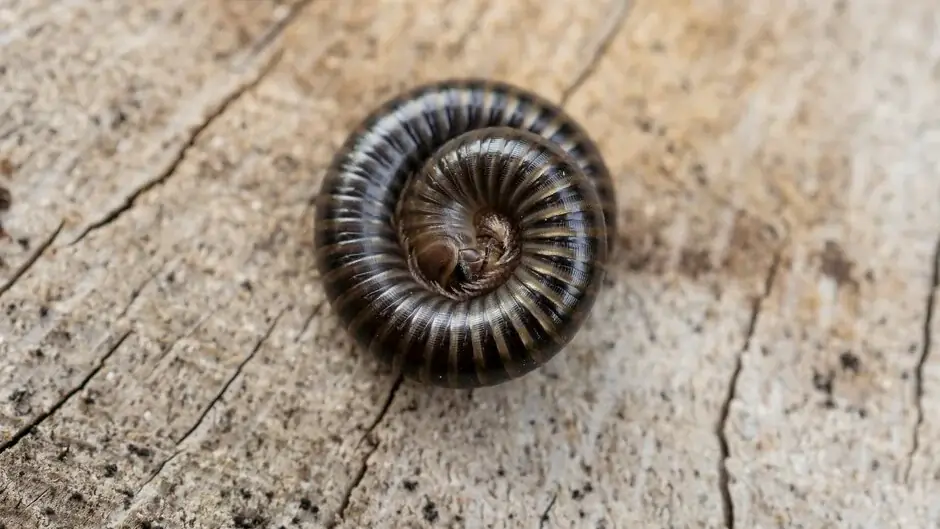
Most people know the big black shongololo, the slow, shiny millipede that curls into a spiral when touched. It rarely causes problems in numbers. The invasions people call us about usually involve smaller millipede species, dark grey or brown and only a few centimetres long, that build up huge populations in damp organic matter and then move together after rain. Millipedes eat decaying plant material. They don't bite or sting, but many release a defensive fluid that smells unpleasant and can stain skin and pale surfaces.
Why Sandton gets millipede invasions
Sandton's gardens produce a lot of organic matter: leaves from big trees, thick bark mulch on beds, compost heaps, grass clippings and ground cover that's watered all year. That's where millipedes breed. Then the summer storms arrive. Heavy rain floods the soil and the millipedes move up and out, onto walls, paving and patios, and through gaps into houses, garages and pool pump rooms. Complexes with shared, heavily mulched common gardens often see millipedes in many units at once. The invasions are usually short, a few weeks in mid to late summer, but they can repeat every year if the breeding areas stay the same.
What you'll notice
- Large numbers of small millipedes on outside walls, especially in the evening and after rain
- Millipedes collecting under doormats, pot plants and along door thresholds
- Dead millipedes curled up on floors and in the pool
- A sharp, unpleasant smell where many have been crushed
How we treat millipedes
- Inspection. We look for the breeding areas: mulch, compost, leaf litter, ground cover and damp beds, especially those next to the house.
- Perimeter barrier. A residual treatment goes around the base of the walls, on door thresholds, weep holes and the paving edge, to stop millipedes reaching the house.
- Breeding area treatment. Where the population is very large, the beds and mulch closest to the house are treated too.
- Garden advice. We show you which mulch, compost and watering changes will reduce next season's numbers.
Normal treatments don't require you to leave. Children and pets can use the garden again once the treated areas are dry.
Complexes and estates
In complexes, millipedes rarely respect unit boundaries. The communal beds along the base of the buildings are usually the main breeding ground, and treating one patio while the shared garden beside it keeps producing millipedes gives only short relief. We suggest the body corporate books a site-wide perimeter treatment just before the main rains, and asks the garden service to keep mulch thin along building walls and to bag leaf litter rather than spreading it under shrubs. Timing matters: a barrier applied as the first heavy storms arrive works far better than one applied once the invasion is in full swing.
What people often get wrong
Spreading more fresh mulch to tidy up the garden in spring, right up to the walls. It's the best breeding ground millipedes could ask for, placed exactly where you don't want them. Another common mistake is sweeping them up and dropping them in the compost heap, which is where they breed.
A Sandton tip
Leave a strip of bare paving or gravel, at least a hand's width, between your beds and the house walls, and keep mulch thin in beds near doors. Millipedes avoid crossing dry, open surfaces, so that strip does a lot of the work a barrier treatment does, and it also keeps the damp-proof course clear.
What millipede control costs, and why
The price depends on the length of the perimeter, the size of the beds and breeding areas to be treated, and whether a whole complex is being done. A single house perimeter is a modest job; large gardens and complexes cost more. This page shows a guide 'from' price, and our price page for Johannesburg pest control has the details. If you see a few millipedes after the first storms, sweeping them up and binning them, and thinning the mulch, may be enough until the invasion passes.
Centipedes turn up in the same damp spots but behave differently; see centipede control in Sandton if you're seeing fast, flat ones. Our Sandton pest control overview covers the other common local pests, and there's a page for pest control in Strathavon too. We also deal with millipede invasions in Midrand estates and with millipedes across the city through millipede control in Johannesburg.
Combat Pest Control is owned and run by Jason van Heerden, with 25 years in the business, SAPCA membership and Department of Agriculture registration. Book with us and service is within 24 hours; the treatment carries a 3-month guarantee. Call 084 200 2700, or WhatsApp us a photo of the invasion and we'll suggest the best approach.
Questions we get asked
How much does millipede treatment cost?
It depends on the length of the perimeter and how much of the garden needs treating. A single house is a modest job; large gardens and complexes cost more. We quote after a look.
Are millipedes harmful?
No. They don't bite or sting, but some release a fluid that smells and can stain skin and pale surfaces. Wash your hands after handling them and keep pets from chewing them.
Why do millipedes come in after rain?
Heavy rain floods the soil and mulch where they live, so they climb out onto walls and paving and find gaps into the house.
How long does a millipede invasion last?
Usually a few weeks in mid to late summer. Without changing the breeding areas, it often repeats the following year.
Is the treatment safe around the pool?
Yes, when applied correctly. We keep treatment away from the water and treat the paving edges and walls where millipedes gather.
Can I just use a broom?
For small numbers, yes. Sweep them into a bag and bin it rather than putting them in the compost. For mass invasions, a perimeter treatment saves you sweeping every morning.