
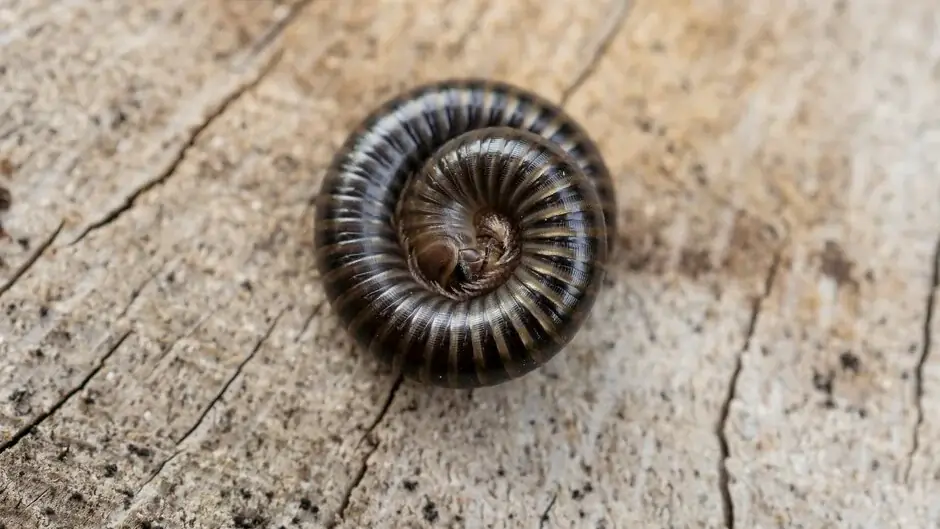
Millipede control in Fourways is usually needed in early summer, when the first good rains send large numbers of millipedes out of the garden and up walls, onto patios and under doors. We put a residual barrier around the house, treat the damp beds they come from, and help you cut back the leaf litter and mulch they breed in.
What's going on when millipedes invade
Millipedes spend most of the year out of sight, in the top layer of soil, under mulch, leaf litter, logs and compost, eating decaying plant material. They're slow, harmless to people and actually useful in breaking down garden waste. The trouble starts when conditions change suddenly. After the first heavy Highveld storms in October or November, the soil becomes saturated, and many millipedes move up and out, looking for somewhere drier or simply dispersing to new ground. Later in summer, a long hot dry spell can trigger the same kind of movement.
The house is in the way. Millipedes climb the walls, gather in corners of the patio and pile up in the gap under the garage door. Many die indoors because the house is too dry for them, and you end up sweeping them up every morning.
Why it's so noticeable in Fourways
A lot of Fourways properties are set up in a way that millipedes love. Beds against the walls are thickly mulched with bark chips, gardens are well irrigated, and estates and complexes often have extensive landscaped common areas with ground cover, leaf litter and compost. In newer developments built on former veld, there was already a natural millipede population in the soil before the houses arrived. When the rains come, it's not unusual for several neighbouring homes in a complex to get them at the same time.
The ones you'll see
- Small dark millipedes, a few centimetres long, that move in large numbers and curl into a tight spiral when touched. These are the ones behind most invasions.
- Large shongololos, the big black or dark brown millipedes that can be as long as a hand. They're slow, solitary and harmless, and children often love them. We don't treat for these; a few in the garden are no problem.
Are millipedes harmful?
Not really. They don't bite or sting. When disturbed, many release a defensive fluid that smells unpleasant, can stain floors and skin a brownish colour, and may irritate the skin or eyes, so wash your hands after handling them. Dogs that mouth a millipede often drool and froth for a while from the taste. If a pet seems unwell after that, give your vet a call. In the garden, large numbers can nibble seedlings and soft fruit lying on the ground, but they're mainly a nuisance indoors.
How we deal with a millipede invasion
Perimeter barrier
We apply a residual, non-staining treatment along the base of the house walls, across the patio edge, at door thresholds, garage doors, sliding door tracks and weep holes. That's the line the millipedes have to cross to get in.
Treating the source
We treat the damp, mulched beds, the leaf litter under hedges and the areas around the compost heap where they're concentrated. In complexes, it helps to include the common garden areas next to the units.
Reducing the habitat
We show you what to change so the invasion doesn't repeat every year, mostly about mulch, leaf litter and irrigation near the walls.
You don't need to leave home. Keep children and pets off treated areas until they're dry.
What people tend to get wrong
Spraying the millipedes on the floor and patio every morning. It kills the ones that have already arrived, but they're coming from the garden, so more arrive the next night. Sweeping them away and treating the barrier and the beds is what makes the difference. Another mistake is piling fresh mulch right against the walls in spring, just before the rains, which gives the millipedes an ideal launch pad onto the house.
A local prevention tip
In late winter, before the summer rains, rake back bark chips and leaf litter from a strip along the house walls and leave it bare or gravelled. Move the compost heap well away from the house, and check that the seal under the garage door is in good condition. Homes that do this before October see far fewer millipedes when the storms arrive.
What millipede control costs, and why
What you pay depends on the length of the house perimeter, how much of the garden or common area needs treating, and whether the invasion is spread across a complex. A townhouse unit with a small garden is a quick treatment; a large estate home with deep beds and a big patio takes longer. Our pest control prices show where treatments start. If you're seeing a handful, sweeping them up and raking back the mulch may be all you need.
If what you're seeing is flat and fast rather than round and slow, read about centipede control in Fourways instead. For the full picture, see millipede control across Johannesburg. We also treat millipedes in Bryanston, complexes in Maroeladal, and the rest of the area through our Fourways pest control service.
Combat Pest Control is SAPCA registered and also registered with the Department of Agriculture, and Jason van Heerden has 25 years of pest control experience. We offer service within 24 hours, with a 3-month guarantee on the treatment. Swept up a dustpan full this morning? Call 084 200 2700, or WhatsApp us a photo.
Questions we get asked
How much does millipede treatment cost?
It depends on the length of the house perimeter and how much garden or common area needs treating. A townhouse is a quick job; large estate homes and whole complexes take longer.
Why are there suddenly hundreds of millipedes?
Heavy summer rain saturates the soil and triggers mass movement. They leave the damp beds and mulch and end up climbing walls and coming under doors.
Are millipedes dangerous to my dog?
Not usually. Dogs that mouth one often drool or froth because of the taste of the defensive fluid. Call your vet if your dog seems unwell afterwards.
Do millipedes bite?
No. They don't bite or sting, but the fluid they release can stain skin and irritate the eyes, so wash your hands after touching them.
How long does the treatment last?
A barrier treatment usually holds through the main invasion period. Raking mulch back from the walls makes it last much longer.
Should I treat the big shongololos too?
No need. Large shongololos are slow, solitary and harmless, and they help break down garden waste. We focus on the small millipedes that invade in numbers.
Will it come back next year?
It can, because the population lives in the garden. Reducing mulch and leaf litter near the house before the rains, and a barrier if needed, keeps it under control.