
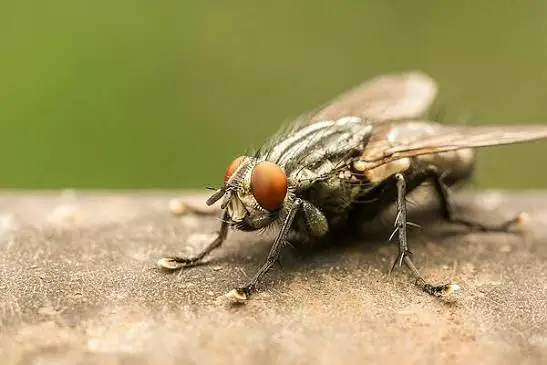
Fly control in Randburg works when the breeding source is found and removed. Flies hatch from rotting food, bin residue, pet waste, compost and drains, often within a few metres of where you see them. We identify the type of fly, find where it's breeding and treat that, then add targeted residual treatment where flies rest.
Which fly are you seeing?
- House flies are the medium grey flies that land on food and people. They breed in rotting organic matter: bin residue, compost, food waste and animal droppings.
- Blowflies are larger, metallic green or blue and noisy. They breed in meat and fish scraps, dead animals and pet food left out. A sudden swarm indoors often means something has died in the roof, a wall or under the floor.
- Drain flies are tiny, fuzzy and moth-like, resting on walls near sinks and showers. They breed in the slime inside drains and traps.
- Fruit flies are small, often with red eyes, hovering around fruit bowls, bins and bar areas. They breed in fermenting fruit, spilt drinks and the residue in bottles and drains.
Why Randburg businesses call us
Randburg's main roads carry a long line of restaurants, takeaways, butcheries, bakeries, delis and supermarkets, often sharing a back lane or service yard with bins collected only a few times a week. In summer, from about October to March, warm weather can turn a bin's residue into a fly nursery in under a week. Grease traps, floor drains, mop sinks and the space under heavy kitchen equipment add to the problem, along with any cockroach issue, because both thrive on the same food and moisture. For food businesses, flies are also an inspection issue: a health inspector or franchise auditor will want to see what you're doing about them.
Flies at home
For households, the usual sources are the outside wheelie bin, dog mess in the garden, a compost heap that's too wet, fruit trees dropping fruit, chicken runs, and pet food bowls left out. Larger properties near open ground or smallholdings can see more flies from outside, but most home fly problems start within the property.
How we control flies
- Inspection. We check bin areas, drains, grease traps, compost, animal areas and the kitchen to find the breeding sites. Finding maggots is often the giveaway.
- Source treatment. We treat breeding sites with products suited to the type of fly and give you a clear list of what must be cleaned or changed.
- Resting-surface treatment. A targeted, odourless residual treatment on the walls, ceilings and fittings where flies land and rest, away from food contact surfaces.
- Scheduled service for food businesses. Regular visits through the fly season with a written record of each one.
Before we arrive
Leave the bins as they are rather than emptying them the morning of the visit, because the larvae inside tell us which fly we're dealing with. Note the times of day the flies are worst and where they gather, and if you run a kitchen, have someone available who knows the cleaning schedule for drains and grease traps.
The mistake that keeps the flies coming
Spraying the air with an aerosol every time there are flies in the kitchen. It kills the adults you can see and does nothing to the hundreds of larvae developing in the bin or drain outside. Within a day or two the next batch hatches. Flies are a hygiene and waste-management problem first; the spray is only the last step.
A Randburg tip
Wash the wheelie bin, not just the bin bag. In summer, liquid collects at the bottom of the bin and in the lid hinge, and that's where blowflies and house flies lay eggs. A weekly rinse with hot soapy water, a tight lid, and bags tied before they go in will cut a home fly problem dramatically. For shops sharing a bin yard, agree a cleaning roster with the neighbours.
What fly control costs, and why
The price depends on the size of the property, the number of breeding sites, whether it's a home or a food business, and how often treatment is needed through the season. A home with a bin and a compost heap is usually a single, affordable visit. A restaurant or food factory needing a scheduled programme with records is priced on the site and the visit frequency. See our pest control price guide for the guide "from" price, which this page also shows. If the source is one rotting bag in the bin, cleaning it out may be all you need.
Flies and cockroaches share the same kitchens, so read about cockroach control for Randburg kitchens too. The wider service is on fly control across Johannesburg, and we run fly programmes for Fourways restaurants and centres as well. Businesses in Strijdompark have a local page, and everything else we do nearby is on pest control in Randburg.
Jason van Heerden owns and runs Combat Pest Control and has 25 years in the industry. We're SAPCA registered and registered with the Department of Agriculture, with service within 24 hours and a 3-month guarantee on fly treatments. Call 084 200 2700 to book an inspection.
Questions we get asked
How much does fly control cost for a restaurant?
It depends on the size of the premises, the number of breeding sites and how often you need visits through the season. A scheduled programme with records is priced on the site. We quote after inspecting.
Why do I suddenly have lots of big flies in one room?
A sudden swarm of blowflies usually means something has died nearby, often a rat or bird in the roof, wall or under the floor. Finding and removing it solves the problem.
Is fly treatment safe in a kitchen?
Yes. We treat breeding sites and resting surfaces away from food contact areas, using odourless products, and work around your trading hours.
Can you give us records for a health inspection?
Yes. On a scheduled programme, every visit is recorded with what was found and treated, which is what inspectors and auditors look for.
How long does fly control last?
As long as the breeding sources stay under control. The treatment carries a 3-month guarantee, and food businesses in summer usually benefit from regular scheduled visits.
Where do the tiny flies around my sink come from?
Usually the drain. Drain flies breed in the slime inside pipes and traps. Cleaning the drain properly matters more than spraying the flies.