
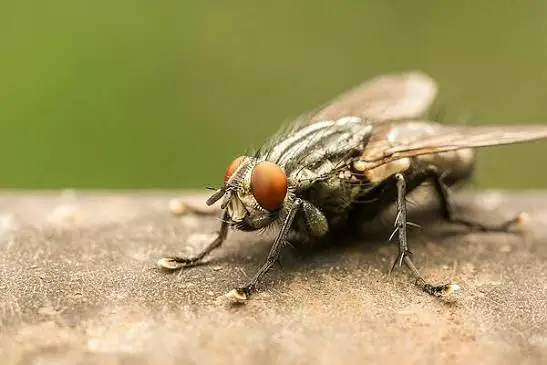
Fly control in Midrand only lasts when you deal with where the flies breed. On Kyalami plots that means manure, bedding and feed; at warehouses, food outlets and complexes it means refuse areas and drains. We find the breeding sites, treat resting surfaces with residual products and fly baits, and set out a sanitation plan.
Horses, bins and long summers
Midrand has a fly problem that most of Johannesburg does not: a large horse community. Stables, paddocks and riding schools in and around Kyalami produce manure and wet bedding every day, and in summer a single muck heap can breed enormous numbers of house flies and stable flies. Neighbouring estates and homes feel the effect, especially on still, warm afternoons. Poultry, dog runs and compost on smallholdings add to it.
The commercial side has its own sources. Food outlets, office canteens, shopping centres and logistics depots all have refuse rooms and skips that, if they are not emptied and washed often, become breeding grounds for blowflies and house flies. In complexes, a shared bin area in full sun on a hot January day is enough to produce flies for the whole block.
The flies we deal with
- House flies: the common grey fly in kitchens and on patios. Breeds in manure, rotting food and wet refuse.
- Stable flies: similar in look but they bite, mainly around the legs. A real nuisance to horses and to people near stables.
- Blowflies: large, metallic green or blue flies around bins, dead animals and meat waste. Their larvae are the maggots in wheelie bins.
- Fruit flies: tiny flies around fruit bowls, bars, drains and recycling bins.
- Drain flies: small, fuzzy, moth-like flies in bathrooms and kitchens with slow drains.
Why flies are worth taking seriously
Flies land on manure, waste and food in quick succession, so they carry bacteria onto kitchen surfaces and food. In food businesses that is a health inspection problem; in homes it is a hygiene one. Biting stable flies stress horses and other livestock and can make the yard miserable in summer.
How we control flies
1. Survey the breeding sites
We look at muck heaps, stable bedding, feed rooms, compost, dog runs, refuse areas, skips, drains and grease traps. Finding where the larvae are developing is the most important step.
2. Fix sanitation and waste handling
We give you a practical plan: how often to remove manure, where to place the muck heap, how to cover and turn compost, how often bins should be emptied and washed.
3. Treat resting surfaces
Flies rest on walls, ceilings, beams, fences and under eaves near their breeding sites. An odourless, non-staining residual treatment on those surfaces kills adult flies as they land.
4. Baits and targeted treatment
Fly baits are placed where flies gather but out of reach of animals and children. Drains and refuse areas get targeted treatment where needed.
5. Scheduled visits for businesses
Food businesses, stables and depots usually need regular treatment through summer, and we provide service records for each visit.
The mistake that keeps the flies coming
Hanging up fly strips and spraying the kitchen while the muck heap or skip outside keeps producing thousands of new flies every day. Without dealing with breeding, sprays only kill flies that would have died in a few days anyway.
A Midrand tip for plot owners
Move the muck heap as far from the house and stables as practical, cover it with a tarp, and turn or remove it at least weekly through summer. Fly larvae need a few days of undisturbed, moist manure to develop, and regular removal breaks the cycle.
Where there are flies and spilled feed, there are often rats too, so look at rat control for Midrand plots and homes if you are seeing droppings in the feed room.
What fly control costs, and why
Fly work is priced on the source as much as the flies: the size of the property, how many breeding sites and resting areas need treatment, whether it is a home, a stable yard or a food business, and how often visits are needed through summer. A home with a bin problem is a modest once-off job; a stable yard or restaurant on a scheduled programme is quoted to suit the site. Our pest control prices page shows where treatments start, and this page has a guide "from" price. Often, simply washing bins weekly and covering compost solves a home fly problem without any treatment.
Plots in Blue Hills and Kyalami are at the centre of our fly work. For flies in restaurant kitchens further south, see fly control in Sandton, read about the full approach on fly control across Johannesburg, or see the Midrand pest services page.
Combat Pest Control is owned and operated by Jason van Heerden and has 25 years of pest control experience. We are SAPCA registered and registered with the Department of Agriculture under Act 36, offer service within 24 hours, and guarantee our fly treatments for 3 months. Phone 084 200 2700, or WhatsApp us a photo of the flies and where you see them.
Questions we get asked
How much does fly control cost?
It depends on the property size, the number of breeding sites and whether it is a home, stable yard or food business. A once-off home treatment costs much less than a scheduled summer programme for a stable or restaurant. We quote after a survey.
Is fly treatment safe around horses?
Yes, when applied correctly. We treat resting surfaces and place baits out of reach of animals, and we will tell you when treated areas can be used again.
Why do flies keep coming back after spraying?
Because spraying only kills adult flies. If manure, refuse or compost keeps breeding new flies, they replace the dead ones within days.
How do I get rid of maggots in my wheelie bin?
Empty and wash the bin, let it dry in the sun, and bag wet food waste tightly before it goes in. Keep the lid closed. If it keeps happening, we can treat the bin area.
Do restaurants need regular fly treatment?
Usually, yes, especially through summer. A scheduled programme with service records helps with health inspections and keeps flies away from food areas.
What are the tiny flies in my bathroom?
They are often drain flies breeding in the slime inside slow drains. Cleaning the drains thoroughly usually solves it.